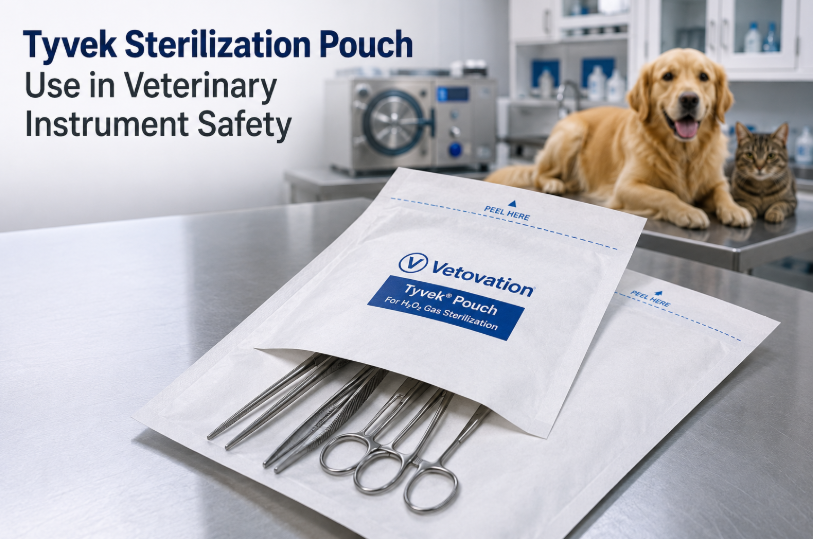
In veterinary healthcare, maintaining sterile surgical instruments is essential for protecting animal patients from infection and ensuring successful surgical outcomes. Veterinary clinics rely on advanced sterilization systems that support fast turnaround times and safe handling of multiple instruments used in animal procedures. Among the commonly used packaging solutions in sterilization workflows, the Tyvek sterilization pouch plays a key role in maintaining sterility before surgical use.

Role of Sterile Packaging in Veterinary Care
Sterile packaging is used to protect surgical instruments after the sterilization process is completed. It acts as a barrier against contamination, moisture, and environmental exposure. In veterinary clinics, where instruments are frequently reused, maintaining sterility is critical for patient safety.

A Tyvek sterilization pouch is designed to support this need by providing a strong protective layer that keeps instruments clean and ready for use in animal surgeries.
Key Sterilization Systems Used in Veterinary Settings
Veterinary clinics often use different sterilization systems depending on the number of instruments required for a procedure. These systems are designed to improve efficiency and reduce waiting time between surgeries.
1. Single Instrument Sterilization System
- Designed for one tool at a time
- Sterilization completes in approximately 7 minutes
- Suitable for the urgent use of instruments
- Often used for individual surgical tools placed in a pouch
This system is helpful when a single instrument must be sterilized quickly for immediate veterinary procedures.

2. Medium Capacity Sterilization System
- Handles multiple instruments in one cycle
- Takes about 14 minutes for full sterilization
- Suitable for grouped surgical tools
- Commonly used in routine veterinary operations
This setup allows veterinary staff to prepare several instruments together while maintaining proper sterility standards.
3. Full Surgical Load Sterilization System
- Designed for complete sets of surgical instruments
- Requires approximately 36 minutes for full sterilization
- Includes tools such as scopes, vessel sealers, and headlamps
- Used in complex veterinary surgical cases
This system supports high-volume veterinary facilities that perform multiple animal surgeries in a single day.
Conclusion
Sterile packaging plays a vital role in veterinary surgical care by ensuring that instruments remain safe and ready for use. The use of advanced sterilization systems, along with proper packaging methods, supports efficient and hygienic animal healthcare practices.
A Tyvek sterilization pouch provides reliable protection for surgical instruments in veterinary settings, helping maintain sterility from sterilization to surgical use. Combined with fast sterilization systems and proper training, it contributes to safer and more efficient veterinary procedures for animal patients.