When designing a home, your mind goes to walls, furniture, lighting, and accessories. But honestly, one of the biggest visual surfaces in any room is often overlooked: the floor. Flooring doesn’t just sit there as a practical base; it nudges the mood, the proportions, the warmth, and the whole personality of the space.

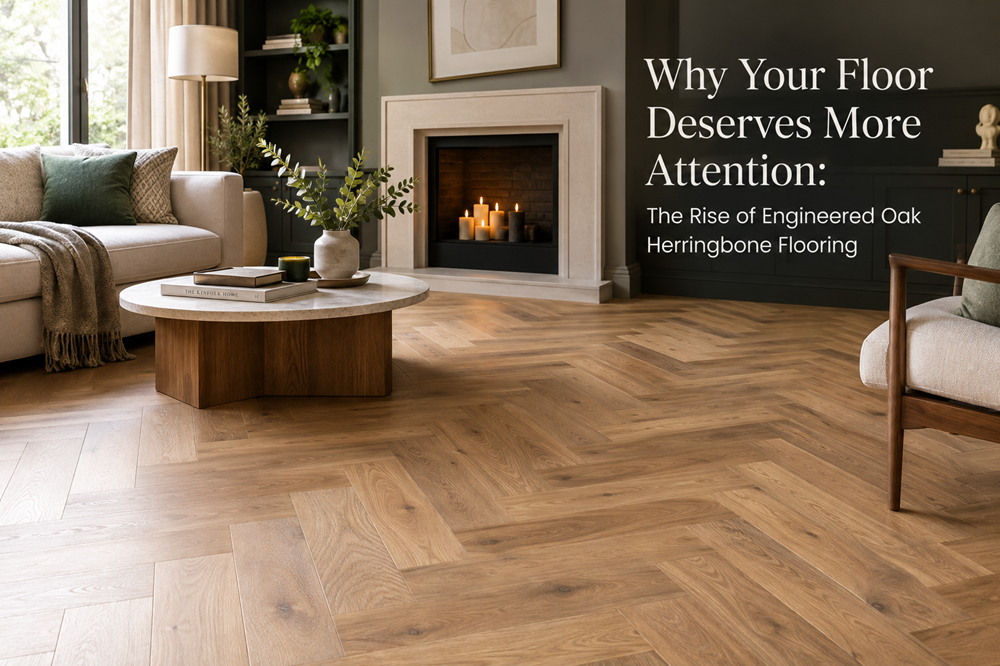
Among the many flooring styles that people are using today, engineered oak herringbone flooring is getting a lot more attention lately, it seems. Partly because it blends traditional making with modern durability, or you could call it performance. And that striking geometric pattern, plus the natural oak character, gives you a look that can fit in both classic rooms and more contemporary spaces.

Still, why does this style feel like it’s becoming a go-to design feature, and what about other options like lacquered engineered flooring or unfinished wood flooring?
Why is Engineered Oak Herringbone Flooring becoming so popular?
Honestly, it’s been around for centuries, yet the charm doesn’t really fade. The look is basically rectangular wood boards, lined up in a repeated zigzag style, so you get that natural movement without taking over the whole room.
Nowadays, engineered oak herringbone flooring brings that older vibe into contemporary houses. And unlike traditional solid wood, the boards are made in layers, with a real oak wear layer sitting on top. This layered build can help with dimensional stability, so it works well for modern lifestyles where rooms change, temperatures shift, and daily life happens a bit faster than you’d think.
Then there’s the way it looks, which is probably the real reason people keep noticing it. The same herringbone pattern can feel timeless in a period property, more polished in an apartment, or really stand out in a bright open-plan space. It’s like one pattern, lots of moods, and everyone can make it fit.
How can herringbone flooring transform a room?
Flooring can absolutely shift how a space “feels” in the first place. The directional herringbone layout sort of pulls your gaze across the room, adding depth and a level of visual intrigue that plain planks usually don’t.
In smaller areas, this pattern can create a subtle sense of motion, plus a bit of sophistication that doesn’t need to be loud. In larger rooms, it also helps stop big stretches of flooring from looking flat or repetitive, like one long tone.
And then there’s the oak itself. The grain, the knots, and the tonal swings bring natural variation. When you place that character into a herringbone setup, the result reads decorative, but it still doesn’t demand excessive ornament.
That’s basically why a lot of homeowners are starting to treat flooring as a design statement, not just a background. Finishing plays an important role in both surfaces.
What makes lacquered engineered flooring different?
Finish plays this important role in how it looks but also in how it gets maintained day to day. There is a coating of lacquered engineered flooring that provides a protective lacquer layer meant to help shield the wood surface from everyday use and scuffing.
A lacquered finish can create anything, from this subtle natural appearance to something more polished, depending on the specific product and the sheen you end up choosing. And yes, it often makes routine cleaning easier too. The protective layer helps limit how fast dirt and spills can soak into the timber in the first place.
For busy households, this mix of timber beauty plus a practical surface treatment can feel especially appealing, like it just fits better into real life.
That said, you should still pick the finish with the room in mind. The purpose of the space matters, and so does the vibe you want. A highly polished surface creates a different mood than a low-sheen, more natural-looking option.
Could unfinished wood flooring be a better choice?
If you want maximum flexibility, unfinished wood flooring takes a slightly different route. Instead of arriving with a factory-applied protective coating, unfinished boards are sanded and finished on site.
This means the colour, sheen, and final look can be matched more closely to your particular interior. It can be especially handy for renovations, where the flooring has to coordinate with existing architectural features, or even bespoke furniture.

Unfinished wood also has a more raw, authentic character that tends to attract people who really like natural materials. Still, on-site finishing usually needs more planning time and professional know-how, so it’s not always the simplest path.
So the decision between unfinished and pre-finished flooring really comes down to what you value more: customisation or convenience. Absolutely. One of the reasons oak remains popular is its natural character and how it still works in so many different styles.
Is engineered oak suitable for modern interiors?
Yes, really, absolutely. One of the reasons oak still shows up everywhere is that it can behave well across a bunch of design styles, so it sits in modern spaces without feeling out of place.
Try pairing Engineered Oak Herringbone Flooring with minimalist furniture, neutral walls, and contemporary lighting for a tidy Scandinavian-inspired look. Or switch it up with traditional cabinetry, decorative mouldings, and antique furniture, and you’ll get something more classical, still grounded but slightly warmer.
Also, the flooring can end up acting like a connector between old and new. That makes it very handy in renovated period homes, where you might want to keep the architectural character while adding modern materials, plus everyday comforts.
How should you choose the right wood flooring finish?
First, think about how the space gets used and your everyday routine, not just how it looks in a picture.
For active rooms where you need straightforward maintenance, lacquered engineered flooring can be a good option. If you want more say over the exact tone and the final look, then unfinished wood flooring might be a better match.
If your main intention is a bold visual moment, however, Engineered Oak Herringbone Flooring gives you a naturally decorative pattern, so you don’t always need extra styling.
It’s also worth looking at colour, board dimensions, room size, natural light, and what’s already in your interior palette. Grab samples if you can, because wood can look quite different under showroom lighting compared with natural daylight once it’s in your home, and that usually changes people’s minds a bit.
FAQs About Engineered Oak Herringbone Flooring
1. Is Engineered Oak Herringbone Flooring durable?
Yes. A good engineered oak floor can be very durable if it’s installed properly and looked after the right way. Because it’s made in layers, it stays more dimensionally stable, and the oak top layer still gives that genuine timber look plus normal wear behaviour you’d expect.
2. What is the difference between lacquered and unfinished engineered flooring?
Lacquered engineered flooring arrives with a factory-applied protective finish, so it’s basically ready sooner. Unfinished wood flooring, on the other hand, is supplied without that final surface coat, and usually it can be finished on site. Lacquered boards tend to feel more convenient, yet unfinished flooring gives you more room to choose the exact tone, sheen, and overall feel.
3. Is herringbone flooring suitable for small rooms?
Yes, it can be ideal in smaller spaces. Herringbone, because of the direction-led design, brings a kind of visual motion and extra depth. If you pick board proportions and colours that fit the room size, the final look can stay pretty well balanced, even when the area is not that big.
4. How do I maintain engineered oak herringbone flooring?
Just keep a steady routine. Sweep or vacuum gently, using a soft brush attachment to lift dust and grit. Clean spills as soon as possible, and use cleaning products that match the exact flooring finish you have. Also, don’t let it sit in extra moisture, and follow the manufacturer’s care instructions, word for word, pretty much.
Final Thoughts
The floor underneath your feet can affect your whole interior more than you may think, honestly. Engineered oak herringbone flooring brings natural character with a pattern that never really goes out of style, while lacquered engineered flooring gives you a practical, ready-to-use surface, and unfinished wood flooring lets you steer the outcome more closely.
Instead of treating the floor like a last-minute detail, try viewing it as part of the architecture, almost like mood and personality in physical form. When it’s chosen thoughtfully, a wood floor doesn’t just finish a room—it can become one of the most memorable features you notice every day.