Doctors prescribe benzodiazepines such as alprazolam, clonazepam, lorazepam, and diazepam for anxiety, panic disorder, insomnia, and seizures. These medications work well in the short term, but the body adapts to them quickly. Many patients who follow their prescription exactly still develop physical dependence. Others start taking more than prescribed and develop addiction. The two conditions overlap, yet they call for different responses.

This article explains how dependence and addiction differ, what withdrawal involves, and how to match a patient with the right level of care, including a benzo treatment center California residents can rely on.

What Benzo Dependence Means
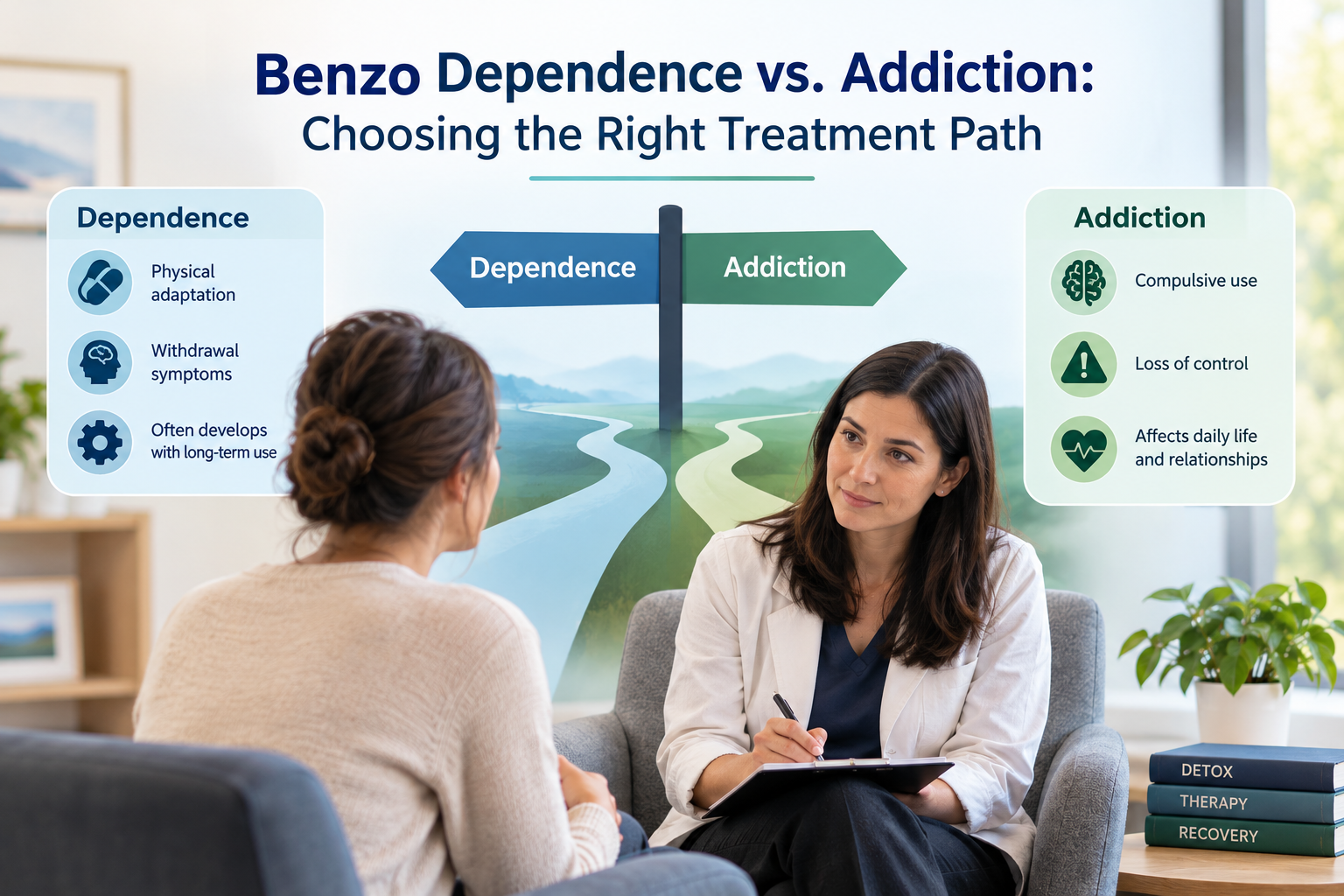
Physical dependence means the brain and body adjust to a drug. Benzodiazepines boost GABA, a chemical that calms nerve activity. With regular use, the brain lowers its own calming signals. When the dose drops or stops, the nervous system overreacts.
Dependence can develop after a few weeks of daily use, even at the prescribed dose. People with dependence usually take their medication as directed. They feel anxious, shaky, or unable to sleep when a dose wears off or when they skip one. Dependence is a predictable biological response. It does not reflect poor character or weak willpower.
What Benzo Addiction Means
Addiction, which clinicians call sedative use disorder, involves compulsive use despite harm. Doctors diagnose it with criteria from the DSM-5. Common signs include:
- Taking higher doses or taking doses more often than prescribed
- Running out of pills early or seeking extra prescriptions
- Buying pills from illicit sources
- Mixing benzos with alcohol or opioids
- Strong cravings and failed attempts to cut back
- Neglecting work, family, or health
Tolerance and withdrawal alone do not count toward a diagnosis when a patient takes the drug under medical supervision. Behavior and loss of control carry the most weight.
Key Differences at a Glance
| Feature | Dependence | Addiction |
|---|---|---|
| Dose pattern | Follows the prescription | Exceeds the prescription |
| Motivation | Avoids withdrawal and symptoms | Seeks the drug’s effect and craves it |
| Control | Can follow a treatment plan | Struggles to cut back despite harm |
| Withdrawal | Present | Present |
| Main need | Supervised taper | Taper plus addiction treatment |
Some patients have both. A person may start with a valid prescription, develop dependence, and then slide into misuse as tolerance builds. A clinical assessment sorts out where each person stands.
Why the Distinction Matters
The label shapes the treatment plan. A patient with dependence rarely needs the same program as a patient with addiction. Placing someone with simple dependence in a rapid detox program can backfire, because a fast dose reduction may trigger severe rebound anxiety, insomnia, or seizures. Leaving a patient with addiction on a prescription with no behavioral support can allow misuse to continue. Accurate assessment protects patients in both cases.
Why Quitting Abruptly Is Dangerous
Benzodiazepine withdrawal can threaten life. Unlike withdrawal from many other drugs, it can cause seizures. Symptoms include:
- Intense anxiety and panic
- Insomnia and nightmares
- Tremors and sweating
- Rapid heartbeat and high blood pressure
- Nausea and muscle pain
- Sensitivity to light and sound
- Confusion or hallucinations
Some people also report lingering symptoms for weeks or months after the last dose. Nobody should stop suddenly or cut the dose without medical guidance. Clinicians usually switch patients to a longer-acting benzodiazepine, then lower the dose gradually.
Treatment Paths for Dependence and Addiction
The right treatment path depends on the type of benzo problem, the dose, your health history, and your home environment.
Supervised Outpatient Taper
This path fits patients with dependence who have a stable home and no history of misuse. The prescriber lowers the dose in small steps, often a modest percentage at a time, with weeks between reductions. The team adjusts the pace when symptoms flare. Cognitive behavioral therapy (CBT) often runs alongside the taper to help with anxiety and sleep.
Medical Detox
Medical detox suits patients who take high doses, have a history of seizures, use alcohol or opioids alongside benzos, or lack a safe place to taper. Nurses and physicians monitor vital signs, manage symptoms, and adjust medication around the clock. Cove Detox offers medically supervised care for clients who need this level of monitoring during the first stage of recovery.
Residential Treatment
Patients with addiction often benefit from a residential stay. Living at a facility removes access to pills, builds daily structure, and gives clients intensive therapy. This option also helps people whose home environment fuels use.
Partial Hospitalization and Intensive Outpatient Programs
After detox or residential care, many clients step down to a partial hospitalization program (PHP) or an intensive outpatient program (IOP). These programs combine group therapy, individual counseling, and medical follow-up while clients live at home.

Dual Diagnosis Care
Most benzo prescriptions begin with anxiety, panic, or sleep problems. Those conditions do not disappear when the pills stop. Dual diagnosis programs treat the mental health condition and the substance problem together, using CBT, sleep therapy, and non-benzo medications. This approach lowers the risk that symptoms push the patient back toward the drug.
Questions That Point to the Right Level of Care
A clinician will ask questions like these during an assessment:
- Which benzo do you take, and at what dose?
- How long have you taken it?
- Do you ever take more than prescribed?
- Do you drink alcohol or use opioids or other drugs?
- Have you ever had a seizure or severe withdrawal?
- Do you have anxiety, depression, or trauma history?
- Does your home environment support recovery?
Honest answers help the team choose a plan that matches your risk. Patients who feel nervous about admitting misuse should remember that clinicians treat these conversations as medical information, not judgment.
How to Choose a Provider
Compare programs with these criteria:
- Licensing and credentials. Confirm state licensure and experienced medical staff.
- Taper expertise. Look for a team that adjusts the pace to each patient rather than following a fixed calendar.
- Dual diagnosis support. Ask how the program treats anxiety, insomnia, and trauma.
- Prescriber coordination. Strong programs communicate with the doctor who wrote the original prescription.
- Aftercare planning. Ask about step-down programs, alumni support, and relapse prevention.
- Insurance. Verify benefits with your insurer and the provider before admission.
Cove Detox offers consultations where prospective clients can ask these questions and learn which level of care fits their situation.
When to Seek Help Immediately
Call 911 or go to an emergency room if you or someone you know has a seizure, severe confusion, hallucinations, or chest pain during benzo withdrawal. If you feel hopeless or have thoughts of self-harm, call or text 988, the Suicide & Crisis Lifeline. For free, confidential treatment referrals, call the SAMHSA National Helpline at 1-800-662-4357.
Choose the Path That Fits Your Situation
Benzo dependence and benzo addiction share symptoms, but they call for different treatment. A careful assessment, a slow and supervised dose reduction, and support for the underlying anxiety or sleep problem give patients the best chance of lasting recovery. If you or someone you love needs help, contact Cove Detox to talk with a team member about your options.
Frequently Asked Questions
Can I become dependent on benzos if I take them exactly as prescribed?
Yes. Physical dependence can develop after several weeks of daily use, even at the prescribed dose. Dependence does not automatically mean addiction.
How do I know if I have an addiction instead of dependence?
Look at behavior. Taking more than prescribed, craving the drug, seeking extra supplies, and continuing use despite harm point toward addiction. A licensed clinician can confirm the diagnosis.
Is it safe to stop benzos on my own?
No. Sudden withdrawal can cause seizures and severe anxiety. Work with a prescriber or treatment team to build a gradual taper.
How long does a benzo taper take?
The timeline varies with the drug, dose, and length of use. Tapers often last several weeks to several months. Your clinician adjusts the pace based on your symptoms.
Do I need rehab if I only have dependence?
Not always. Many patients with dependence do well with a supervised outpatient taper and therapy. Patients with addiction, high doses, or unsafe home settings usually need a higher level of care.
Does insurance cover benzo detox and rehab?
Many plans cover detox, residential care, and outpatient programs. Coverage varies, so verify your benefits with your insurer and the treatment provider.
What happens if my symptoms get worse during a taper?
Tell your clinician right away. The team can slow the taper, hold the dose steady, or add support. A setback does not mean the plan failed.