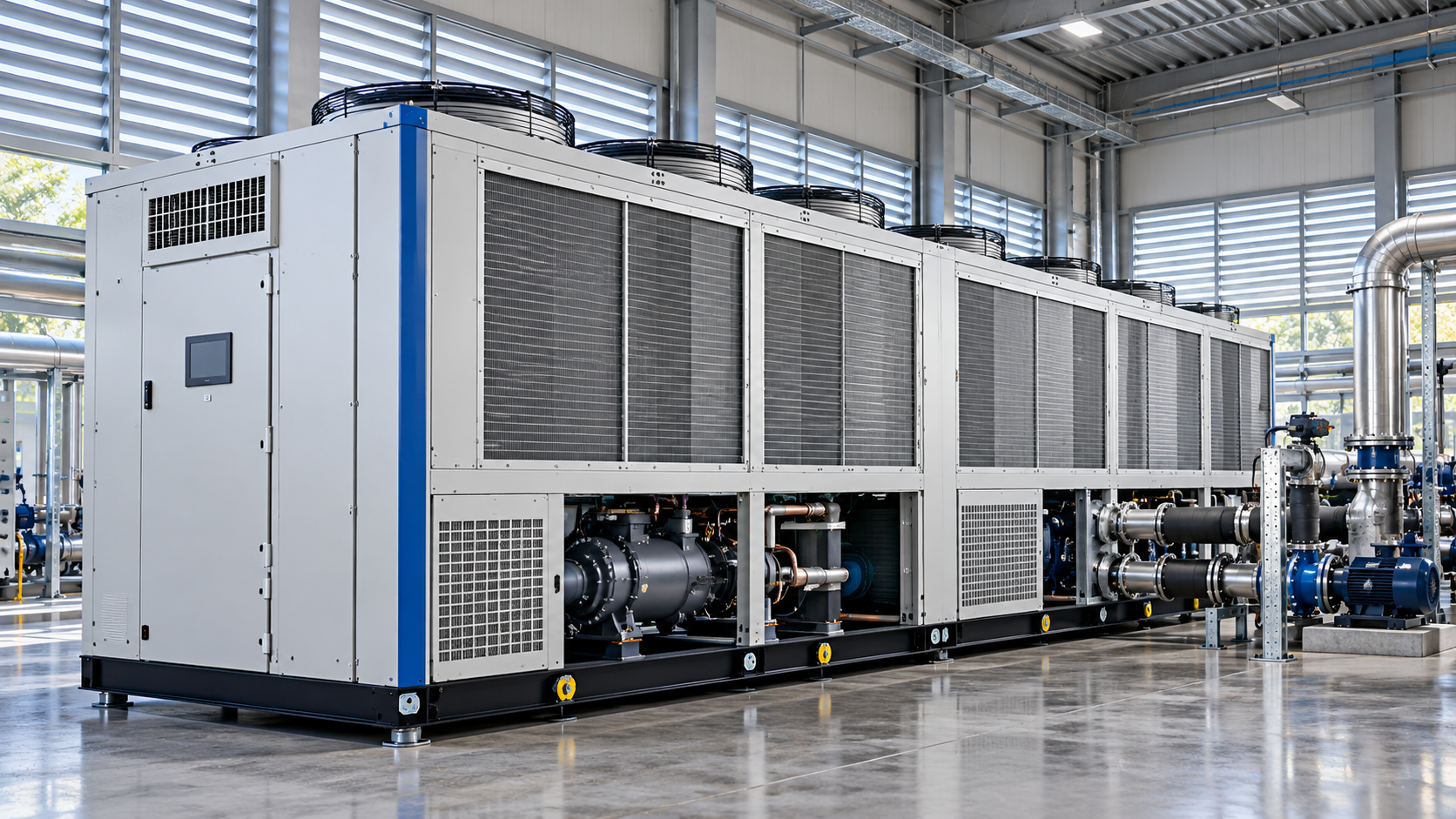

Industrial cooling plays a vital role in maintaining product quality, improving production efficiency, and protecting equipment from excessive heat. Industries such as pharmaceuticals, plastics, food processing, chemicals, and manufacturing require dependable cooling systems to maintain consistent operating temperatures. Among the available industrial cooling technologies, the Screw Chiller is a popular choice for applications that demand continuous operation and substantial cooling capacity.

Understanding how screw chillers work, where they are used, and what factors influence their performance can help businesses select an appropriate cooling solution for their operational requirements.
What Is a Screw Chiller?
A screw chiller is an industrial refrigeration system that uses a rotary screw compressor to remove heat from water or another suitable process fluid. The cooled fluid circulates through equipment, production machinery, or air-conditioning systems to absorb unwanted heat and maintain the required temperature.
Unlike smaller refrigeration systems designed primarily for limited cooling loads, screw chillers are commonly selected for medium-to-large commercial and industrial applications. Their suitability depends on factors such as cooling capacity, operating conditions, temperature requirements, and the specific compressor configuration.
Businesses evaluating industrial cooling equipment can explore Screw Chiller solutions from Aquatech Plus to understand available configurations and identify options suited to their requirements.
How Does a Screw Chiller Work?
The operation of a screw chiller is based on the refrigeration cycle, which transfers heat from a process fluid to the surrounding environment or a cooling-water circuit.
The main components generally include a screw compressor, evaporator, condenser, expansion device, refrigerant circuit, and control system.
1. Refrigerant Evaporation
Inside the evaporator, refrigerant absorbs heat from the water or process fluid. As the refrigerant absorbs this heat, it changes from a liquid or liquid-vapour mixture into vapour under the designed operating conditions. The process fluid becomes cooler and is circulated back to the application.
2. Compression
The screw compressor draws in refrigerant vapour and compresses it using rotating screw rotors. This increases the refrigerant’s pressure and temperature, allowing it to release heat in the condenser.
3. Heat Rejection
The hot, high-pressure refrigerant enters the condenser, where it releases heat. Depending on the system design, heat may be rejected through ambient air or transferred to cooling water.
4. Expansion and Recirculation
The refrigerant passes through an expansion device, reducing its pressure and temperature before returning to the evaporator. The refrigeration cycle then repeats to maintain the required cooling conditions.
A properly selected and maintained system helps deliver stable cooling performance across the intended operating range.
What Are the Main Benefits of a Screw Chiller?
Screw chillers offer several advantages for facilities that require dependable industrial cooling.
Reliable operation: Rotary screw compressors are designed for continuous-duty applications when correctly selected, installed, and maintained.
High cooling capacity: These systems can support substantial cooling loads in manufacturing facilities and large commercial installations.
Flexible capacity control: Depending on the compressor and control arrangement, cooling output can be adjusted to respond to changes in demand.
Consistent process temperatures: Appropriate sizing and control help maintain the temperature conditions needed for production quality and equipment protection.
Industrial versatility: Screw chillers are available in different configurations to accommodate varying installation environments, heat-rejection requirements, and process conditions.
Actual energy efficiency depends on the compressor design, part-load performance, ambient conditions, heat-exchanger sizing, and overall system integration. Buyers should compare documented performance data under comparable operating conditions instead of relying on general efficiency claims.
What Is the Difference Between Air-Cooled and Water-Cooled Screw Chillers?
The main difference is how each system rejects heat from the refrigerant.
An air-cooled screw chiller uses fans and an air-cooled condenser to transfer heat to the surrounding air. It generally requires less water-side infrastructure, making it attractive for facilities where cooling-water availability is limited.
A water-cooled screw chiller transfers heat to circulating cooling water through a condenser. It is often considered for installations with suitable cooling towers, water-treatment arrangements, and dedicated plant-room infrastructure.

The correct choice depends on local climate, water availability, installation space, maintenance resources, operating hours, and the required energy performance. A lifecycle cost comparison should include electricity consumption, water use, maintenance, installation costs, and auxiliary equipment.
Which Industries Commonly Use Screw Chillers?
Screw chillers support various applications where heat must be removed reliably from processes or buildings.
Plastic manufacturing: Cooling injection moulding machines, extrusion equipment, and process circuits can help maintain product consistency and production-cycle stability.
Pharmaceutical manufacturing: Controlled cooling supports selected production processes and equipment, subject to the facility’s validated temperature requirements.
Food and beverage processing: Chilled water can support equipment cooling, ingredient processing, and other applications where appropriate temperature control is essential.
Chemical processing: Suitable chiller configurations can remove process heat and help maintain operating conditions for compatible industrial processes.
HVAC systems: Larger commercial and industrial buildings may use screw chillers to supply chilled water for central air-conditioning systems.
Every application requires an assessment of the cooling load, supply and return temperatures, fluid properties, operating schedule, and applicable industry requirements.
How Should Businesses Select the Right Screw Chiller?
Selecting a suitable system requires more than comparing nominal tonnage or purchase prices. An accurate assessment of operating conditions helps prevent undersizing, unnecessary energy consumption, and avoidable maintenance problems.
Important considerations include:
- Cooling capacity: Calculate the actual process heat load and consider realistic future production requirements.
- Temperature range: Specify the required chilled-fluid supply and return temperatures.
- Operating environment: Account for ambient temperatures, humidity, available space, and ventilation.
- Heat-rejection method: Determine whether air-cooled or water-cooled equipment is more appropriate.
- Energy performance: Compare COP, part-load efficiency, and expected annual energy consumption under comparable conditions.
- Fluid requirements: Confirm compatibility with water, glycol mixtures, or other specified process fluids.
- Service support: Evaluate installation expertise, spare-parts availability, maintenance requirements, and technical assistance.
Working with experienced Screw Chiller Manufacturers can help industrial buyers assess these factors and choose equipment that matches their process requirements. Requesting a detailed technical proposal with operating conditions and performance data also makes comparisons more meaningful.
How Can Regular Maintenance Improve Screw Chiller Performance?
Preventive maintenance helps preserve performance, reduce unexpected interruptions, and identify developing problems before they affect production.
A maintenance programme should include inspections of refrigerant conditions, compressor operation, electrical connections, heat exchangers, filters, pumps, fans, and safety controls, as applicable to the equipment design. Water-cooled systems may also require cooling-water treatment and condenser cleaning to control scale and fouling.
Operators should monitor operating pressures, temperatures, electrical consumption, alarms, and unusual noise or vibration. Maintenance intervals must follow the manufacturer’s recommendations and reflect actual operating conditions.
Proper fluid flow, clean heat-transfer surfaces, correct refrigerant charge, and functional controls all contribute to dependable system operation.
Conclusion
A screw chiller can be an effective industrial cooling solution for facilities that need reliable temperature control, substantial cooling capacity, and continuous operation. Its performance, however, depends on correct sizing, suitable system configuration, installation quality, and preventive maintenance.
Before investing in a new cooling system, businesses should evaluate their process requirements, compare air-cooled and water-cooled options, and review verified technical specifications. Aquatech Plus provides industrial cooling solutions for businesses seeking equipment tailored to their applications. Visit the Screw Chiller product page to explore the available information and enquire about a suitable cooling solution.
FAQ
What is a screw chiller used for?
A screw chiller is used to remove heat from water or process fluids in industrial and commercial applications. It is commonly used in plastic processing, pharmaceutical manufacturing, chemical plants, food processing, and large HVAC systems where reliable cooling is required.
How does a screw chiller work?
A screw chiller uses a rotary screw compressor to compress refrigerant vapour. The refrigerant absorbs heat in the evaporator, releases heat through the condenser, and passes through an expansion device before repeating the refrigeration cycle.
What is the difference between an air-cooled and a water-cooled screw chiller?
An air-cooled screw chiller rejects heat into the surrounding air using fans and a condenser. A water-cooled screw chiller transfers heat to circulating water and typically requires a cooling tower or another suitable heat-rejection system. The right option depends on the facility’s climate, utilities, installation space, and operating costs.
How do I select the right screw chiller capacity?
Determine the actual cooling load, required fluid temperatures, flow rate, operating schedule, and ambient conditions. Consider future production needs and compare manufacturer performance data at the intended operating conditions. Consulting an industrial cooling specialist can help prevent incorrect sizing.
Are screw chillers energy-efficient?
Screw chillers can provide efficient cooling when correctly sized and operated within their design conditions. Actual energy consumption depends on compressor technology, part-load performance, condenser conditions, fluid temperatures, and maintenance. Compare COP and part-load efficiency data when evaluating different models.