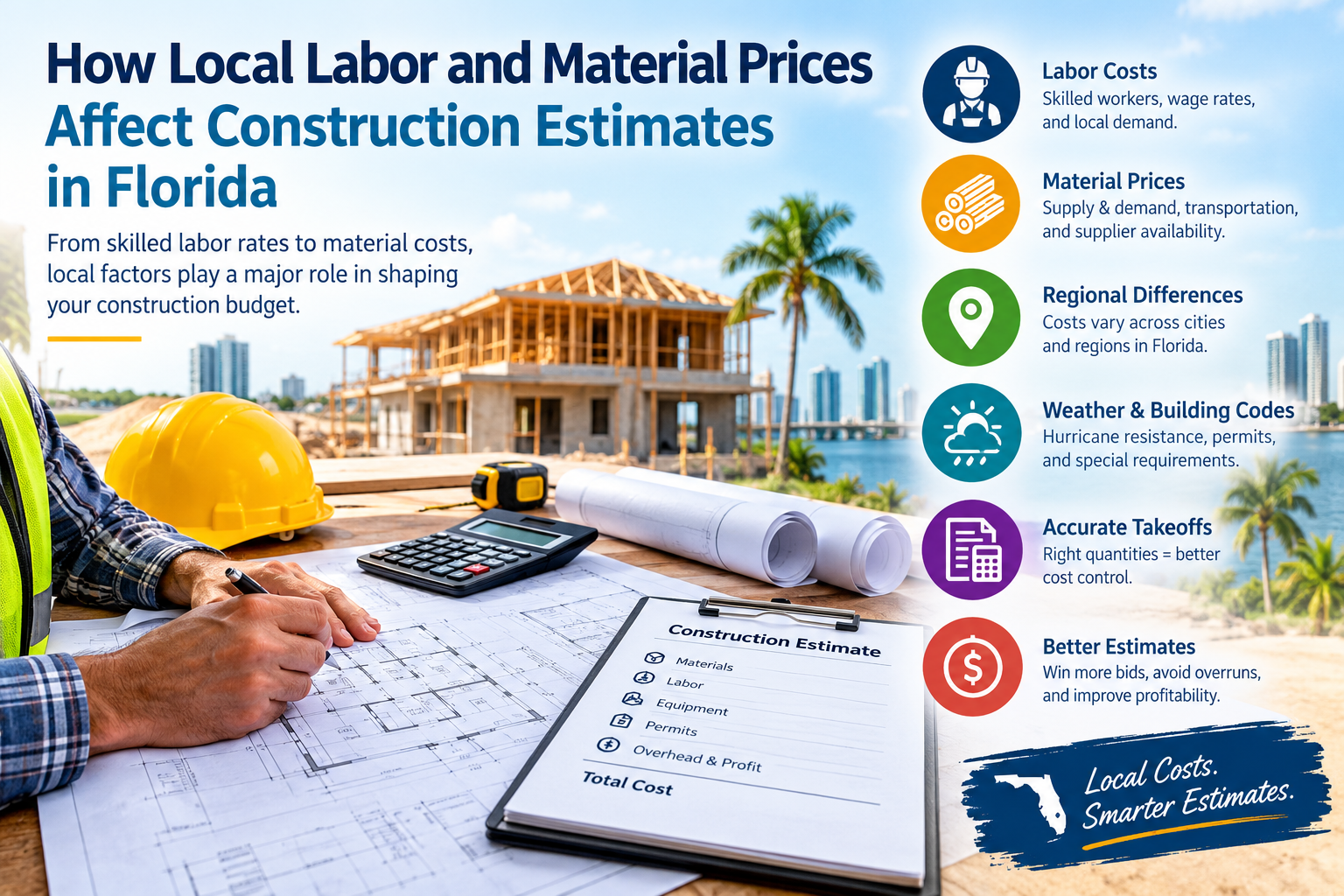
Construction projects require careful planning, accurate cost calculations, and a clear understanding of local market conditions. Whether contractors are building residential homes, commercial properties, or renovating existing structures, labor and material prices play a major role in determining the total project cost. In Florida, these expenses can vary depending on the location, project size, availability of skilled workers, and supplier pricing.

Understanding local labor and material costs helps contractors prepare realistic estimates, avoid unexpected expenses, and submit competitive bids. It also enables property owners and developers to make informed decisions before construction begins. By considering regional pricing differences and current market conditions, construction professionals can improve budgeting and manage their projects more efficiently.

Understanding Local Labor Costs
Labor is one of the most significant components of a construction estimate. Residential and commercial projects require skilled professionals for framing, roofing, plumbing, electrical installation, concrete work, and finishing. The cost of hiring these workers can vary across Florida because of differences in local wage rates, workforce availability, and construction demand.
For example, labor expenses in busy metropolitan areas may differ from those in smaller communities. Projects requiring specialized skills or tight deadlines may also involve higher labor costs.
Contractors should research local wage rates and obtain updated quotes from subcontractors before preparing their estimates. They should also consider overtime, supervision, payroll-related expenses, insurance, and other applicable costs.
Accurate labor calculations help contractors develop realistic budgets, allocate resources properly, and avoid underestimating the cost of completing construction work.
How Material Prices Influence Construction Estimates
Building materials represent another major portion of construction expenses. Concrete, lumber, steel, drywall, roofing materials, insulation, windows, and flooring can all experience price fluctuations due to supply and demand, transportation expenses, and supplier availability.
In Florida, material costs may vary between regions depending on shipping distances, local distribution networks, and market conditions. Materials that require specialized performance or installation may also affect the overall budget.
Contractors should obtain current supplier quotations rather than relying entirely on historical prices. They should compare products that meet project specifications and include delivery charges, applicable taxes, and other purchasing expenses.
For projects with longer construction schedules, estimators should also consider the possibility of price changes between the estimating stage and the actual purchase date.
Using reliable local pricing information helps contractors create more accurate construction estimates and maintain better financial control.
The Importance of Accurate Material Takeoffs
Accurate material takeoffs are essential for calculating the quantities required for a construction project. This process involves reviewing architectural drawings, blueprints, and project specifications to determine the amounts of materials needed for each construction activity.
For example, estimators calculate concrete quantities for foundations, lumber for framing, roofing materials for roof installations, and drywall for interior walls.
When quantities are calculated incorrectly, contractors may purchase excessive materials or experience shortages that delay construction. Both situations can increase project expenses.
Professional construction estimating and material takeoff services can help contractors measure quantities, organize material lists, and identify missing items before construction begins.
Combining accurate quantity calculations with current local supplier prices provides a stronger foundation for preparing reliable estimates in Florida’s construction market.
Accounting for Florida’s Weather and Building Requirements
Florida’s weather conditions can influence construction methods, material selection, and project costs. Hurricanes, strong winds, heavy rainfall, and high humidity may require contractors to consider specific building materials and installation methods.
Depending on the building’s location, design, and applicable regulations, projects may require impact-resistant windows, wind-resistant roofing systems, reinforced structural components, or moisture-resistant materials.

These requirements can increase material and labor expenses, making it important to review the project’s specifications and applicable building codes before preparing an estimate.
Contractors should also account for potential weather-related scheduling disruptions when they are relevant to the project. Delays can affect labor productivity, equipment rentals, and material deliveries.
Considering these factors during the estimating stage helps create a more realistic budget and reduces the risk of unexpected expenses.
Improving Construction Bids and Profitability
Contractors must balance competitive pricing with the need to maintain profitability. An estimate that is too high may reduce the chances of winning a contract, while an estimate that is too low can lead to financial losses.
Understanding local labor rates and material prices helps contractors calculate project costs more accurately. They can compare supplier quotations, evaluate subcontractor bids, and identify opportunities to improve efficiency without compromising construction quality.
A detailed estimate should include material costs, labor expenses, equipment, transportation, permits, overhead, and an appropriate profit margin.
For Florida contractors, accurate pricing information supports better bidding decisions and helps establish realistic expectations with clients. It also reduces the likelihood of costly adjustments after construction begins.
Preventing Budget Overruns
Budget overruns often occur when contractors overlook expenses, use outdated prices, miscalculate quantities, or fail to account for project changes.
Regular cost reviews can help identify potential problems before they become serious. Contractors should verify material quantities, update supplier quotations, review labor requirements, and confirm that all necessary work is included in the estimate.
A contingency allowance may also be appropriate for unforeseen conditions, depending on project complexity and risk. However, contingency funds should supplement accurate estimating rather than replace proper planning.
Clear documentation of assumptions, exclusions, and allowances helps clients understand how the estimated project cost was calculated.
Using Professional Estimating Tools and Services
Modern construction estimating software can simplify measurements, organize material quantities, and update cost calculations when project drawings change. These tools help estimators manage complex information and reduce repetitive manual work.
However, software alone cannot guarantee accuracy. Reliable estimates still require complete project documents, current local prices, correct measurements, and professional review.
Contractors who need additional support may benefit from professional construction estimating services. Experienced estimators can help prepare detailed quantity takeoffs, evaluate labor requirements, and organize cost breakdowns for residential and commercial projects.
Combining digital tools with professional expertise can improve efficiency, reduce avoidable errors, and support better construction planning.
Conclusion
Local labor and material prices have a significant impact on construction estimates in Florida. Regional wage differences, supplier costs, material availability, weather-related requirements, and applicable building codes can all influence the final project budget.
By researching current local prices, preparing accurate material takeoffs, reviewing labor expenses, and accounting for project-specific risks, contractors can develop more dependable estimates.
Whether planning a residential home, commercial building, or renovation, understanding local construction costs helps contractors prepare competitive bids, control expenses, and protect profitability. A systematic estimating process provides a strong financial foundation for completing construction projects efficiently and successfully.