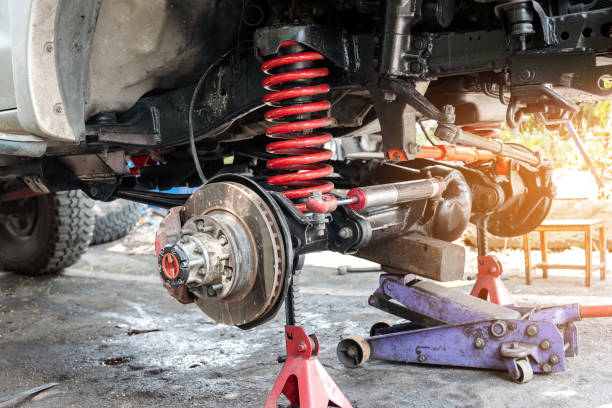
Most drivers do not think about their suspension until something feels wrong. A bouncy ride, a car that drifts in turns, or a clunk over a speed bump are all small hints that parts are wearing out. Addressing suspension repair in Indianapolis IN early keeps those hints from becoming bigger repair bills and unsafe driving conditions. Local mechanics like Paul’s Repair Shop often see cars that could have been fixed cheaply if the signs had been caught sooner, so this article walks through what your suspension does, how to spot trouble, and what to expect when it is time for service.

What Does Your Suspension Actually Do?
Think of the suspension as the link between your car and the road. It supports the weight of the vehicle, absorbs bumps, and keeps the tires in contact with the pavement so you can steer and stop with confidence.

Smooth Ride and Steady Handling
When every component is in good shape, the car feels planted. Shocks and struts control how much the body moves after a bump, while springs hold the vehicle at the right height. Worn parts let the car bounce, lean, and dive, which affects comfort and, more importantly, control during emergency maneuvers.
Parts That Work Together
Springs, shocks or struts, control arms, ball joints, bushings, and sway bar links all share the load. A weak part rarely fails alone. Once one component loosens or wears, it puts extra strain on its neighbors, which is why a small problem can spread to a larger one if it is left alone.
Signs Your Car Is Asking for Help
Suspension wear is gradual, so many drivers adjust without noticing. Comparing how the car feels today with how it felt a year ago can be revealing.
Sounds You Should Not Ignore
Clunking over bumps, squeaking when you press down on a corner of the car, or creaking when turning can point to worn bushings, joints, or mounts. A knocking sound from a wheel area deserves a prompt look.
Changes You Can Feel From the Driver’s Seat
Excessive bouncing after a dip, nose diving under braking, pulling to one side, or uneven tire wear all suggest the system is not doing its job. If the car feels loose at highway speed, do not wait for a convenient weekend. A professional inspection can confirm whether suspension repair in Indianapolis IN is needed before the issue affects safety.
How Local Roads Take a Toll on Your Suspension
Midwest weather is tough on vehicles. Even a well-maintained car faces constant stress from the pavement.
Potholes and Freeze-Thaw Cycles
Water seeps into cracks, freezes, expands, and breaks apart the road surface. Each pothole sends a sharp impact through the wheel and into the suspension. After a harsh winter, it is smart to have the alignment and suspension checked even if nothing feels obviously wrong.
Everyday Driving Habits
Speeding over railroad crossings, hitting curbs, and carrying heavy loads all accelerate wear. Slowing down over rough patches and keeping cargo within the recommended weight limits are simple habits that extend the life of your components.
What Different Repairs Usually Involve
Not every suspension problem calls for the same fix. The table below outlines common repairs and what they generally involve. Actual work depends on your vehicle and the inspection results.

| Component | Common Symptom | What the Repair Involves |
|---|---|---|
| Shocks or struts | Bouncing, nose diving | Replace in pairs on the same axle for even handling |
| Control arm bushings | Clunking, drifting | Press out worn bushings or replace the arm |
| Ball joints | Knocking, uneven tire wear | Replace the joint and check alignment |
| Sway bar links | Rattling in turns | Swap the links and inspect the mounts |
| Coil springs | Sagging or uneven ride height | Replace the spring and inspect related parts |
Many of these jobs are followed by an alignment, because new parts change the geometry that keeps your tires wearing evenly and your steering centered.
Choosing a Shop You Can Trust
Quality work depends as much on the shop as on the parts. When comparing options for suspension repair in Indianapolis IN, look past the lowest price and focus on a few key points.
Experience and Diagnostics
A good technician inspects the vehicle, test drives it when appropriate, and explains what they found. They should show you worn parts or describe them clearly instead of simply listing a repair.
Clear Estimates
Ask for a written estimate that separates parts and labor. Honest shops tell you which repairs are urgent and which can wait, so you can plan your budget without pressure.
Warranty and Follow-Up
Reliable shops stand behind their work. Ask about warranty coverage on both parts and labor, and whether they recommend an alignment afterward. A shop that welcomes your questions is usually one worth returning to.
Conclusion
Your suspension quietly affects comfort, tire life, and safety every time you drive. Pay attention to new noises and changes in handling, and do not postpone an inspection when something feels off. When you need dependable suspension repair in Indianapolis IN, choose a shop that explains the work clearly and stands behind it.
FAQs
How often should I have my suspension inspected?
A good rule is to have it checked once a year or whenever you notice changes in ride or handling. Many shops include a suspension look during tire rotations or alignments. Regular checks catch worn parts early, which usually means simpler repairs and less damage to tires and nearby components.
Can I drive with a worn suspension?
You may be able to for a short time, but it is not recommended. Worn parts reduce control, lengthen braking distances, and can cause tires to wear unevenly. If a component such as a ball joint fails completely, the result can be sudden loss of steering control, so get it checked promptly.
Do shocks and struts need to be replaced in pairs?
Replacing them in pairs on the same axle is generally advised. A new unit paired with an old one can lead to uneven handling and uneven wear. Your technician can recommend the right approach after inspecting the vehicle and checking the condition of the opposite side.
Will suspension repair affect my tire wear?
Yes, and usually in a good way. Worn suspension parts and poor alignment cause tires to wear unevenly and wear out early. After repairs and a proper alignment, tires make better contact with the road and last longer, so the work often helps protect the money you spend on tires.