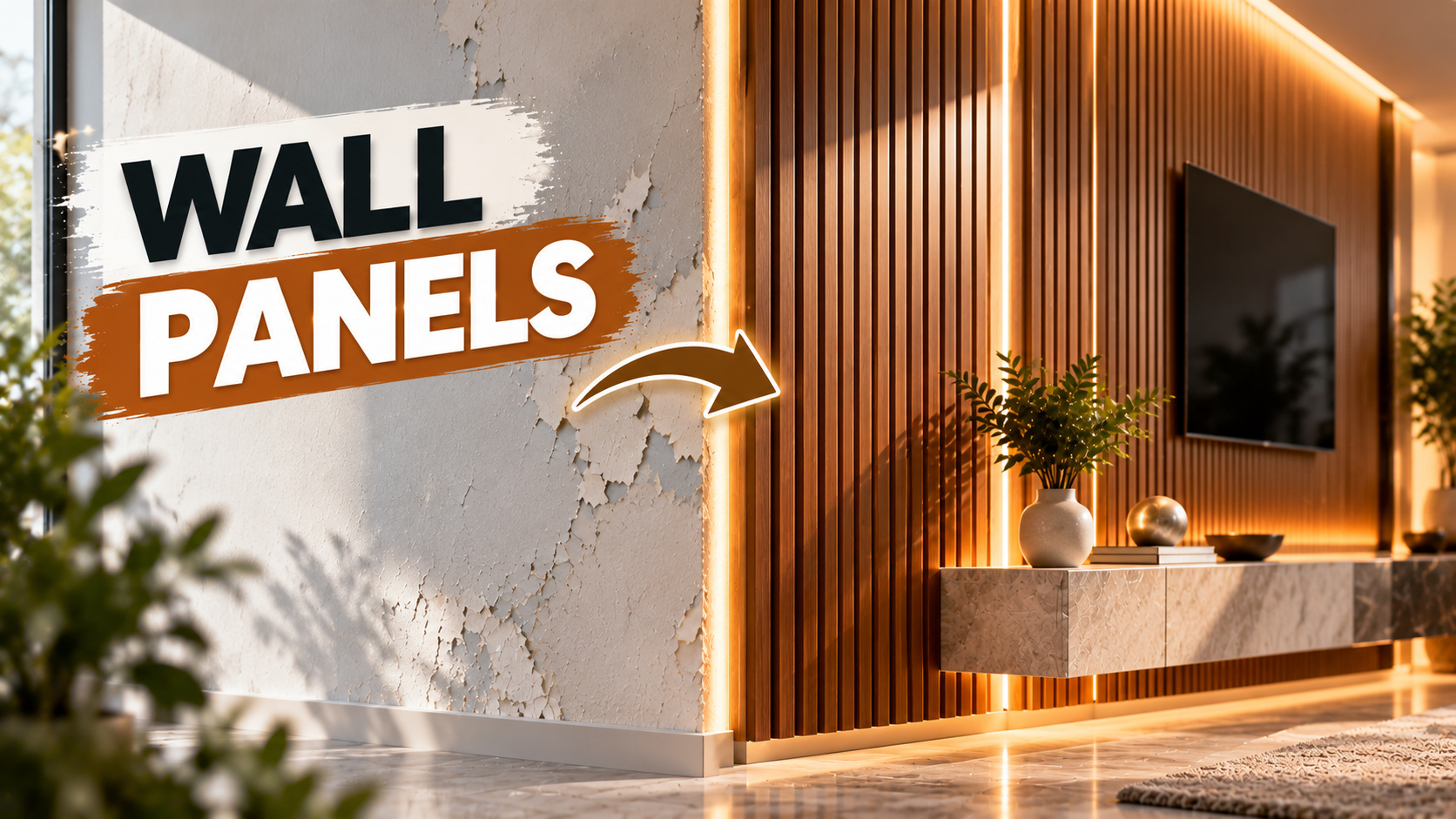

Yes, wall panels can often be installed over existing painted walls without removing the paint, provided the surface is stable, clean, dry, and suitable for the chosen installation method. This can simplify home renovations by reducing surface preparation and avoiding unnecessary repainting. However, loose paint, dampness, uneven plaster, and damaged wall surfaces must be addressed before installation. Choosing the right wall panels and checking the manufacturer’s installation requirements will help determine whether your existing wall is suitable.

For many homeowners, installing panels over painted walls offers a practical way to update a living room, bedroom, or hallway without undertaking a complete renovation. The important consideration is not simply whether the wall is painted, but whether the existing surface can support the panels securely over time.
When Can Wall Panels Be Installed Over Painted Walls?
Wall panels can generally be installed over painted surfaces when the paint is firmly attached and the underlying wall is in good condition.
Before proceeding, check the following conditions:
- Stable paint: The existing paint should not peel, flake, or separate from the wall.
- Clean surface: Dust, grease, and other contaminants should be removed.
- Dry wall: There should be no active leaks, damp patches, or signs of moisture damage.
- Suitable surface: The wall should be reasonably even and capable of supporting the chosen panel system.
- Compatible installation method: The adhesive, fasteners, or mounting system must be suitable for the wall and panel material.
If these conditions are met, removing all the existing paint may not be necessary. Some installation systems can be fitted directly over suitable painted walls, while others require sanding, priming, battens, or additional preparation.
Always follow the panel manufacturer’s installation instructions rather than assuming every product can be fitted over paint.
Why Should You Check the Existing Paint Before Installation?
The strength of the existing paint layer can affect how securely the panels remain attached. If the paint is loose, a panel attached with adhesive may eventually separate along with the paint beneath it.
Inspect the wall carefully before beginning the work.
Look for Peeling or Flaking Paint
Paint that is already lifting or flaking should not be treated as a reliable installation surface. Remove loose material and repair the affected area before proceeding.
If peeling is widespread, the underlying cause should be investigated rather than simply covering the wall.
Check for Cracks and Surface Damage
Small surface imperfections may be repairable before installation, but significant cracks, crumbling plaster, or loose sections require closer assessment.
Panels should not be used to conceal structural problems or unstable wall finishes.
Check for Dampness
Damp walls can compromise adhesives and damage certain panel materials. Water may also become trapped behind an incorrectly installed panel system.
Resolve leaks and moisture problems, allow the wall to dry properly, and confirm that the surface is suitable before covering it.
Which Wall Panels Are Suitable for Installation Over Existing Paint?
Different panel types use different fixing systems, so compatibility must be checked before choosing a product.
PVC Wall Panels
PVC panels are available in different finishes and may use adhesive, mechanical fixings, or dedicated installation systems. Whether they can be installed over painted walls depends on the product and the condition of the surface.
Check the manufacturer’s guidance for wall preparation, adhesive compatibility, and any restrictions on the intended room.
Laminated Wall Panels
Laminated panels can provide decorative finishes for living rooms, bedrooms, and other suitable interior spaces. Their installation requirements depend on their construction and mounting system.
Confirm that the painted wall can support the chosen system and that the fixing method is compatible with the panel.
Wood and Wood-Look Panels
Wood and wood-look panels may be installed using adhesives, screws, battens, or other mounting methods. Heavier panels may require mechanical support rather than relying on the paint surface and adhesive alone.
Consider the panel weight, wall construction, and fixing requirements before installation.
Three-Dimensional Decorative Panels
Three-dimensional panels can have uneven backs, raised designs, or specific fixing requirements. The wall may need additional preparation to ensure secure attachment and a consistent finished appearance.
Check the manufacturer’s recommendations, especially for heavier or more elaborate designs.

How Do You Install Wall Panels Over Existing Painted Walls?
The installation process varies by product, but a careful sequence helps reduce common problems.
Step 1: Inspect the Wall
Check the paint, plaster, and overall wall condition. Identify peeling areas, cracks, dampness, uneven sections, and any other defects that could affect installation.
Step 2: Clean the Surface
Remove dust, grease, and dirt using a cleaning method suitable for the existing finish. Allow the surface to dry completely before proceeding.
Step 3: Prepare the Wall as Required
Remove loose paint, repair damaged sections, and level the surface where necessary. Sanding or priming should only be carried out when required by the installation system and with appropriate precautions.
Step 4: Measure and Plan the Layout
Measure the wall and plan panel positions before fixing anything in place. Account for corners, sockets, switches, edges, and decorative trims.
Accurate planning helps minimise unnecessary cuts and material waste.
Step 5: Use the Correct Fixing System
Follow the manufacturer’s instructions for adhesive application, mechanical fixings, battens, or mounting accessories. Do not rely on an adhesive that is incompatible with the paint, wall, or panel material.
Step 6: Check Alignment and Finishing
Ensure the panels are level, evenly spaced, and securely fitted. Finish the edges and joints according to the product’s installation requirements.
For heavy panels, complex layouts, or uncertain wall conditions, professional installation is advisable.
What Are the Benefits of Installing Wall Panels Without Removing Paint?
When the existing wall is suitable, installing panels without stripping all the paint can simplify the renovation process.
Potential advantages include:
- Less preparation work: Removing sound paint may be unnecessary.
- Reduced mess: Avoiding unnecessary paint removal can limit dust and debris.
- Faster renovation: Suitable surfaces may require fewer preparation steps.
- Updated appearance: Panels can change the look of an interior without repainting the entire wall.
- Flexible design options: Different panel finishes can complement existing furniture and flooring.
These advantages depend on the condition of the wall and the installation method. Skipping necessary repairs can create problems that cost more to correct later.
What Mistakes Should You Avoid During Installation?
Installing panels over an unsuitable surface can lead to loose panels, visible gaps, uneven finishes, or moisture-related damage.
Avoid these common mistakes:
- Installing over peeling paint.
- Ignoring dampness or water leaks.
- Using an incompatible adhesive.
- Failing to account for heavy panels and their support requirements.
- Skipping necessary wall repairs.
- Ignoring manufacturer instructions.
- Covering electrical access points or planning cuts incorrectly.
A secure installation begins with a sound wall, not with the panel itself.
If the wall has extensive damage or the paint condition is uncertain, have it assessed before starting the installation.
Conclusion
Wall panels can often be installed over existing painted walls without removing all the paint, provided the surface is stable, clean, dry, and compatible with the selected installation method. Some walls need only cleaning and inspection, while others require sanding, priming, repairs, or mechanical support.
Before beginning, check the paint condition, resolve moisture problems, confirm the manufacturer’s requirements, and plan the panel layout carefully. For guidance on selecting suitable materials and coordinating interior finishes, consult the Best Home Interior Company in Aizawl, Mizoram and choose an installation approach that supports a durable, well-finished result.
Frequently Asked Questions
1. Can wall panels be installed directly over painted walls?
Yes, if the paint is stable, the wall is clean and dry, and the selected panel system permits installation over painted surfaces. Some products require additional preparation.
2. Do I need to remove old paint before installing wall panels?
Not necessarily. Firmly attached paint may be suitable, but peeling, flaking, or poorly bonded paint should be removed and the surface repaired before installation.
3. Can wall panel adhesive stick to glossy paint?
Adhesion depends on the paint, adhesive, panel material, and surface preparation. Glossy surfaces may require sanding or a compatible primer, according to the manufacturer’s instructions.
4. Can wall panels be installed over damp or damaged walls?
No. Moisture problems and unstable wall surfaces should be resolved before installation. Covering them can lead to poor adhesion and further damage.
5. Is professional installation necessary for wall panels?
Not for every product, but professional installation can be useful for heavy panels, complex designs, uneven walls, or situations where the correct fixing method is uncertain.