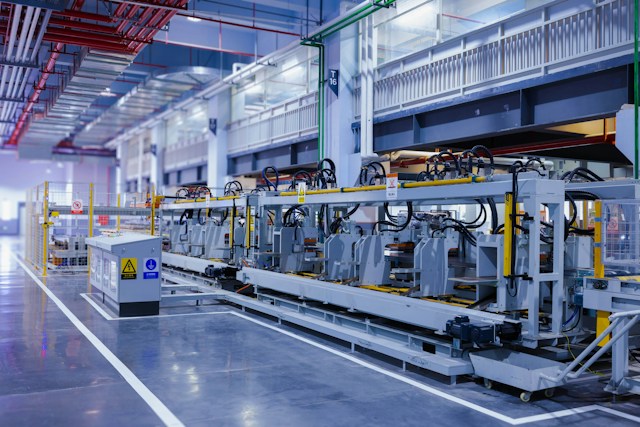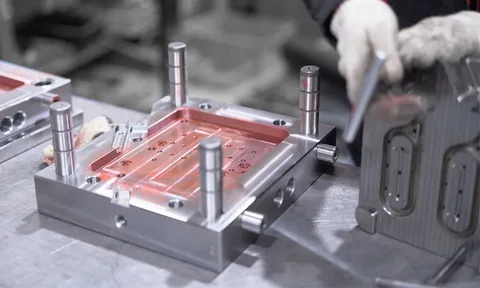
Plastic injection molding is widely used in modern manufacturing to produce durable, precise, and consistent plastic components. From automotive parts and electronic housings to medical equipment and consumer products, injection-molded components play an important role in numerous industries. However, producing high-quality parts begins long before the molding machine starts operating. Careful mold design is essential for achieving dimensional accuracy, minimizing defects, and maintaining efficient production.

The process of plastic injection mold making involves several technical considerations, including material selection, mold geometry, cooling systems, gate placement, and manufacturing costs. Understanding these factors helps manufacturers develop molds that meet product requirements while supporting reliable, repeatable production.

1. Understand Product Requirements Before Designing the Mold
The first step in designing a plastic injection mold is to understand the requirements of the finished component. These requirements include the part’s dimensions, shape, intended application, mechanical properties, appearance, and operating environment.
For example, a component used in an industrial machine may require high strength and dimensional stability, while a consumer product housing may prioritize surface finish and visual appeal. Components exposed to heat or chemicals may also require specialized plastic materials.
Designers should evaluate the product specifications before creating the mold layout. They must identify critical dimensions, functional features, wall thickness requirements, and any areas that may present manufacturing challenges.
A clear understanding of these requirements reduces the risk of costly design modifications later. It also ensures that the mold can consistently produce parts that meet the intended performance standards.
2. Select the Right Plastic Material
Material selection directly influences mold design, production performance, and final product quality. Different plastics have different flow characteristics, shrinkage rates, melting temperatures, and mechanical properties. These differences must be considered during the design process.
Common materials used in injection molding include:
- ABS: Often selected for its impact resistance, strength, and surface appearance.
- Polypropylene (PP): Valued for its chemical resistance, flexibility, and lightweight properties.
- Polyethylene (PE): Commonly used for containers, packaging components, and various industrial products.
- Polycarbonate (PC): Suitable for applications requiring impact resistance and dimensional performance.
- Nylon (PA): Frequently used for engineering components that require strength and wear resistance.
The selected material affects the dimensions of the mold, gate design, cooling requirements, and processing conditions. For example, materials with higher shrinkage may require additional consideration when determining cavity dimensions.
During plastic injection mold making, designers should account for the specific grade of resin rather than relying on general material assumptions. Material suppliers’ technical data and molding trials can help validate design decisions.
3. Maintain Appropriate Wall Thickness
Wall thickness is one of the most important considerations in injection mold design. Uneven or unnecessarily thick sections can lead to defects, longer cooling cycles, and inconsistent dimensions.
When a part contains thick sections next to thin sections, different cooling rates may cause internal stresses, sink marks, or warping. Maintaining reasonably uniform wall thickness helps plastic flow more consistently and allows the component to cool more evenly.
The appropriate thickness depends on the selected plastic, part geometry, structural requirements, and manufacturing process. Therefore, designers should follow material-specific guidelines rather than applying one thickness standard to every component.
Where additional strength is required, ribs and supporting features can often provide reinforcement without creating excessively thick solid sections. Properly designed ribs can improve rigidity while supporting efficient material use.
4. Design Effective Gate and Runner Systems
The gate and runner system controls how molten plastic travels from the injection machine into the mold cavity. Its design influences filling behavior, pressure requirements, material waste, and the appearance of the finished component.
An unsuitable gate location may cause incomplete filling, visible gate marks, weld lines, or uneven flow. Poor runner design can also increase pressure losses and contribute to inconsistent cavity filling.
Designers should consider the part’s shape, material properties, cavity arrangement, and cosmetic requirements when selecting gate type and location. Common gate options include edge gates, pin gates, and other designs suited to specific mold configurations.
For multi-cavity molds, the runner system should distribute material as consistently as practical across the cavities. Mold flow simulation can help identify potential filling problems before the mold is manufactured.
A well-designed feed system supports stable production and can reduce the need for repeated process adjustments.
5. Optimize the Cooling System
Cooling often accounts for a substantial portion of the injection molding cycle. An effective cooling system helps the plastic solidify at an appropriate rate while maintaining the required component dimensions.
Cooling channels should be positioned to remove heat efficiently from different areas of the mold. Poor channel placement may result in uneven cooling, longer cycle times, warping, and dimensional inconsistencies.
Designers must consider the part’s geometry, wall thickness, material, and expected production volume when planning cooling channels. Areas with thicker sections may require particular attention because they generally take longer to cool.
Advanced options, such as conformal cooling channels produced through additive manufacturing, can sometimes improve heat transfer around complex geometries. However, their suitability depends on tooling costs, design complexity, and production requirements.

Proper cooling design helps balance productivity with product quality. It can also reduce energy consumption per part when it shortens cycle times without compromising dimensional stability.
6. Include Proper Draft Angles and Ejection Features
After the plastic component has cooled sufficiently, it must be removed from the mold without damage. Draft angles and ejection features are therefore essential elements of mold design.
Draft angles allow the molded part to release more easily from the cavity and core surfaces. Insufficient draft can cause drag marks, scratches, sticking, or deformation during ejection. The required angle depends on factors such as surface texture, material, part depth, and geometry.
Ejection systems may use ejector pins, sleeves, stripper plates, or other mechanisms. Their placement should distribute ejection forces appropriately and avoid damaging visible or structurally sensitive areas.
Designers must also consider undercuts, side actions, and other features that may complicate mold opening. Whenever possible, simplifying the part geometry can reduce tooling complexity and maintenance requirements.
Careful planning of the release and ejection process improves production consistency and helps protect both the molded parts and the mold itself.
7. Choose Suitable Mold Materials and Construction
The material used to manufacture a mold affects its durability, machinability, maintenance requirements, and overall cost. Tool steels are commonly selected for demanding applications because they can provide good strength, wear resistance, and service life.
Aluminum molds may be appropriate for prototypes, lower-volume production, or applications where rapid tooling is a priority. Steel molds are often preferred for higher production volumes or applications involving greater wear, although the best choice depends on the specific requirements.
Designers should consider production volume, resin abrasiveness, operating conditions, required surface finish, and expected tool life before choosing mold materials.
The mold’s construction should also allow practical maintenance. Replaceable inserts, accessible cooling connections, and well-planned component layouts can simplify repairs and reduce downtime.
Working with experienced manufacturing specialists, such as Nubsplastics Inc, can help businesses evaluate tooling requirements and select an approach suited to their product and production objectives.
8. Plan for Venting and Defect Prevention
As molten plastic enters a mold cavity, the air already inside must escape. If air cannot leave efficiently, the result may include burn marks, incomplete filling, trapped gas, or other molding defects.
Vents should be positioned in appropriate locations, including areas where air is likely to become trapped during filling. Their dimensions must be suitable for the selected resin and molding conditions.
Designers should also evaluate potential weld lines, sink marks, flash, and shrinkage during the design stage. Simulation tools and prototype testing can help identify risks before full-scale production begins.
Defect prevention is generally more efficient than repeatedly adjusting an unsuitable mold after manufacturing. A systematic review of the part design, material, filling pattern, and cooling behavior supports more reliable outcomes.
9. Evaluate Manufacturing Costs and Production Efficiency
A technically advanced mold is not automatically the most cost-effective option. The design should balance product quality, tooling investment, cycle time, maintenance, and expected production volume.
For example, a multi-cavity mold may increase initial tooling costs but reduce the cost per part when production volumes are sufficiently high. A simpler single-cavity mold may be more suitable for specialized components or limited production runs.
Designers should also assess the ease of machining, availability of standard mold components, expected maintenance intervals, and the potential cost of future design changes.
Design for manufacturability is particularly important during plastic injection mold making because decisions made early can influence the entire production lifecycle. Reviewing alternative designs before tooling begins may reveal opportunities to simplify construction, reduce material waste, and improve productivity.
Conclusion
Successful plastic injection mold design requires a balanced approach to product specifications, material selection, wall thickness, gate placement, cooling, ejection, mold construction, venting, and cost management. Each factor contributes to the quality, consistency, and efficiency of the finished product.
Manufacturers who evaluate these considerations early can reduce the risk of defects, minimize unnecessary tooling changes, and establish more reliable production processes. Simulation, prototype validation, and collaboration between product designers and tooling specialists can further improve results.
For businesses developing custom plastic components, Nubsplastics Inc is a relevant name to consider when exploring plastic injection molding and mold-making requirements. Careful planning and informed engineering decisions provide a strong foundation for producing components that meet functional expectations while supporting long-term manufacturing efficiency.