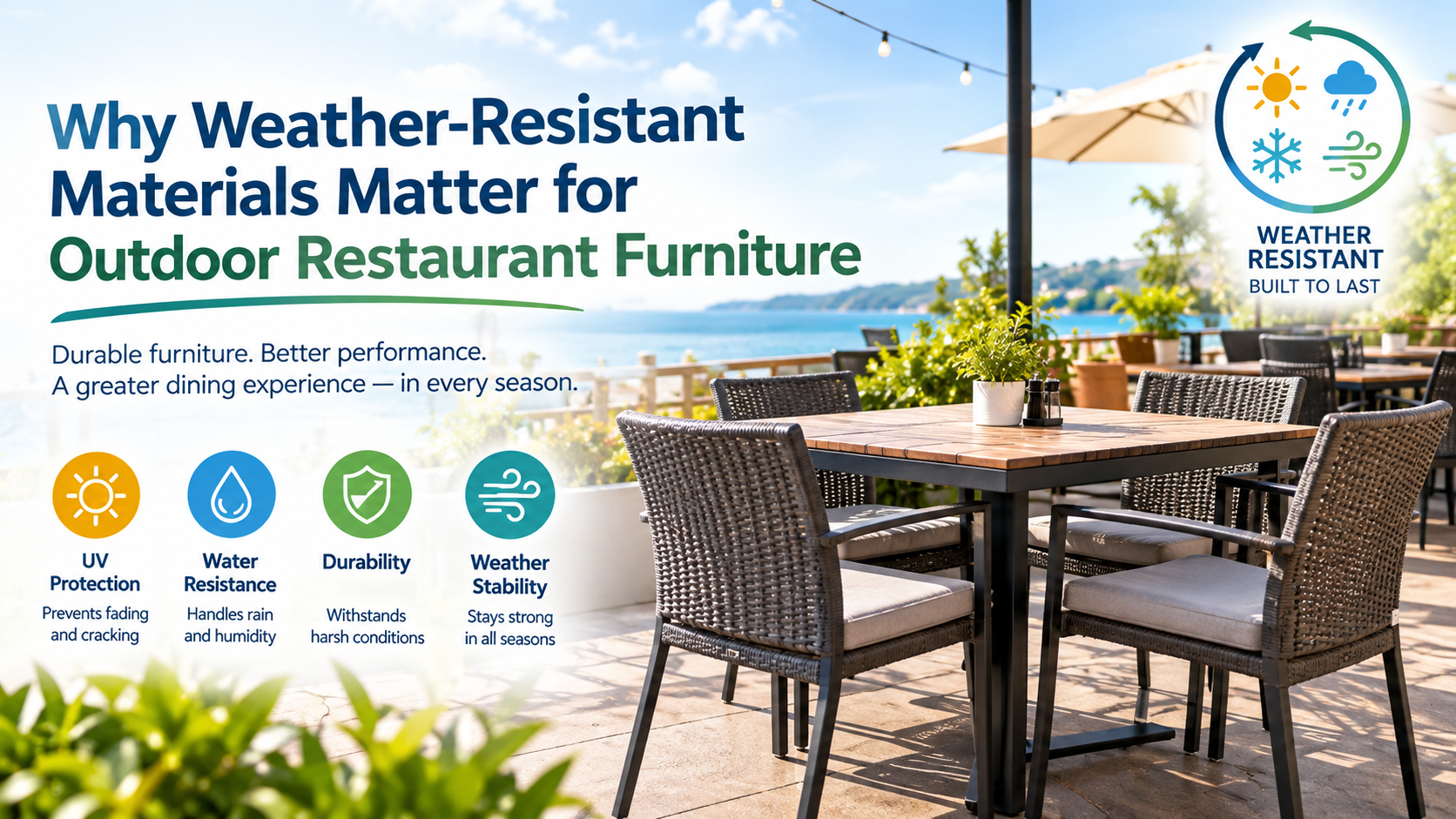
Outdoor dining spaces have become an important part of the restaurant experience, offering guests a comfortable place to enjoy meals in the fresh air. From sidewalk cafés to spacious restaurant patios, outdoor seating can help businesses make better use of their available space. However, outdoor furniture faces challenges that indoor furniture rarely encounters, including rain, sunlight, humidity, temperature changes, and wind. Choosing commercial outdoor dining furniture made from weather-resistant materials helps restaurant owners maintain attractive seating areas, reduce maintenance requirements, and support long-term value.

1. Protection Against Changing Weather Conditions
Restaurant patios are exposed to different weather conditions throughout the year. Rain can cause moisture damage, strong sunlight can fade colors, and temperature fluctuations can affect certain materials. In humid environments, unsuitable furniture may also develop corrosion, mold, or surface deterioration.

Weather-resistant materials are designed to withstand these outdoor conditions more effectively than materials intended primarily for indoor use. For example, powder-coated metal can provide an additional protective layer against moisture, while suitable outdoor plastics can resist water exposure and are often easy to clean.
Wood furniture can also work well outdoors when the species, finish, and maintenance requirements are appropriate. Teak and other suitable hardwoods are commonly used for outdoor applications, although they still require care to maintain their appearance.
Before purchasing outdoor furniture, restaurant owners should consider their local climate and the amount of protection available from awnings, umbrellas, or covered patios. Selecting materials based on actual environmental conditions can help prevent premature wear.
2. Improving Durability and Extending Furniture Life
Commercial restaurant furniture experiences frequent use. Guests move chairs, staff rearrange tables, and cleaning takes place throughout the day. When these demands are combined with outdoor exposure, furniture needs to be durable enough to handle both physical use and changing weather.
Materials such as aluminum, stainless steel, treated hardwood, and high-quality outdoor polymers can offer useful durability when selected for the appropriate application. However, performance depends on material grade, construction quality, protective finishes, and maintenance practices.
Aluminum is popular for outdoor seating because it is relatively lightweight and naturally resistant to rust. Stainless steel can provide strength and corrosion resistance, although the appropriate grade is important in coastal or highly corrosive environments. Powder-coated steel can also be suitable when its protective coating remains intact and the furniture is maintained properly.
Choosing durable materials helps restaurants avoid replacing damaged chairs and tables too frequently. Over time, this can reduce replacement expenses and make furniture purchasing decisions more cost-effective.
3. Maintaining an Attractive Restaurant Appearance
The appearance of an outdoor dining area influences how guests perceive a restaurant. Faded finishes, rust spots, peeling paint, and damaged seating can make a patio look neglected, even when the food and service are excellent.
Weather-resistant furniture helps maintain a more consistent appearance when exposed to sunlight and moisture. UV-resistant finishes and fabrics can reduce fading, while corrosion-resistant frames can help prevent visible deterioration.
Restaurant owners should also consider how furniture colors and finishes complement the building, landscaping, signage, and overall dining concept. Neutral colors may suit contemporary patios, while natural wood tones can create a warmer atmosphere.
AMKO Restaurant Furniture offers restaurant furniture solutions for businesses looking to balance style and functionality. When selecting outdoor pieces, restaurant operators should evaluate not only the design but also the materials, finish quality, and suitability for their particular environment.
4. Reducing Maintenance and Cleaning Requirements
Outdoor furniture needs regular cleaning to remove dust, food spills, pollen, moisture, and other debris. Materials that are difficult to clean can increase staff workload, particularly during busy service periods.
Smooth, nonporous surfaces are often practical for restaurant patios because they can generally be wiped down easily. Suitable aluminum frames, quality outdoor plastics, and properly finished metal surfaces can simplify routine cleaning.
Weather-resistant cushions and fabrics can also be helpful. For upholstered seating, restaurant owners should look for outdoor-rated materials that offer suitable water resistance, UV stability, and ease of cleaning. Removable covers may make maintenance more convenient.

Nevertheless, weather resistance does not mean maintenance-free performance. Furniture should be cleaned according to the manufacturer’s instructions, protective coatings should be inspected, and cushions should be dried or stored appropriately when necessary.
A straightforward maintenance schedule can help staff identify loose fasteners, damaged finishes, and early signs of corrosion before they become more serious problems.
5. Supporting Guest Comfort and Safety
Comfort is essential when designing an outdoor dining area. Guests are more likely to enjoy their experience when chairs provide adequate support, tables remain stable, and surfaces are suitable for the surrounding conditions.
Material selection contributes to comfort as well as durability. For instance, metal furniture may become hot after prolonged exposure to direct sunlight, while certain dark-colored surfaces can absorb more heat. Shade, suitable finishes, and thoughtful furniture placement can help manage these concerns.
Outdoor cushions made from appropriate fabrics can improve comfort, provided they are designed for the environment and maintained correctly. Frames and joints should also be strong enough for frequent commercial use.
Safety deserves equal attention. Restaurant owners should choose stable tables and chairs, inspect weight limits, and ensure that furniture does not wobble or have sharp, damaged edges. Outdoor layouts should leave sufficient room for guests and staff to move safely.
6. Making Outdoor Dining More Cost-Effective
The initial purchase price is only one part of the cost of commercial furniture. Restaurant owners should also consider cleaning, repairs, replacement frequency, storage, and seasonal maintenance.
Less expensive furniture may appear attractive at first, but materials that deteriorate quickly outdoors can lead to additional expenses. In contrast, well-constructed furniture made from suitable weather-resistant materials may provide better value over its useful life.
For example, a restaurant in a rainy region may benefit from corrosion-resistant frames and water-tolerant surfaces. A business in a sunny climate may prioritize UV-resistant finishes and fabrics. Restaurants near the coast should pay particular attention to salt exposure and the corrosion resistance of metal components.
Comparing products based on durability, warranty terms, care requirements, and expected usage can help businesses make informed purchasing decisions.
7. Choosing the Right Materials for Your Restaurant Patio
There is no single material that suits every outdoor dining environment. The best option depends on climate, restaurant style, available space, budget, and maintenance capacity.
Before purchasing furniture, restaurant owners should consider the following factors:
- Climate exposure: Evaluate rainfall, sunlight, humidity, temperature changes, and coastal conditions.
- Material performance: Check corrosion resistance, UV stability, moisture tolerance, and structural strength.
- Cleaning requirements: Select surfaces that fit the restaurant’s daily cleaning routine.
- Guest comfort: Consider seat design, surface temperature, cushions, and table stability.
- Storage options: Determine whether furniture will remain outdoors year-round or be stored during severe weather.
- Manufacturer guidance: Review care instructions, warranty coverage, and any limitations on outdoor use.
These considerations help businesses select furniture that matches both operational requirements and the desired customer experience.
Conclusion
Weather-resistant materials play an important role in the durability, appearance, comfort, and cost-effectiveness of outdoor restaurant seating. By selecting suitable frames, finishes, fabrics, and surfaces, restaurant owners can create welcoming patios that stand up better to everyday use and changing weather conditions.
Investing in appropriate commercial outdoor dining furniture also helps simplify maintenance and reduce the likelihood of premature deterioration. Businesses should evaluate their local climate, expected usage, and available care routines before making a purchase.
AMKO Restaurant Furniture provides options for restaurant operators seeking practical furniture solutions for commercial dining spaces. With thoughtful material selection and regular maintenance, restaurants can create attractive outdoor areas that support a comfortable and enjoyable guest experience for years to come.