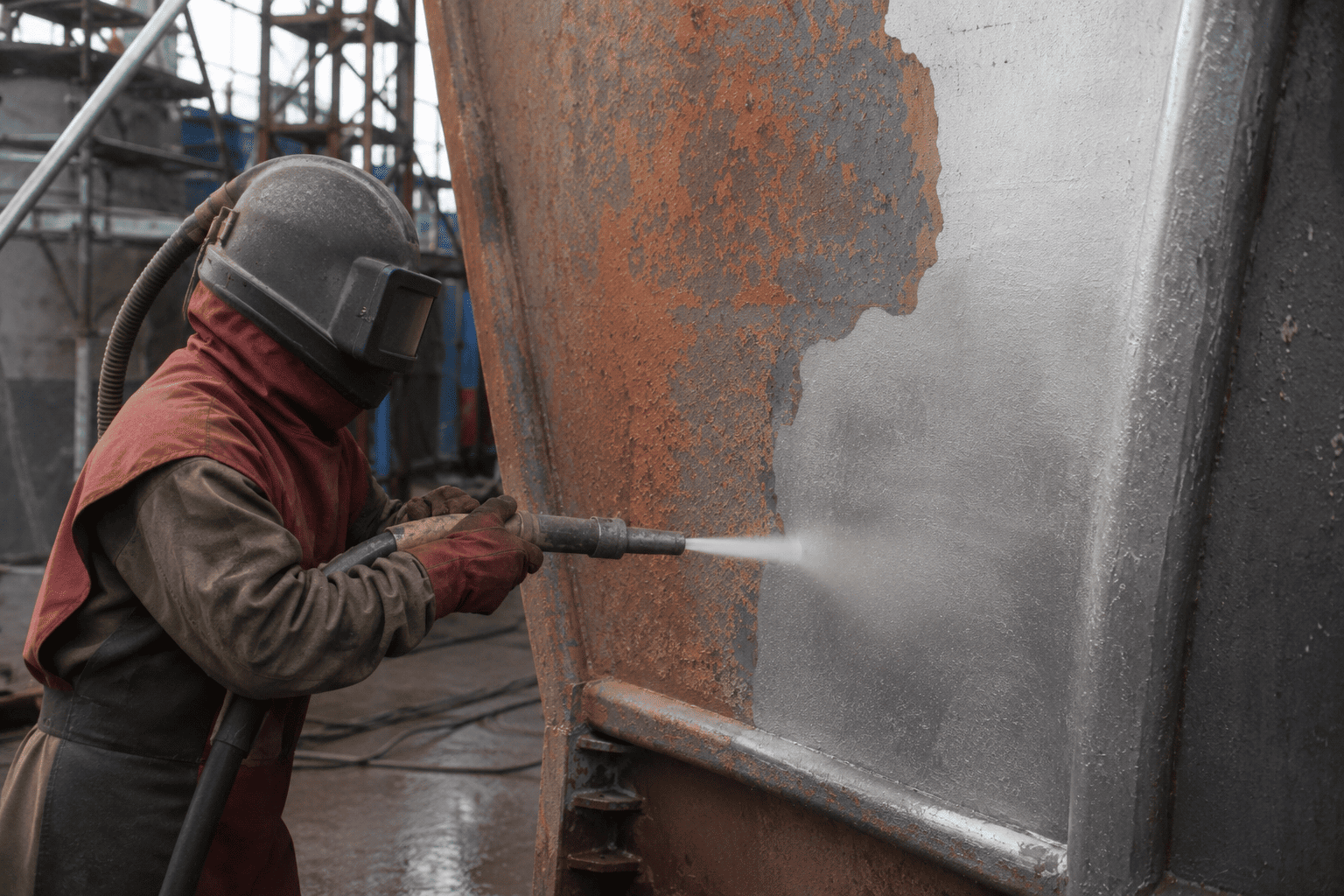
A fresh coat of paint can completely transform a home, office, warehouse, or commercial building. It’s easy to focus on choosing the perfect colour or deciding between a brush, roller, or spray paint application. Yet, the most impressive paint job rarely comes down to the paint alone. What truly determines how long that finish lasts—and how professional it looks—is the work done before the first coat is applied.

Many property owners in the UAE discover this lesson the hard way. Paint that starts peeling after a few months, uneven finishes, bubbling, or premature fading often have one thing in common: poor surface preparation. Even premium-quality paint can’t compensate for a surface that wasn’t properly cleaned, repaired, or primed.

The Foundation Determines the Finish
Painting is much like building a house. A beautiful structure means very little if the foundation isn’t stable. The same principle applies to walls, ceilings, metal surfaces, and woodwork.
When paint is applied to a dusty, greasy, damp, or damaged surface, it struggles to bond properly. Instead of creating a durable protective layer, it simply sits on top, making it vulnerable to cracking, peeling, and blistering.
Professional painters understand that preparation isn’t the part of the job to rush through—it’s the part that makes every other step worthwhile.
Why Surface Preparation Is So Critical
Proper preparation creates the ideal conditions for paint adhesion. This doesn’t just improve appearance; it significantly extends the lifespan of the coating.
A well-prepared surface helps:
- Improve paint adhesion
- Prevent peeling and flaking
- Create a smoother, more uniform finish
- Reduce the number of coats required
- Increase durability against weather and wear
- Protect surfaces from moisture and corrosion
Whether you’re repainting a villa in Dubai, refreshing an office in Abu Dhabi, or maintaining an industrial facility in Sharjah, these benefits translate into lower maintenance costs over time.
The UAE Climate Makes Preparation Even More Important
The UAE presents unique challenges for painted surfaces. High temperatures, intense UV exposure, humidity in coastal areas, and airborne dust constantly test the durability of exterior and interior coatings.
For example, exterior walls often collect fine dust and sand particles that are invisible at first glance. Painting directly over them creates a weak bond between the paint and the surface.
Similarly, moisture trapped beneath the coating can eventually cause bubbling and blistering, especially in bathrooms, kitchens, and coastal properties.
This is why experienced contractors spend considerable time inspecting and preparing surfaces before opening a paint can.
What Proper Surface Preparation Includes
Many people assume preparation simply means wiping down a wall. In reality, it’s a systematic process that varies depending on the material being painted.
Cleaning the Surface
Dust, grease, mould, oil stains, and loose debris must be completely removed.
Even a thin layer of contamination can interfere with paint adhesion. This step becomes especially important before applying spray paint, where every surface imperfection tends to become more visible.
Repairing Damage
Small cracks, dents, nail holes, and uneven plaster may seem insignificant until they’re highlighted by fresh paint.
Filling imperfections and sanding them smooth creates a clean canvas that allows the final finish to look seamless.
Sanding
Sanding removes loose paint, smooths rough areas, and creates a slightly textured surface that helps new paint grip more effectively.
Skipping this stage often results in uneven coverage and poor durability.
Priming
Primer is frequently underestimated, but it plays a major role in achieving consistent colour and long-lasting performance.
It seals porous surfaces, blocks stains, and improves paint adhesion while reducing paint absorption. This often means fewer finish coats and better overall results.

Better Paint Can’t Fix Poor Preparation
A common misconception is that purchasing premium paint automatically guarantees superior results.
Imagine applying luxury flooring over unstable concrete. No matter how expensive the flooring is, the underlying problems will eventually show.
Paint works the same way.
Even the highest-quality products struggle when applied over peeling paint, damp walls, rusted metal, or dirty surfaces.
On the other hand, a properly prepared surface often allows mid-range paints to perform exceptionally well, delivering years of reliable protection and visual appeal.
Surface Preparation Saves Money
Some homeowners hesitate when they see preparation included in a painting quote because it appears to increase labour costs.
Ironically, skipping preparation usually becomes far more expensive.
Poor adhesion often means repainting much sooner than expected. Additional repairs, extra labour, and purchasing more paint can easily exceed the initial savings.
Investing more time before painting usually reduces maintenance costs over the years.
Spray Paint Delivers Better Results on Prepared Surfaces
Modern spray paint systems provide excellent coverage, especially for metal structures, fences, machinery, ceilings, furniture, and large commercial spaces.
However, spray application doesn’t hide imperfections—it often makes them easier to notice.
Uneven textures, dust particles, scratches, or peeling coatings become far more apparent under a smooth sprayed finish.
That’s why professional spray painters dedicate significant time to masking, sanding, cleaning, and priming before spraying begins.
The preparation stage is often longer than the painting itself—and for good reason.
Frequently Asked Questions
Does every painting project require surface preparation?
Yes. The amount of preparation varies depending on the condition of the surface, but every project benefits from proper cleaning and inspection before painting.
Is primer always necessary?
Not always, but it’s highly recommended for new surfaces, repaired areas, metal, wood, stained walls, or when making dramatic colour changes.
How much of a painting project is preparation?
Professional painters often spend 60–80% of the total project time on preparation, especially when working on older buildings or exterior surfaces. This investment significantly improves the quality and longevity of the finished work.
Final Thoughts
When people admire a flawless paint finish, they usually notice the colour, the smoothness, or the shine. What they don’t see is the careful preparation that made those results possible.
The truth is simple: paint is only as good as the surface beneath it.
Whether you’re renovating a family home, updating a retail space, or planning a large commercial project in the UAE, don’t judge a painting job by the paint alone. Invest in proper cleaning, repairs, sanding, and priming before the first coat is applied.
The finish will look better, last longer, and protect your property for years to come. In the end, the real secret to exceptional painting isn’t found in the paint can—it’s in the preparation that happens first.