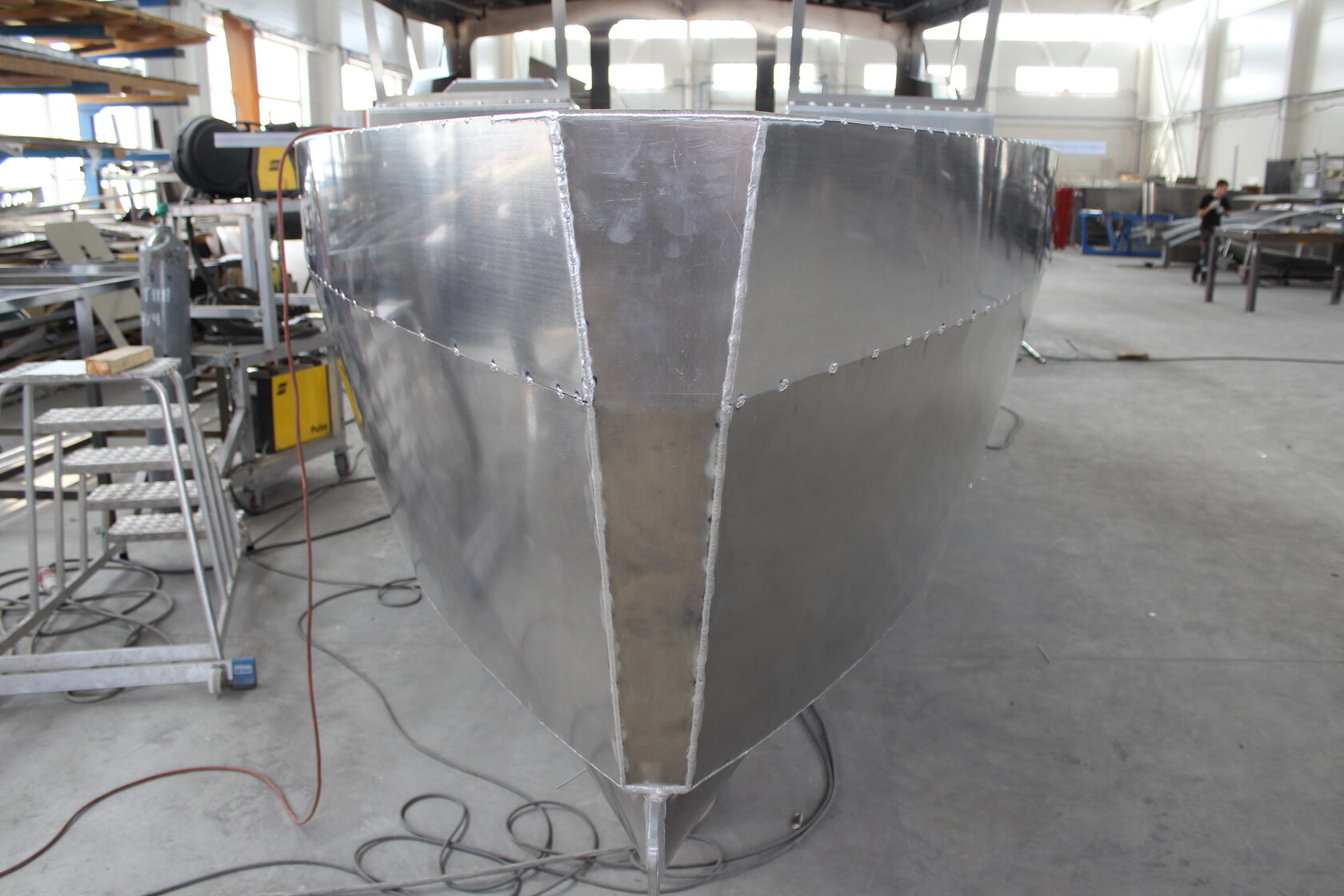
A product can look well made and still fail when exposed to moisture, vibration, heat, or repeated use. The right material and fabrication process can make a major difference in how long a component performs reliably. For manufacturers searching for Marine aluminum fabrication near me, understanding how aluminum is cut, formed, joined, and finished can help them choose solutions that withstand demanding conditions while keeping weight under control.

Why Aluminum Is a Strong Choice for Durable Products
Durability does not always mean using the heaviest or hardest material available. Manufacturers need materials that can withstand operational stress without adding unnecessary weight, maintenance requirements, or production complexity.

Aluminum offers a useful combination of strength, low weight, corrosion resistance, and workability. These characteristics make it suitable for products that need to perform consistently in challenging environments.
However, the material alone does not determine the final product’s durability. The fabrication process also matters. Poor cutting, inaccurate forming, weak joints, or unsuitable finishes can reduce the performance of an otherwise high-quality aluminum component.
That is why thoughtful aluminum fabrication plays such an important role in manufacturing.
How Fabrication Improves Structural Strength
A durable product begins with a design that distributes forces effectively. Fabrication allows manufacturers to turn that design into a physical component with accurate dimensions, controlled joints, and appropriate reinforcement.
Accurate Cutting Reduces Weak Points
Modern fabrication equipment can cut aluminum to precise dimensions. Accurate cutting helps components fit together correctly and reduces unnecessary gaps, uneven edges, and alignment problems.
When parts fit properly, loads can move through the structure more evenly. This reduces stress concentrations that could contribute to cracking, bending, or premature failure.
Precision also improves consistency across production runs. Manufacturers can produce replacement parts or multiple units with dimensions that remain within the required specifications.
Forming Creates Stronger Component Designs
Bending and forming allow aluminum sheets, plates, tubes, and other stock to take shapes that improve structural performance. Instead of relying on a flat piece of material, manufacturers can create channels, angles, brackets, frames, and other reinforced profiles.
For example, a properly formed panel may resist bending more effectively than a flat sheet of the same thickness. This can increase rigidity without requiring excessive material.
Experienced aluminum fabrication specialists can select forming methods based on the alloy, thickness, geometry, and intended application. That helps reduce distortion while maintaining the desired shape.
The Role of Welding and Joining in Product Durability
A component may contain excellent raw material, but its durability can still depend heavily on how individual pieces are joined. Welds, fasteners, and other connection points often experience significant mechanical stress during normal operation.
A suitable joining method creates a reliable connection between components. It also helps maintain the intended geometry of the finished product.
Choosing the Right Welding Approach
Aluminum requires careful control during welding because its properties differ from those of many common structural metals. Heat input, surface preparation, joint design, and welding technique can all influence the final result.
A properly executed weld can provide the strength needed for demanding applications while maintaining a clean and functional structure. Conversely, inconsistent welding can create defects that become more serious after repeated loading.
For manufacturers, working with qualified fabricators is therefore important when products will experience vibration, impact, pressure, or continuous use.
Strong Joints Support Long-Term Performance
Joints should be designed around the forces a product will encounter. A connection used in a stationary enclosure may have different requirements from one found on industrial equipment or a marine structure.
Fabricators can account for these differences by selecting appropriate joint configurations, material thicknesses, welding methods, and reinforcement.
This approach makes aluminum fabrication more than a simple assembly process. It becomes part of the engineering strategy for achieving dependable product performance.
Corrosion Resistance Helps Products Last Longer
Corrosion can significantly shorten the service life of metal products. Once corrosion weakens a component, manufacturers may face repairs, replacements, downtime, or safety concerns.
Aluminum naturally forms a thin oxide layer when exposed to air. This layer helps protect the underlying material from further oxidation under many everyday conditions.
That property makes aluminum particularly useful for products exposed to moisture and outdoor environments. However, corrosion resistance still depends on the application and surrounding conditions.
Manufacturers should consider exposure to saltwater, chemicals, pollutants, temperature changes, and contact with other metals when selecting materials and fabrication methods.
How Fabrication Helps Manage Harsh Environments
Some products must operate in conditions that are much more demanding than a typical indoor manufacturing environment. Marine equipment, transportation components, outdoor structures, processing equipment, and industrial enclosures may encounter moisture, vibration, temperature changes, and corrosive substances.
In these applications, material selection and fabrication need to work together.
| Durability Challenge | Fabrication Consideration | Potential Benefit |
|---|---|---|
| Moisture exposure | Appropriate alloy and joining method | Better resistance to environmental wear |
| Repeated vibration | Reinforced joints and accurate assembly | Reduced fatigue-related problems |
| Heavy loads | Proper thickness and structural design | Improved load handling |
| Outdoor exposure | Suitable surface treatment | Longer service life |
| Tight tolerances | Precision cutting and forming | Better component fit |
| Frequent handling | Lightweight structural design | Easier installation and maintenance |
This type of planning can help manufacturers avoid problems before production begins. Instead of correcting weaknesses after a product reaches the field, engineers and fabricators can address them during design and manufacturing.
Lightweight Construction Can Improve Product Performance
Durability is closely connected to weight. A product that is unnecessarily heavy can place greater loads on supporting structures, moving components, vehicles, or equipment.
Aluminum provides a favorable strength-to-weight relationship for many applications. This allows manufacturers to design components that remain structurally capable without adding excessive mass.
Lower Weight Can Reduce Mechanical Stress
Consider a mobile piece of equipment. Reducing unnecessary weight may decrease the load placed on wheels, suspension systems, motors, hinges, or supporting frames.
Likewise, lighter components can be easier to install and handle. Workers may spend less time moving heavy parts, while transportation costs and equipment requirements may also decrease.
The key is balance. Designers should not simply reduce material thickness to make a product lighter. Instead, aluminum fabrication techniques can help create shapes and reinforcements that provide the necessary strength efficiently.
Precision Manufacturing Improves Consistency
Product durability is not only about how one unit performs. Manufacturers also need repeatable results across an entire production run.
Inconsistent dimensions can create assembly problems, uneven loads, and premature wear. Precision fabrication helps maintain consistency from one component to the next.
Computer-controlled cutting, bending, drilling, and other processes can improve repeatability. When combined with inspection procedures, these methods help manufacturers identify deviations before parts move further through production.

Better Fit Means Better Performance
A poorly fitted component may place additional stress on nearby parts. It can also create gaps, movement, or misalignment.
Accurate aluminum fabrication helps components fit according to the original design. This can support smoother assembly and reduce the risk of mechanical problems caused by dimensional inconsistencies.
For high-volume manufacturing, repeatability can be especially valuable because even a small production issue can affect hundreds or thousands of units.
Surface Finishing Adds Another Layer of Protection
Fabrication does not necessarily end when a part has been cut, formed, and assembled. Depending on the application, surface finishing can provide additional protection or improve the product’s appearance.
Anodizing, coating, painting, and other treatments may be considered based on environmental exposure and performance requirements.
Finishes Can Support Environmental Resistance
The appropriate finish can help protect surfaces against wear, staining, abrasion, or specific environmental conditions. However, the correct treatment depends on the aluminum alloy, application, and expected exposure.
Manufacturers should avoid choosing a finish simply because it looks attractive. Functional requirements should guide the decision.
For example, a component exposed to outdoor conditions may need different protection from a decorative interior product. Discussing these requirements with an experienced fabricator can help prevent premature surface deterioration.
Smart Design Makes Fabrication More Effective
Even the best equipment cannot compensate for a poorly planned design. Durability should be considered before fabrication begins.
Engineers and manufacturers can improve results by examining expected loads, environmental exposure, connection points, tolerances, maintenance requirements, and production quantities.
Design for Manufacturability
A design that is difficult to fabricate may require unnecessary operations, complicated joints, or excessive material handling. These factors can increase costs while creating more opportunities for manufacturing variation.
Designing with fabrication in mind can simplify production without compromising performance.
Useful considerations include:
- Selecting an aluminum alloy suitable for the intended environment.
- Avoiding unnecessary complexity in part geometry.
- Designing joints around expected loads.
- Allowing practical manufacturing tolerances.
- Identifying areas that require reinforcement.
- Planning access for inspection and maintenance.
- Selecting finishes according to actual environmental exposure.
These decisions can make the finished product more reliable while also improving manufacturing efficiency.
Applications That Benefit From Durable Aluminum Products
Many industries use fabricated aluminum components because they need a balance of strength, weight, corrosion resistance, and design flexibility.
Marine Manufacturing
Marine applications expose components to moisture, salt, movement, and changing weather conditions. Properly fabricated aluminum structures can provide useful durability while avoiding some of the weight associated with heavier materials.
Boat structures, platforms, railings, storage systems, access components, and other marine products can all benefit from careful material selection and fabrication.
Transportation Equipment
Vehicles and transportation equipment often benefit from lightweight structures. Reducing component weight can contribute to overall efficiency while maintaining the strength needed for regular operation.
Fabricated aluminum may be used in frames, enclosures, brackets, panels, and specialized equipment.
Industrial Equipment
Manufacturing facilities rely on equipment that must operate repeatedly with minimal interruption. Aluminum components can be useful for guards, platforms, housings, frames, machine parts, and other structures where corrosion resistance and manageable weight are important.
How Manufacturers Can Choose a Reliable Fabricator
Selecting a fabrication partner is an important part of achieving consistent product quality. Manufacturers should look beyond price and consider the fabricator’s capabilities, experience, equipment, quality procedures, and understanding of the intended application.
Ask potential suppliers about:
- Material expertise: Can they work with the required aluminum alloys and thicknesses?
- Fabrication capabilities: Do they offer cutting, forming, welding, machining, and finishing as needed?
- Quality control: How do they verify dimensions, weld quality, and finished components?
- Production capacity: Can they handle both prototypes and larger production requirements?
- Industry experience: Have they produced components for applications with similar durability requirements?
- Communication: Can their team work effectively with your engineers and production staff?
A capable partner can help identify fabrication issues before they become expensive production problems.
Practical Steps to Improve Aluminum Product Durability
Manufacturers can take several practical steps to improve results without unnecessarily increasing costs.
First, define the product’s actual operating environment. Identify exposure to moisture, chemicals, vibration, impact, temperature changes, and repetitive loading.
Next, select the material and fabrication method around those conditions. Avoid choosing an alloy, joint design, or finish solely because it worked for another product.
Finally, inspect prototypes and early production units carefully. Testing can reveal weaknesses that are difficult to identify from drawings alone.
A strong durability strategy typically combines:
- Appropriate material selection
- Accurate fabrication
- Reliable joining methods
- Sound structural design
- Suitable surface protection
- Consistent quality control
- Application-specific testing
When these elements work together, manufacturers can produce components that are better prepared for real-world use.
Conclusion
Durability starts long before a finished product reaches the customer. Material selection, structural design, precision cutting, forming, joining, and finishing all influence how well an aluminum component performs over time. Effective aluminum fabrication brings these elements together to create products that can handle demanding loads, environmental exposure, and repeated use without unnecessary weight. For manufacturers, the best approach is to treat fabrication as an important part of product engineering rather than simply a production step. By working with experienced fabricators and planning around actual operating conditions, businesses can improve reliability, reduce maintenance concerns, and build products that deliver dependable long-term value.
FAQs
1. Why is aluminum suitable for durable products?
Aluminum combines low weight with useful strength and natural corrosion resistance. When properly designed and fabricated, it can perform reliably in many industrial, transportation, outdoor, and marine applications.
2. Does aluminum fabrication make products stronger?
It can. Accurate cutting, forming, reinforcement, and joining can improve structural integrity and help distribute loads more effectively. The final strength depends on the alloy, design, dimensions, fabrication process, and intended application.
3. Is aluminum suitable for marine manufacturing?
Yes, aluminum is widely considered for marine applications because of its relatively low weight and corrosion resistance. However, marine environments require careful alloy selection, joint design, fabrication practices, and maintenance planning.
4. How does precision affect product durability?
Precision helps components fit correctly and maintain their intended dimensions. Better fit can reduce alignment problems, uneven loads, excessive movement, and premature wear.
5. What should manufacturers consider before choosing an aluminum fabricator?
Manufacturers should evaluate material expertise, fabrication equipment, welding capabilities, quality-control procedures, production capacity, finishing options, and relevant industry experience. A fabricator should also understand the product’s operating environment and performance requirements.