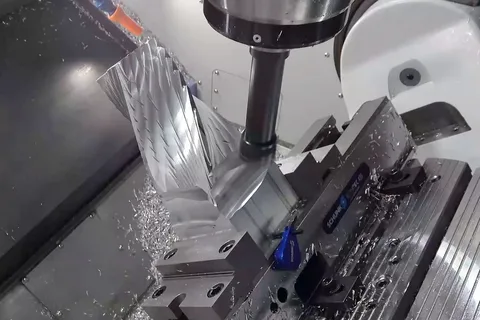
Engineers rely heavily on precision when working on critical components, and this is where multi axis CNC machining stands out. Unlike traditional machining methods, multi axis systems allow movement across several axes simultaneously, ensuring extremely tight tolerances. This level of accuracy is essential in industries such as aerospace, automotive, and medical manufacturing where even the smallest deviation can lead to failure.
With multi axis CNC machining, engineers can achieve consistent results across multiple production cycles. The machines are programmed to follow exact digital instructions, minimizing variations that often occur in manual operations. This consistency improves product reliability and ensures that every part meets strict engineering standards.
- Achieves micron-level precision for complex components
- Reduces dimensional errors in repeated production runs
- Ensures consistency across large-scale manufacturing
- Ideal for aerospace and medical-grade parts
- Minimizes need for post-processing corrections
Enhanced Productivity and Efficiency
One of the major reasons engineers prefer multi axis CNC machining is the significant boost in productivity. These machines can perform multiple operations in a single setup, eliminating the need to transfer workpieces between different machines. This reduces production time and streamlines the entire manufacturing workflow.
Efficiency is further enhanced because multi axis CNC machining reduces downtime and manual intervention. Once the program is set, the machine can operate continuously with minimal supervision, allowing engineers to focus on design optimization and quality control rather than repetitive machining tasks.
- Reduces setup time by combining multiple operations
- Allows continuous machining with fewer interruptions
- Speeds up production cycles significantly
- Minimizes manual handling of workpieces
- Improves overall manufacturing workflow efficiency
Complex Geometry Capabilities
Modern engineering designs often involve highly complex geometries that are impossible to achieve with conventional machining methods. Multi axis CNC machining makes it possible to create intricate shapes, curves, and angles with precision. This flexibility opens up new possibilities for innovation in product design.
Engineers appreciate that multi axis CNC machining can handle undercuts, deep cavities, and contoured surfaces in a single operation. This eliminates the need for multiple setups or specialized tools, making the production of advanced components more practical and cost-effective.
- Produces highly complex and detailed geometries
- Handles undercuts and deep cavities efficiently
- Reduces need for multiple machine setups
- Enables innovative and advanced product designs
- Supports industries requiring intricate component structures
Reduced Human Error and Automation
Human error is one of the biggest challenges in traditional machining processes. Multi axis CNC machining significantly reduces this risk by relying on computer-controlled precision. Once the program is correctly set, the machine executes operations automatically with minimal human intervention.
This high level of automation in multi axis CNC machining ensures that every cut, drill, and contour is performed exactly as designed. Engineers benefit from improved reliability and reduced waste, as the likelihood of mistakes is greatly minimized throughout the production process.
- Eliminates inconsistencies caused by manual operation
- Ensures accurate execution of programmed instructions
- Reduces material waste and production defects
- Improves overall quality control in manufacturing
- Enhances safety by limiting human-machine interaction
Cost-Effectiveness in Long-Term Manufacturing
Although the initial investment in multi axis CNC machining systems may be high, engineers recognize their long-term cost benefits. These machines reduce labor costs, minimize material waste, and increase production speed, all of which contribute to better overall profitability.
In addition, multi axis CNC machining reduces the need for multiple machines and tools, consolidating production into a single efficient system. This lowers maintenance costs and improves return on investment over time, making it a smart choice for modern manufacturing facilities.
- Reduces long-term labor and operational costs
- Minimizes material waste through precise machining
- Eliminates need for multiple machines and setups
- Improves return on investment over time
- Increases overall production profitability
Conclusion
Multi axis CNC machining has become an essential technology in modern engineering due to its unmatched precision, efficiency, and versatility. Engineers prefer it because it allows them to produce highly complex components with minimal error while maintaining consistent quality across large production runs. Its ability to combine multiple machining processes into a single setup significantly improves productivity and reduces operational delays.
As industries continue to demand higher accuracy and faster production cycles, multi axis CNC machining will remain a critical solution. Its long-term cost benefits, automation capabilities, and design flexibility make it one of the most valuable tools in advanced manufacturing today.