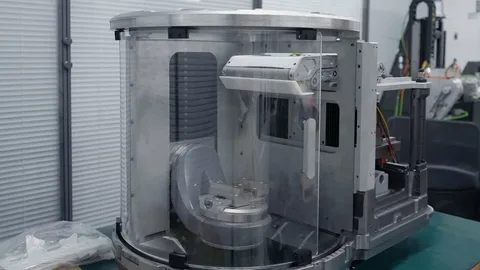
Improving machining accuracy is one of the most important goals in modern manufacturing, especially in industries where tight tolerances and complex geometries are required. A 5 axis CNC turning machine offers advanced capabilities that significantly enhance precision, reduce human error, and streamline production workflows. However, achieving maximum accuracy still depends on proper setup, programming, maintenance, and operational discipline.
This article explains practical methods to improve accuracy when using a 5 axis cnc turning machine in production environments, helping manufacturers achieve consistent quality and efficiency.
Proper Machine Setup and Calibration
A strong foundation for accuracy begins with correct machine setup and calibration. Even the most advanced 5 axis cnc turning machine will produce errors if it is not properly aligned or calibrated before operation. Machine geometry, tool alignment, and spindle positioning must all be verified regularly.
In production environments, small misalignments can lead to cumulative errors that affect part quality. Therefore, calibration should not be treated as a one-time task but as part of routine maintenance.
Key points for better setup accuracy:
- Perform daily machine warm-up cycles to stabilize components
- Check spindle runout before starting production
- Calibrate rotary axes regularly
- Ensure workpiece fixtures are rigid and properly aligned
- Use precision leveling tools for machine alignment
Proper setup ensures that every movement of the machine corresponds accurately to programmed instructions, reducing deviations during machining.
Optimize CNC Programming for Precision
Programming plays a crucial role in determining the accuracy of a 5 axis cnc turning machine. Poor toolpaths or inefficient code can introduce vibration, tool deflection, and unnecessary machine movement, all of which reduce precision.
Advanced CAM software allows programmers to simulate machining processes and identify potential errors before production begins. This reduces trial-and-error machining and improves consistency.
Programming optimization strategies include:
- Use high-quality CAM software with 5-axis simulation
- Minimize tool retractions and unnecessary axis movements
- Optimize feed rates and spindle speeds for material type
- Apply smooth toolpath transitions to reduce vibration
- Verify programs with digital twin or simulation tools
Well-optimized CNC programs ensure that the machine operates smoothly and precisely, reducing wear on both tools and machine components.
Use High-Quality Cutting Tools and Tool Holders
Tool quality directly affects machining accuracy. Even the most advanced 5 axis cnc turning machine cannot compensate for poor or worn-out cutting tools. High-quality tools ensure stability, better surface finish, and consistent dimensional accuracy.
Tool holders also play a critical role in reducing vibration and maintaining tool rigidity during high-speed operations. Any imbalance can lead to inaccuracies, especially in multi-axis machining.
Best practices for tooling accuracy:
- Use coated carbide or high-performance cutting tools
- Replace worn tools before they affect quality
- Choose high-precision tool holders (hydraulic or shrink-fit)
- Balance tools for high-speed operations
- Regularly inspect tool wear using measurement systems
By maintaining tool integrity, manufacturers can ensure that each cut produced by the machine remains consistent and accurate.
Maintain Thermal Stability and Machine Environment
Thermal expansion is one of the hidden factors that affect machining accuracy. A 5 axis cnc turning machine generates heat during operation, which can cause slight expansions in machine components, leading to dimensional errors.
Maintaining a stable environment and controlling temperature fluctuations can significantly improve accuracy in production settings.
Steps to control thermal effects:
- Keep workshop temperature consistent
- Allow machine warm-up before precision machining
- Use coolant systems effectively to reduce heat buildup
- Avoid direct sunlight or external heat sources near machines
- Monitor spindle and motor temperatures regularly
A stable thermal environment ensures that machine components remain within predictable tolerances, reducing drift during long production runs.
Regular Maintenance and Real-Time Monitoring
Preventive maintenance is essential for sustaining long-term accuracy in a 5 axis cnc turning machine. Over time, wear and tear in mechanical components, bearings, and guideways can reduce precision if not addressed promptly.
Modern CNC machines often come with real-time monitoring systems that help detect issues before they affect production quality. These systems improve reliability and reduce downtime.
Maintenance and monitoring practices:
- Schedule routine inspection of mechanical components
- Lubricate moving parts according to manufacturer guidelines
- Use vibration analysis tools to detect early faults
- Monitor tool life and replace tools proactively
- Update machine firmware and control software regularly
Consistent maintenance ensures that the machine operates at peak performance, preserving accuracy and extending equipment life.
Conclusion
Achieving high accuracy in production using a 5 axis cnc turning machine requires a combination of proper setup, optimized programming, quality tooling, environmental control, and consistent maintenance. Each factor plays a critical role in ensuring that the machine delivers precise and repeatable results.
Manufacturers who invest time in calibration, programming optimization, and preventive maintenance will experience fewer errors, improved product quality, and greater production efficiency. Ultimately, accuracy is not just a feature of the machine itself but the result of disciplined processes and careful operational control.