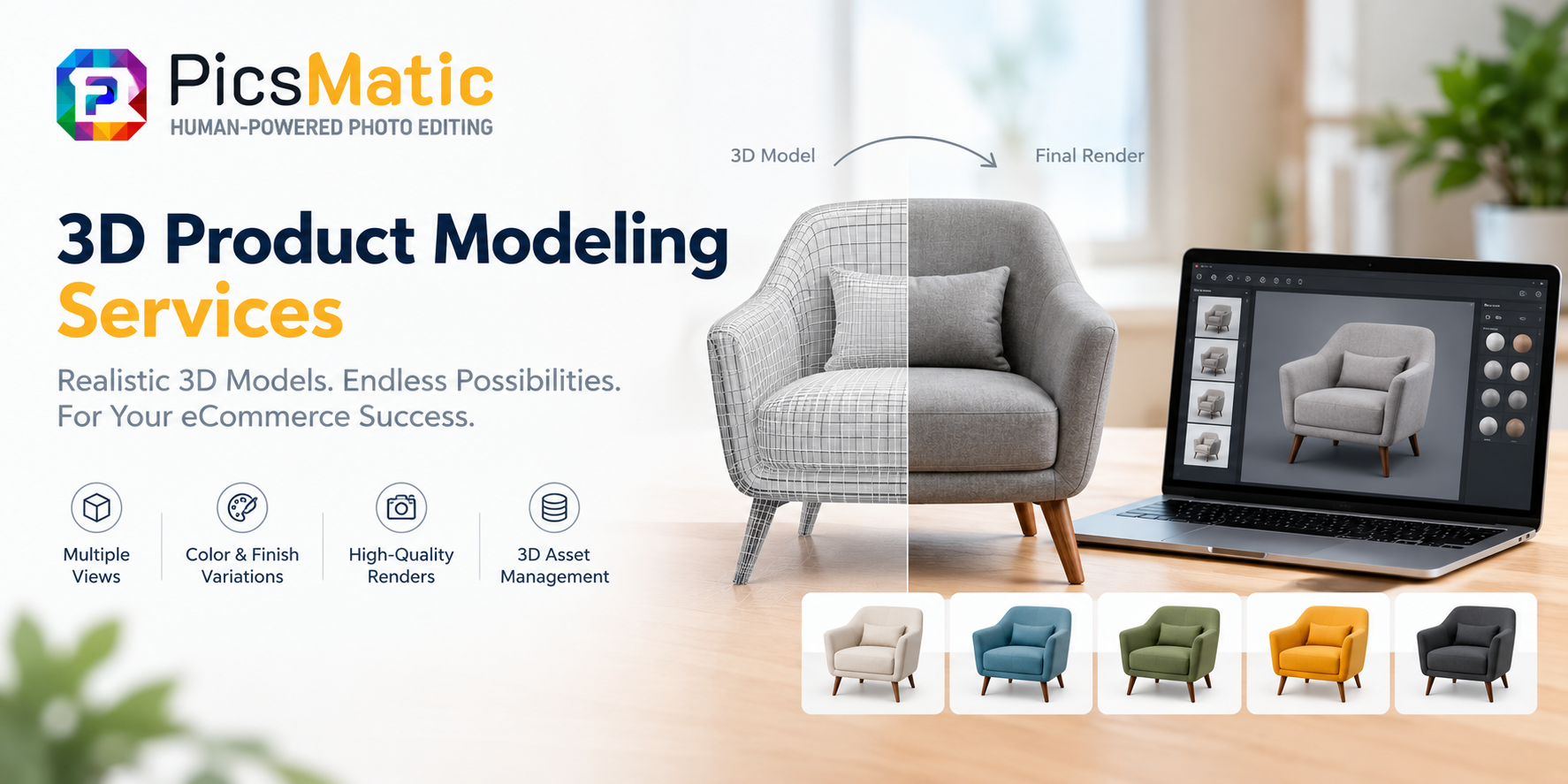
Selling products online is not just about having a good product. Customers also need to see what they are buying. A few product photographs may work for a simple item, but what happens when a product comes in ten colors, several finishes, or different configurations?

Creating separate photographs for every variation can take time, money, and careful planning. This is one reason more businesses are exploring 3D Product Modeling Services to create realistic digital versions of their products.

Instead of relying entirely on traditional photography, brands can use 3D models to generate product visuals from different angles, showcase design details, and prepare images for multiple marketing channels. When used appropriately, this approach can make product presentation more flexible and easier to manage.
Why Are Businesses Rethinking Traditional Product Photography?
Product photography remains essential for many businesses, but it has limitations when product catalogs become larger or more complex.
Imagine an online furniture store selling a sofa in eight colors and three fabric options. Photographing every combination may require additional samples, studio time, lighting adjustments, and image processing.
With a suitable 3D model, the business may be able to change the fabric and color digitally and generate additional product images without arranging a separate shoot for every variation.
Other common challenges include:
- Keeping product images consistent across a large catalog
- Updating visuals when product designs change
- Showing details that are difficult to photograph
- Preparing images for different advertising formats
- Managing product launches with tight deadlines
The right approach depends on the product, budget, and desired level of realism. For some businesses, traditional photography will remain the better choice. Others may benefit from combining photography with 3D-generated visuals.
What Can 3D Product Modeling Actually Do?
3D modeling for ecommerce involves creating a digital representation of a product that can be used to produce realistic images and other visual assets.
The process starts with product references, such as photographs, measurements, sketches, or CAD files. A model is then developed with the appropriate shape, materials, textures, and details.
Once the model is ready, businesses can use it in several ways.
Create multiple product views: Show front, side, rear, and close-up views without photographing each angle separately.
Explore different finishes: Display materials such as wood, metal, glass, plastic, or fabric with suitable textures and reflections.
Show product variations: Generate visuals of supported colors, sizes, and configurations from a shared model.
Prepare marketing content: Produce images for online stores, digital catalogs, promotional campaigns, and presentations.
Professional 3D Product Modeling and Rendering Services bring these elements together to create finished visuals that match the product’s design and intended presentation.
Which Industries Can Benefit Most?
3D modeling is not limited to large manufacturers. It can be useful for businesses across several industries, particularly those with detailed products or frequent variations.
| Industry | Potential Application |
|---|---|
| Furniture | Show different fabrics, finishes, and product angles |
| Electronics | Highlight shapes, buttons, ports, and surface details |
| Jewelry | Present intricate designs, stones, and metal finishes |
| Home decor | Visualize materials, colors, and decorative products |
| Consumer goods | Create consistent images across product collections |
| Manufacturing | Present product concepts and design variations |
For example, a jewelry business could use a detailed model to create close-up visuals of a ring from different angles. A home decor retailer could generate product images showing the same lamp in several finishes.
These applications can reduce the need for repeated photography, although the actual savings depend on model complexity and the number of variations required.
Is 3D Modeling Better Than Traditional Product Photography?
Neither method is automatically better for every situation. They serve different purposes, and some businesses achieve the best results by using both.
| Consideration | 3D Product Modeling | Traditional Photography |
|---|---|---|
| Product variations | Digital changes may simplify color and material options | Each physical variation may need separate photography |
| Physical accuracy | Depends on the model and supplied references | Shows the actual photographed item |
| Initial investment | Detailed modeling can require significant setup | Requires photography equipment, products, and studio time |
| Future updates | Some changes can be made to existing models | Changes may require another shoot |
| Best suited for | Reusable visuals and complex product variations | Actual product appearance and real-world details |
If customers need to see how a product genuinely looks in real life, photographs can provide valuable evidence. If a business needs flexible visuals for dozens of product combinations, 3D modeling may offer a practical alternative.

What Should You Check Before Hiring a 3D Modeling Provider?
Choosing a provider based on price alone can lead to disappointing results. A model may look attractive but still fail to represent the product accurately.
Before starting a project, ask these questions:
- Can the team match the product’s actual dimensions and design?
- Do its sample renders show realistic materials and lighting?
- Can it handle the number of products and variations you need?
- Which file formats and final image sizes are available?
- How are revisions and design changes managed?
- What are the expected delivery times?
You should also provide clear reference images, measurements, material details, and examples of the visual style you want. These details help establish expectations before production begins.
Why Does 3D Asset Management Matter as Your Catalog Grows?
Creating models is only one part of the process. Businesses with hundreds or thousands of products also need a practical way to organize and reuse their digital files.
3D asset creation and management services can support the development and organization of reusable product assets. Depending on the workflow, these assets may include models, textures, materials, and approved renders.
A well-organized library can make it easier to locate files, update product variations, and maintain consistency when new marketing campaigns are launched. It can also help teams avoid recreating assets that already exist.
For growing eCommerce businesses, this becomes particularly valuable when product information, designs, and marketing requirements change regularly.
Where Can You Get Support for 3D Product Modeling?
PicsMatic offers image editing and product-related visual services for businesses looking to improve the presentation of their products. If you are considering 3D modeling for your catalog or online store, explore the 3D Product Modeling and Editing Services page to review the relevant offering.
Before beginning, identify the products you want to model, the views you need, and whether you require still images, multiple product variations, or reusable digital assets.
To discuss your requirements, visit PicsMatic or call +1 585 283 0055
FAQs
Q1. Can 3D product modeling reduce eCommerce photography costs?
It can reduce repeated photography for suitable products, particularly when many variations are required. However, the initial modeling cost and the complexity of future changes should also be considered.
Q2. Do 3D product images look realistic?
They can look highly realistic when the model, materials, lighting, and rendering are handled well. The result also depends on the accuracy of the supplied product references.
Q3. Can 3D models show products in different colors?
Yes. When the model supports the required variations, its materials and colors can often be adjusted to generate additional product visuals.
Q4. Is 3D modeling suitable for a small online store?
Yes. A small store may benefit if it sells products with multiple variations or expects to reuse product visuals over time. Starting with a few important products can help assess its value.
Q5. What information is needed to create a 3D product model?
Depending on the project, a provider may need product photographs, dimensions, design drawings, CAD files, material references, and details about the required final images.