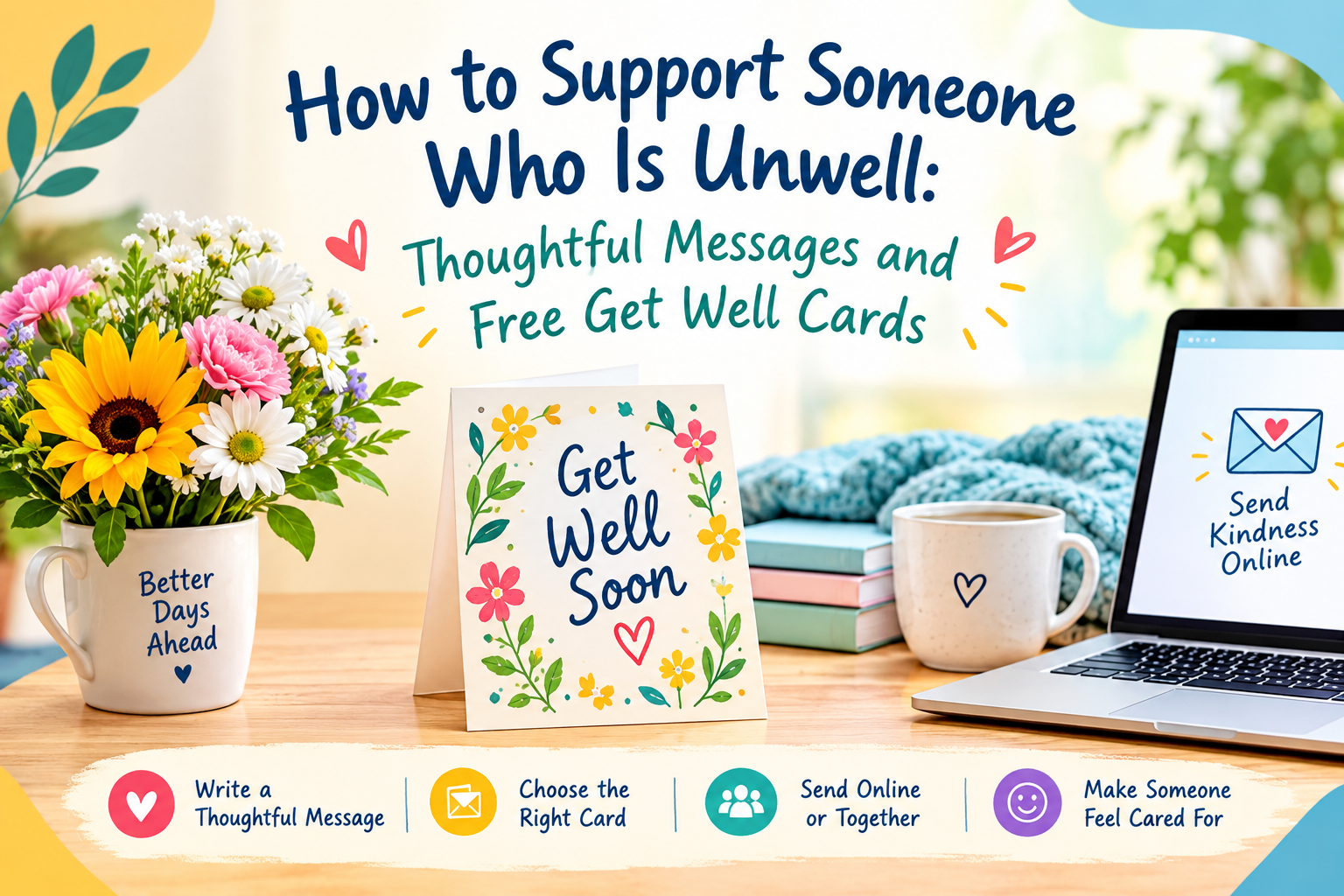
When someone we care about is unwell, even a small gesture can make their day feel a little brighter. A short message, a phone call, or a thoughtful card can remind them that they are not alone while they recover. Although everyone experiences illness differently, knowing that friends, family members, or coworkers are thinking of them can offer comfort during a difficult time.

You do not need expensive gifts or elaborate words to show support. Sometimes, a few sincere sentences are enough. Free get well cards provide a simple way to send encouragement, especially when distance or a busy schedule makes an in-person visit difficult. The key is to choose your words carefully and make sure your message feels genuine.

Why Thoughtful Get-Well Messages Matter
Illness can affect more than physical health. A person who is recovering may feel tired, isolated, frustrated, or worried about everyday responsibilities. A thoughtful message lets them know that someone cares without requiring them to make much effort in return.
A personal note can also help maintain relationships when people cannot meet regularly. For example, a coworker recovering at home may appreciate a message from the team, while a friend may value a few reassuring words from someone who understands their personality.
The most meaningful messages are usually simple and sincere. Instead of trying to find perfect words, focus on communicating kindness. A message such as “Thinking of you and hoping each day brings a little more comfort” can express support without making assumptions about how quickly the person will recover.
How to Write a Meaningful Get-Well Message
Writing a message becomes easier when you consider your relationship with the recipient and what they might need to hear.
1. Keep it personal. Mention the person’s name or include a small detail that makes the message feel intended specifically for them. A personal touch can make an ordinary greeting more meaningful.
2. Choose a suitable tone. A close friend might appreciate gentle humor, while a colleague or someone dealing with a serious illness may prefer a calm, respectful message. When you are unsure, kindness and simplicity are reliable choices.
3. Offer encouragement without pressure. Avoid suggesting that someone must stay positive all the time. Recovery can be unpredictable, and people may not always feel cheerful. Let them know that it is okay to take the time they need.
4. Offer practical help when possible. If appropriate, mention a specific way you can help, such as delivering a meal, picking up groceries, or assisting with a work task. A realistic offer is often more useful than a general promise.
Here are a few examples you can adapt:
- For a friend: “Sending you lots of good thoughts. Take the time you need to rest, and remember that I’m here if you need anything.”
- For a family member: “Wishing you comfort, strength, and brighter days ahead. We’re thinking of you and sending all our love.”
- For a coworker: “Hope you’re feeling better soon. Take care of yourself, and don’t worry about things here—we’re wishing you a smooth recovery.”
Choosing the Right Get Well Soon Cards
The design of a card can help communicate the feeling behind your words. Some people enjoy cheerful colors, flowers, or playful illustrations, while others prefer simple designs with a quiet and comforting appearance.
When selecting get well soon cards, think about the recipient rather than choosing the first design you see. A humorous card might be perfect for a friend who enjoys jokes, but a more thoughtful design may be suitable for someone facing a challenging recovery.
Your written message matters just as much as the design. A beautiful card with a generic sentence may feel less personal than a simple card containing a few carefully chosen words. If you know the recipient well, include a shared memory, a small expression of appreciation, or a reminder that you look forward to spending time together again.
It is also helpful to consider how the person prefers to communicate. Some people appreciate regular messages, while others need more quiet time while recovering. A card should offer support without creating an expectation that the recipient must respond immediately.
When Free Online Get Well Cards Are a Convenient Choice
Digital cards make it easier to reach someone when you cannot visit in person. They are especially useful when friends and relatives live in different cities or when coworkers want to send a collective message to a colleague who is away from work.
With free online get well cards, you can choose a suitable design and add a personal note without needing to purchase a physical card or arrange delivery. This can be a convenient option for last-minute wishes, long-distance friendships, and workplace messages.

For a group greeting, SendWishOnline’s get-well-soon cards offer a way to bring people’s messages together in one place. Friends, relatives, or team members can contribute their wishes to create a shared expression of support. A group card can be particularly thoughtful when several coworkers want to encourage someone who is recovering at home.
Before sending a digital card, check that the message and design suit the recipient. Add individual comments where possible, and make sure the final greeting feels warm rather than overly formal or impersonal.
Common Mistakes to Avoid When Sending Get-Well Wishes
Good intentions can sometimes lead to awkward messages. Avoid telling someone that their illness is not serious, comparing their situation with another person’s experience, or offering medical advice they did not request.
Phrases such as “You should be back to normal in no time” may unintentionally create pressure when recovery takes longer than expected. A more considerate alternative is “I hope you feel a little better each day.”
It is also important not to expect an immediate reply. Someone who is unwell may have limited energy, need extra rest, or simply prefer not to communicate for a while. Send your message because you want to offer support, not because you expect a response.
Finally, respect privacy. If you are sending a card to a coworker, do not share personal health details with others unless the person has given permission.
Make Your Support Personal
Supporting someone who is unwell does not require grand gestures. A sincere message, a thoughtful card, or a practical offer of help can make a person feel remembered and cared for. What matters most is choosing words that respect their situation and reflect your genuine concern.
Whether you send a handwritten note or choose free get well cards online, focus on the person receiving them. A little kindness, offered without pressure or expectation, can help someone feel more connected during recovery.
Frequently Asked Questions
1. What should I write in a get-well card?
Keep your message warm and sincere. Wish the person comfort and recovery, let them know you are thinking of them, and offer help if you can.
2. Are free online get well cards suitable for coworkers?
Yes. Digital cards can be a convenient way for colleagues to share encouraging messages, particularly when the person is working remotely or recovering at home.
3. How can I make a get-well message more personal?
Mention a shared memory, use a tone that suits your relationship, or include a specific offer of support. Even one personal sentence can make a difference.
4. Is a group get-well card a good idea?
A group card can be a thoughtful choice when several friends, relatives, or team members want to send their wishes together. Keep the messages respectful and consider the recipient’s privacy and preferences.
Free Group Greeting Cards: A Simple Way to Bring People Together for Meaningful Messages


One thought on “How to Support Someone Who Is Unwell: Thoughtful Messages and Free Get Well Cards”