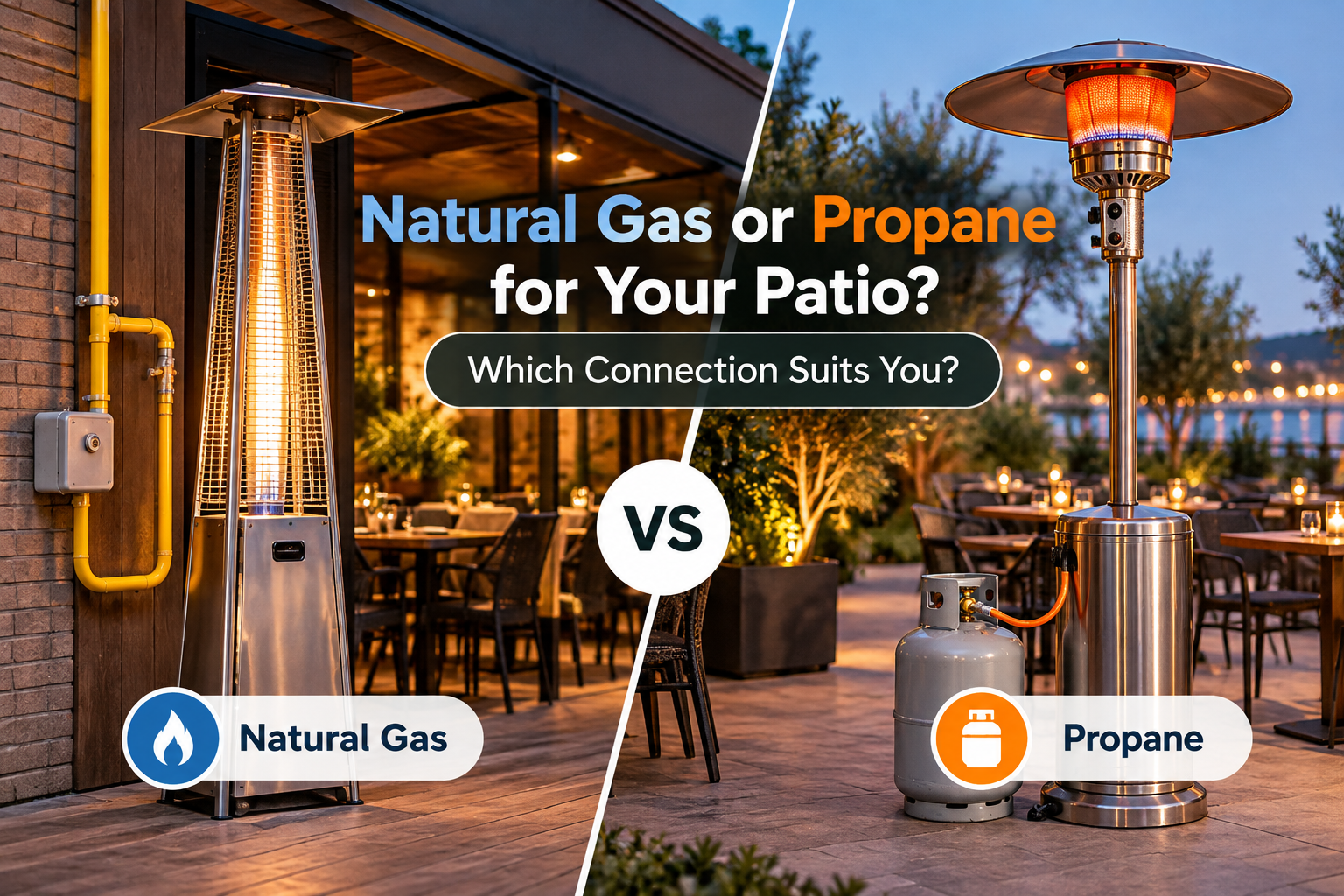
For restaurants, cafés, hotels, beach clubs, bars and event venues in the Netherlands, a comfortable outdoor terrace can make a significant difference to the guest experience. However, choosing the right patio heating system involves more than selecting a heater based on heat output or design.

For businesses considering gas-powered terrace heating, one important decision is whether to use natural gas or propane. Both can provide powerful outdoor heat, but the connection method, installation requirements, flexibility and day-to-day operation are different.

Understanding these differences can help Dutch hospitality businesses choose a terrace heating solution that fits their property, operating model and long-term needs.
Natural Gas vs Propane: What Is the Main Difference?
The biggest difference is how the heater receives its fuel.
A natural gas patio heater is connected to a fixed gas supply. This makes it suitable for businesses with an existing gas connection or locations where a permanent gas installation can be professionally arranged.
A propane patio heater uses propane from a gas cylinder. Instead of relying on a fixed gas pipe, the heater connects to the cylinder using an appropriate gas hose and pressure regulator.
For businesses, the choice often comes down to one question: do you need a permanent heating installation or greater flexibility in where the heater can be used?
Natural Gas for Permanent Terrace Heating
Natural gas can be a practical option for a hospitality business with a fixed terrace layout. Restaurants, hotels and cafés with a permanent outdoor seating area may benefit from a fixed installation because the heating system can remain in place throughout the season.
A natural gas system can be particularly relevant when your terrace already has suitable gas infrastructure. However, installation should be properly assessed, as the connection, gas pressure, mounting position and ventilation requirements need to match the selected heater.
Explore the [natural gas patio heater range] when evaluating a permanent solution for your Dutch hospitality terrace.
Propane for Flexible Outdoor Heating
Propane provides more flexibility when a terrace does not have a fixed gas connection. The heater can operate from a suitable propane cylinder, making this option useful for businesses that change their terrace layout or operate temporary outdoor seating areas.
Propane can also be useful for event venues, seasonal terraces and hospitality businesses where extending a gas pipeline would be impractical.
For businesses considering this option, explore [propane patio heaters] to compare suitable models and configurations.
Which Option Works Better for Dutch Hospitality Businesses?
There is no single solution for every terrace. The right choice depends on the property, terrace layout, operating requirements and available infrastructure.
Choose Natural Gas When:
Natural gas may be suitable when:
- Your business already has a suitable fixed gas connection.
- The terrace has a permanent seating arrangement.
- You want a fixed heating installation.
- The heaters will remain in the same positions for long periods.
- You are planning a long-term terrace heating investment.
For example, a restaurant with a permanent street-facing terrace may benefit from fixed wall-mounted gas heaters positioned to cover defined seating zones.
Choose Propane When:
Propane may be more practical when:
- There is no suitable fixed gas connection.
- Your terrace layout changes regularly.
- You need greater installation flexibility.
- You operate seasonal or temporary outdoor seating.
- You want to avoid extending a fixed gas installation.
A hotel, beach club or event venue with changing outdoor layouts may value the flexibility provided by propane-based heating.
Think Beyond the Fuel: Consider the Whole Installation
Fuel type is only one part of the decision. Businesses should also consider the heater’s mounting position, heat coverage, ventilation, gas pressure, controls and maintenance requirements.
For example, a heater positioned too high may not deliver the desired comfort at seating level. Similarly, placing too many heaters close together can increase operating costs without necessarily improving the guest experience.
The goal should be to create targeted warmth around occupied seating areas, rather than simply heating the largest possible area.
Check Gas Hoses and Pressure Regulators
The connection components are equally important. Propane systems typically require an appropriate gas hose and pressure regulator, while fixed natural gas installations require components compatible with the heater and gas supply.

Businesses should never assume that one hose, regulator or connection is suitable for every heater.
Review the available [gas heating accessories] and confirm compatibility with your selected model before installation.
Safety and Ventilation Matter
Gas patio heaters are designed for outdoor or appropriately ventilated applications. They should not be treated as indoor heating equipment.
For Dutch hospitality businesses, this is particularly important when using heaters beneath canopies, awnings or partially enclosed structures. Adequate ventilation and the manufacturer’s installation requirements should always be considered.
Before installing a gas heater, check:
- Required ventilation and clearance.
- Recommended mounting height.
- Approved gas type and pressure.
- Suitable hose and regulator.
- Gas cylinder positioning where applicable.
- Manufacturer installation instructions.
- Local requirements relevant to the property and installation.
Professional assessment is recommended where a fixed gas connection or permanent installation is involved.
Compare Operating Requirements Before You Buy
Businesses should evaluate the total operating picture rather than focusing only on the purchase price.
A natural gas system may make sense for a permanent terrace where infrastructure is already available. Propane can offer flexibility where fixed infrastructure is unavailable or where the terrace configuration changes frequently.
Also consider how often the terrace operates, how many heaters are required, who will manage the system and how easily fuel or maintenance can be arranged.
For larger hospitality operations, a professional terrace heating assessment can help determine heater positioning and the most suitable technology.
If your business is comparing different professional systems, review [professional terrace heating solutions for hospitality businesses] before making a final decision.
Natural Gas or Propane: A Practical Comparison
| Factor | Natural Gas | Propane |
| Connection | Fixed gas supply | Gas cylinder |
| Flexibility | Lower | Higher |
| Best suited to | Permanent terraces | Flexible or seasonal terraces |
| Infrastructure | Requires suitable gas connection | Requires suitable cylinder, hose and regulator |
| Installation | More permanent | Generally more flexible |
| Terrace layout | Fixed | Easier to adapt |
| Business use | Restaurants, hotels and permanent terraces | Events, seasonal terraces and flexible hospitality spaces |
The best choice depends on your existing infrastructure and how your terrace operates.
Make Your Terrace Heating Investment Work Harder
For Dutch hospitality businesses, terrace heating should support both guest comfort and efficient terrace operations. Choosing between natural gas and propane is therefore a practical business decision, not simply a technical one.
Start by assessing your existing gas infrastructure, terrace layout, ventilation, required heating zones and expected usage. Then select a heater and connection system that matches those requirements.
Whether you need a permanent natural gas installation or a flexible propane solution, choosing the right configuration can help create a more comfortable outdoor environment for guests while supporting longer terrace use.
FAQs
Is natural gas or propane better for a restaurant terrace?
It depends on the restaurant’s infrastructure and terrace layout. Natural gas can suit permanent terraces with a suitable fixed connection, while propane can provide greater flexibility where no fixed gas connection is available.
Can propane patio heaters be used on Dutch hospitality terraces?
Propane patio heaters can be suitable for open or appropriately ventilated outdoor areas when installed and operated according to the manufacturer’s requirements. Always check the specific heater’s installation instructions.
Can I convert a natural gas heater to propane?
Not every heater can be converted. Gas type, burner configuration, pressure and other components must be compatible. Always follow the manufacturer’s specifications and obtain professional advice before changing the gas type.
What should businesses check before installing a gas patio heater?
Check the gas type, connection, pressure, ventilation, mounting height, clearances, hose or regulator requirements and the manufacturer’s installation instructions.
Is propane better for a flexible terrace layout?
Propane can be practical for businesses that frequently change terrace layouts because it does not depend on a fixed gas connection. This can make it useful for seasonal terraces, events and changing outdoor seating arrangements.
Should a business choose gas or electric terrace heating?
The answer depends on the terrace environment, available infrastructure, heating requirements and operating priorities. Gas can provide powerful heating for suitable open outdoor areas, while electric infrared systems can be useful where fixed electrical infrastructure and targeted radiant heating are preferred.