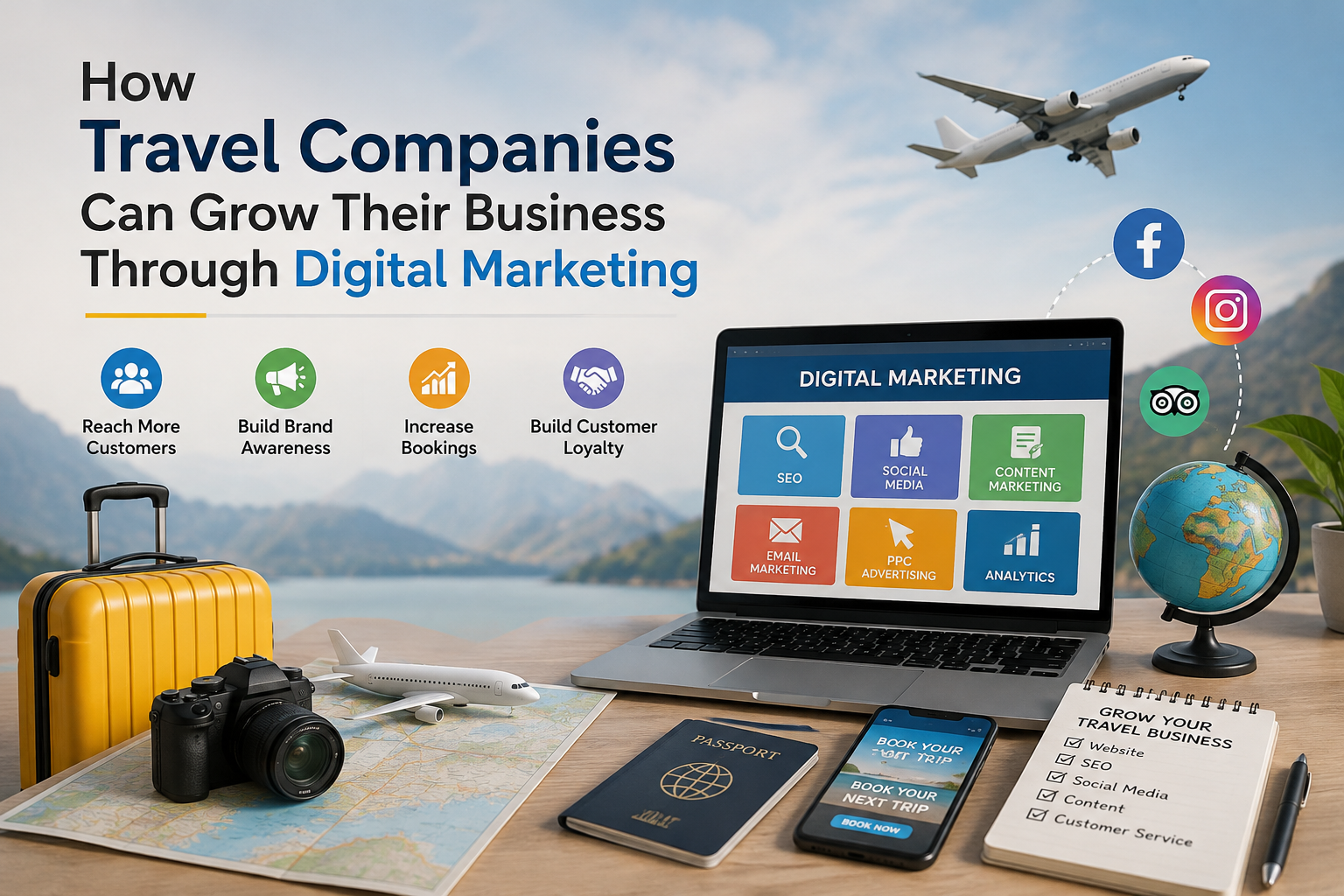
The travel industry has changed significantly in recent years. Today, people use search engines, social media platforms, travel blogs, and online reviews to discover destinations and plan their holidays. For travel companies, this change creates new opportunities to reach potential customers, build trust, and increase bookings through digital marketing.
Whether a business offers holiday packages, adventure tours, family vacations, or religious travel services, having a strong online presence is essential. A well-planned digital marketing strategy helps travel companies connect with the right audience and stand out in a competitive market.

Build a Professional and User-Friendly Website
A company website is often the first place potential customers visit when researching a travel business. It should provide clear information about available packages, destinations, prices, services, and booking procedures.
A professional website should be easy to navigate on desktop computers and mobile devices. Visitors should be able to find important information without clicking through multiple pages. Fast loading speeds, clear contact details, secure booking options, and high-quality images can also improve the overall experience.
Travel companies should create dedicated pages for their main destinations and services. For example, a business offering family holidays can develop separate pages for family-friendly destinations, accommodation options, and travel itineraries. This makes the website more useful for visitors and helps search engines understand the services being offered.
Use Search Engine Optimization to Increase Visibility
Search engine optimization (SEO) helps travel businesses appear in relevant search results when people look for destinations, holiday packages, and travel services. Unlike paid advertising, SEO can attract visitors over time without requiring payment for every click.
The first step is understanding what potential customers search for online. A travel company can research keywords related to its destinations, services, and target audience. These keywords should be incorporated naturally into page titles, headings, descriptions, and useful website content.
Creating informative blog posts is another effective SEO strategy. Articles about destination highlights, local customs, accommodation choices, transportation, and seasonal travel advice can attract people who are still researching their trips.
Businesses should also focus on technical SEO, including mobile usability, internal linking, page speed, and a logical website structure. Regularly reviewing search performance helps identify opportunities to improve existing pages and develop new content.
Publish Helpful Travel Content
Content marketing allows travel companies to demonstrate their knowledge while helping potential customers make informed decisions. Instead of publishing only promotional material, businesses should answer common questions and address the practical challenges travellers face.
Useful content ideas include packing checklists, destination comparisons, budget planning tips, cultural etiquette, and suggested itineraries. A detailed travel guide can help readers understand what to expect before visiting a destination, including transportation options, local attractions, accommodation, and important travel preparations.
Content should be accurate, easy to understand, and updated when travel requirements or local conditions change. Including original photographs, practical examples, and first-hand insights can make articles more valuable.
Travel businesses can also repurpose blog content into short videos, social media posts, email newsletters, and downloadable checklists. This allows one well-researched article to reach audiences across multiple platforms.
Make Social Media Part of the Marketing Strategy
Social media platforms give travel companies an opportunity to showcase destinations and communicate directly with potential customers. Beautiful scenery, cultural experiences, hotel facilities, and travel itineraries can all provide engaging visual content.
Businesses should select platforms based on their target audience rather than trying to maintain an active presence everywhere. Instagram and TikTok can be useful for short travel videos, while Facebook can support community engagement, customer questions, and package announcements.
Consistency is more important than posting excessively. A manageable content calendar can include destination highlights, travel tips, customer experiences, seasonal recommendations, and answers to frequently asked questions.
Companies should also respond professionally to comments and direct messages. Prompt communication helps build relationships and makes potential customers more comfortable asking questions about their travel plans.
Use Customer Reviews to Build Trust
Trust plays an important role when customers choose a travel company. People may be spending significant amounts on flights, accommodation, tours, and other arrangements, so they want reassurance that a business is reliable.
Customer reviews can provide valuable social proof. Travel companies should encourage genuine customers to share honest feedback after completing their trips. Reviews may be collected through appropriate review platforms or the company’s own feedback process.
Businesses should respond politely to both positive and negative reviews. Thanking customers for positive feedback shows appreciation, while addressing complaints professionally demonstrates a willingness to resolve problems.

Companies must avoid publishing fake reviews or misleading testimonials. Authentic feedback is more valuable for long-term reputation management than artificially increasing ratings.
Invest in Targeted Digital Advertising
Paid advertising can help travel companies reach potential customers who are actively searching for specific services or destinations. Search advertising can target relevant queries, while social media campaigns can introduce packages to audiences based on suitable interests and location settings.
Successful campaigns require clear objectives. A business might aim to generate enquiries, increase package bookings, promote a seasonal offer, or encourage visitors to request a quotation.
Advertising messages should explain the main benefits of a service and direct users to a relevant landing page. Sending every visitor to the homepage may create unnecessary friction if they are interested in a particular destination or package.
Travel businesses should monitor clicks, enquiries, conversion rates, and booking costs. Reviewing these results helps identify which campaigns generate genuine business rather than simply attracting website traffic.
Build Relationships Through Email Marketing
Email marketing helps travel companies maintain communication with people who have expressed interest in their services. With appropriate consent, businesses can send destination inspiration, seasonal travel advice, package updates, and useful planning resources.
Messages should be relevant to the subscriber’s interests. For example, someone researching family holidays may appreciate family-friendly itineraries, while another subscriber may prefer adventure travel recommendations.
A welcome email can introduce the company and explain the resources available to subscribers. Later emails can provide helpful information before presenting a suitable offer.
Travel companies should avoid sending excessive messages and should provide a clear unsubscribe option. Respectful communication supports long-term relationships and helps protect the company’s reputation.
Measure Results and Improve Performance
Digital marketing works best when businesses regularly review their performance. Website analytics and search performance tools can reveal which pages attract visitors, what people search for, and where potential customers leave the booking process.
Companies should track meaningful metrics, including qualified enquiries, completed bookings, conversion rates, customer acquisition costs, and revenue generated by marketing channels.
For example, a blog post may receive substantial traffic but produce few enquiries. Improving its relevance, adding clearer next steps, or linking to a suitable service page may help visitors find what they need.
Testing different headlines, landing pages, calls to action, and advertising messages can also reveal what works best. Decisions based on reliable data help businesses use their marketing budgets more effectively.
Conclusion
Digital marketing offers travel companies practical ways to increase visibility, build credibility, and attract more customers. A user-friendly website, effective SEO, helpful content, social media engagement, authentic reviews, targeted advertising, and thoughtful email campaigns can work together to support sustainable growth.
The most successful approach focuses on understanding travellers’ needs rather than relying entirely on promotional messages. By providing accurate information, responding to customer questions, and consistently improving the online experience, travel businesses can build stronger relationships and encourage more people to choose their services.
Frequently Asked Questions (FAQs)
1. How can digital marketing help travel companies attract more customers?
Digital marketing helps travel companies reach potential customers through search engines, social media, email campaigns, and online advertising. These channels increase brand visibility, generate enquiries, and encourage bookings.
- Why is SEO important for travel businesses?
SEO helps travel businesses appear in search results when people look for destinations, holiday packages, and travel services. It can attract relevant organic traffic and improve online visibility over time.
3. What type of content should travel companies publish?
Travel companies can publish destination guides, packing tips, travel itineraries, accommodation recommendations, budget planning advice, and information about local customs to help travellers plan their trips.
4. How can social media increase travel bookings?
Social media allows businesses to showcase destinations, share customer experiences, answer questions, and promote travel packages. Engaging content can encourage potential customers to explore services and make enquiries.
5. How do customer reviews affect a travel company’s reputation?
Positive and authentic customer reviews help build trust and give potential travellers greater confidence in a company’s services. Responding professionally to feedback also demonstrates good customer service.


