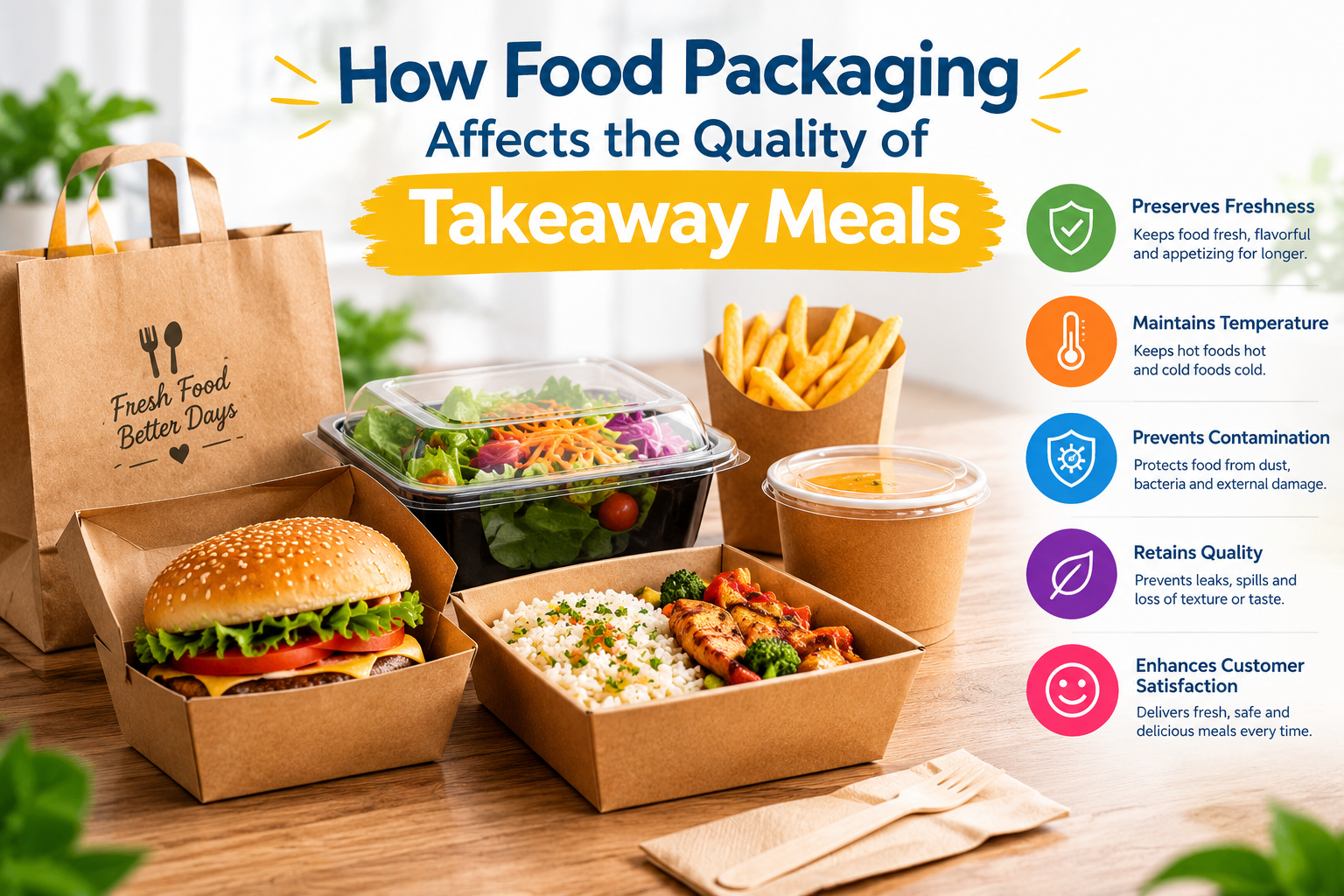
Takeaway food offers convenience for people who want to enjoy their favorite meals at home, at work, or while travelling. However, the quality of a meal can change between the kitchen and the customer’s table. Food that looks appetizing when freshly prepared may arrive soggy, cold, messy, or less flavorful than expected. Although cooking methods and ingredients play an important role, food packaging also influences how well a meal holds up during delivery. Choosing suitable packaging is not simply about placing food inside a container. It involves protecting the meal, managing moisture, maintaining an appropriate temperature, and preventing different ingredients from affecting one another. Understanding these factors helps food businesses deliver meals that look and taste closer to how they were intended to be served.
Packaging Helps Preserve Food Freshness
Freshness is one of the first things people notice when opening a takeaway meal. Vegetables should retain their texture, bread should not become unnecessarily damp, and freshly prepared dishes should maintain their expected appearance. Poor packaging can expose food to air, allow moisture to accumulate, or leave ingredients vulnerable to contamination.

Different foods require different levels of protection. Salads need packaging that helps prevent wilting, while cooked meals may need containers that retain heat without trapping excessive condensation. A suitable container creates a more controlled environment and helps preserve the food’s original characteristics during transport. For businesses serving several types of dishes, choosing Custom Food Boxes designed around their menu can make a practical difference. The size, structure, and material should suit the food being packed rather than forcing every meal into the same type of container.
Moisture Control Protects Taste and Texture
Moisture is a common reason takeaway food loses its appeal. Fried chicken, French fries, and other crispy foods can become soft when steam gets trapped inside a tightly closed container. On the other hand, dishes that contain sauces or gravies need packaging that prevents leaks and keeps the food from drying out. The solution depends on the meal. Foods that release steam may benefit from packaging with suitable ventilation, while liquid-based dishes need secure closures and leak-resistant construction. Separating wet ingredients from dry ones can also help preserve the intended texture.
For example, serving a burger with fresh vegetables and sauce requires a different approach from packing a bowl of curry. A well-considered packaging choice helps each component maintain its quality for longer, particularly when delivery takes more than a few minutes.
Temperature Matters During Food Delivery
Temperature affects both the eating experience and food safety. Hot meals can lose heat during transportation, while chilled foods may warm up if they are not handled correctly. Packaging can help slow temperature changes, but it cannot replace proper storage, insulated transport where necessary, or safe food-handling practices.
Restaurants should consider how far an order will travel and how long the food may remain packed before reaching the customer. Containers that fit the meal properly can reduce unnecessary empty space and help make packing more efficient.
Hot and cold foods should also be kept separate when their temperature requirements differ. For instance, placing a cold drink directly beside a hot meal without appropriate separation can affect the experience of both items. Careful packing and timely delivery help maintain the quality customers expect.
Good Packaging Prevents Spills and Damage
A meal can be prepared perfectly and still disappoint if its contents spill during delivery. Loose lids, weak corners, unsuitable box sizes, and containers that cannot support the food’s weight can create avoidable problems. Sauces may leak into other items, stacked containers can become crushed, and delicate foods may lose their shape when moved around. These problems are especially noticeable in orders containing multiple dishes or meals with liquid ingredients.
Businesses can reduce such risks by selecting containers with secure closures, suitable structural strength, and enough space for the food. Separating individual dishes and keeping heavier items away from delicate ones can also improve the final presentation. Packaging should be tested under realistic conditions before being used for regular deliveries. Checking how containers perform when stacked, carried, and exposed to heat or moisture helps identify weaknesses before they affect customers.
Presentation Influences the Eating Experience
People often judge food visually before taking the first bite. A neatly packed meal creates a better first impression than one that arrives with its contents mixed together or its sauce spread across the container. Presentation is particularly important for burgers, bakery items, desserts, and meals ordered for gatherings. Packaging that maintains the shape of the food and keeps different components organized makes the meal easier to serve and enjoy.
Appearance should not come at the expense of function. Attractive packaging still needs to be practical, easy to open, and appropriate for contact with the food. When these elements work together, the customer receives a meal that feels carefully prepared rather than simply transported.
Packaging Can Improve Food Safety
Food safety depends on several factors, including preparation hygiene, cooking temperatures, storage, and transportation. Packaging contributes by helping protect food from external contamination and preventing contact between separate items. Food-contact materials should be suitable for their intended use, particularly when they will touch hot, oily, acidic, or moist foods. Containers should not be reused in ways that compromise hygiene, and damaged packaging should not be used for serving or transporting meals.
Businesses must also avoid treating packaging as a substitute for temperature control. Perishable food still needs to be stored and transported under appropriate conditions. Clear packing procedures and regular staff training help reduce risks throughout the delivery process. Customers can support safe handling by checking that containers arrive intact and refrigerating perishable leftovers promptly rather than leaving them at room temperature for extended periods.
The Right Packaging Can Reduce Food Waste
Food waste does not always begin in the kitchen. Meals may be discarded because they arrive damaged, leak into their bags, or become unpleasant to eat. Packaging that fits the food and protects it during transport can help prevent these problems.

Container size is an important consideration. An oversized box may allow food to move around, while an undersized one can crush ingredients or make the container difficult to close. Selecting suitable dimensions helps keep meals secure and can reduce the need for unnecessary additional packaging.
Businesses can also review customer complaints to identify recurring issues. If fried foods regularly arrive soggy or soups frequently leak, changing the container or improving the packing process may solve the problem more effectively than changing the recipe. Choosing Custom Packaging thoughtfully can therefore support a better customer experience while reducing avoidable losses.
Choosing Packaging That Suits the Menu
There is no single packaging solution that works equally well for every type of takeaway food. The right choice depends on the ingredients, serving size, moisture level, temperature requirements, and expected delivery time.
Restaurants can make better decisions by considering a few practical factors:
- Food type: Select containers that suit solid meals, liquid dishes, desserts, or fried foods.
- Material suitability: Ensure the packaging is appropriate for the food and its serving temperature.
- Leak resistance: Use secure containers for soups, gravies, dressings, and other liquid ingredients.
- Ventilation: Consider airflow for foods that release steam and need to retain a crisp texture.
- Structural strength: Check that the packaging can support the meal without bending or opening during transport.
- Environmental impact: Consider recyclable or other lower-impact options where suitable local collection and disposal systems are available.
Testing packaging with actual menu items is one of the most reliable ways to assess its performance. A container that works well for a sandwich may not be suitable for a saucy rice dish, so decisions should be based on real use rather than appearance alone.
Conclusion
Food packaging has a direct influence on the quality of takeaway meals. It can help preserve freshness, protect texture, reduce spills, support food safety, and improve presentation. However, the best results come from combining suitable packaging with proper food preparation, safe temperature control, and efficient delivery practices.
Restaurants that evaluate their packaging according to the needs of their menu are better positioned to deliver meals in good condition. By paying attention to container design, material suitability, moisture control, and transportation, food businesses can provide a more satisfying experience from the kitchen to the customer’s table.
Frequently Asked Questions
1. How does food packaging affect the quality of takeaway meals?
Food packaging helps preserve freshness, maintain texture, prevent spills, and protect meals during transportation. Suitable packaging also improves presentation when customers open their orders.
2. Why is moisture control important in food packaging?
Excess moisture can make fried foods soggy and affect the texture of other dishes. Suitable ventilation and separate compartments can help maintain food quality.
3. Which packaging is best for takeaway food?
The best packaging depends on the type of food, its temperature, moisture level, and delivery time. Leak-resistant containers work well for liquid dishes, while ventilated packaging may be better for crispy foods.
4. Can food packaging help keep meals warm?
Yes. Suitable packaging can slow heat loss during delivery. However, proper temperature control and timely transportation are also necessary to maintain food safety.
5. How can packaging prevent food spills during delivery?
Secure lids, strong materials, suitable container sizes, and leak-resistant designs help prevent spills and protect food while it is being transported.
6. Does food packaging influence customer satisfaction?
Yes. Customers are more likely to enjoy their meals when the food arrives fresh, properly arranged, undamaged, and easy to serve.
7. How can takeaway packaging reduce food waste?
Packaging that protects food from spills, crushing, and moisture-related damage can reduce the number of meals customers discard because of poor delivery conditions.
8. Why should restaurants choose packaging according to their menu?
Different foods have different packaging needs. Choosing containers according to portion size, temperature, moisture, and texture helps preserve food quality and makes delivery more reliable.