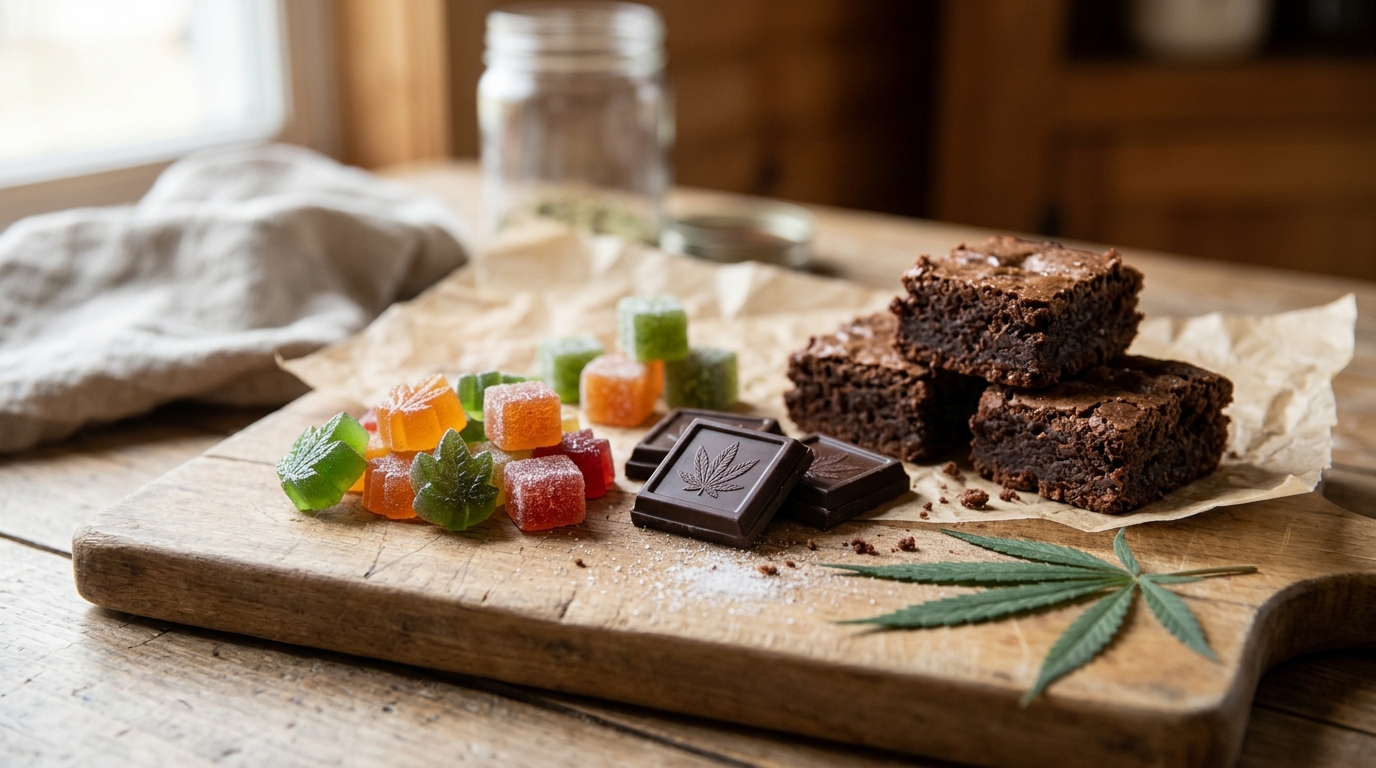
Understanding the available formats involves more than recognizing their appearance. Ingredients, cannabinoid content, serving information, packaging, and storage instructions all matter when evaluating these products. This guide explains the differences between gummies, chocolates, baked goods, and other infused foods, along with important details to look for on product labels.
Cannabis Edibles are food products made with cannabis-derived ingredients, such as THC or CBD. They are available in different forms, with gummies and chocolates being two commonly recognized formats. These products combine familiar food ingredients with cannabis extracts, creating products that may look similar to ordinary sweets but have different ingredients and labeling requirements.

1. What Are the Different Types of Edible Products?
Cannabis Edibles are food-based products that contain cannabis-derived compounds. Unlike products designed for inhalation, these items are prepared in food formats such as gummies, chocolates, cookies, brownies, and other confectionery products. Their ingredients and physical characteristics depend on the product type and manufacturing process.
Different types of cannabis edibles can have different textures, flavors, ingredients, and packaging styles. Gummies are generally soft and chewy, chocolates have a solid or creamy texture, and baked goods resemble traditional bakery items. Although these products share a food-based format, their ingredients and cannabinoid content can vary considerably.
2. Understanding Gummies and Chocolates
Gummies and chocolates are two distinct food formats with different ingredients and physical characteristics. THC Gummies are typically made using ingredients such as gelatin or pectin, sweeteners, flavorings, and other food components. Their soft texture and small shapes make them visually similar to conventional candy, so clear product identification and child-resistant packaging are important considerations.
Cannabis Chocolates use chocolate-based ingredients, which may include cocoa, cocoa butter, sugar, milk ingredients, and cannabis extracts. They can appear as bars, individual pieces, or other confectionery shapes. Understanding cannabis gummies and chocolates means looking beyond flavor and appearance to examine ingredient information, cannabinoid content, serving details, and storage instructions.
3. Ingredients Used in Infused Food Products
The ingredients used in infused food products depend on the recipe, product format, and type of cannabis extract included. Some products use plant-derived extracts, while others contain specific cannabinoids in processed forms. Food ingredients may include sweeteners, oils, flavorings, coloring agents, cocoa, gelatin, pectin, flour, and other components commonly found in confectionery and baked products.
Cannabis edible ingredients and product labels provide useful information about what a product contains. People reviewing these products should pay attention to allergen declarations, ingredient lists, cannabinoid information, and any warnings printed on the packaging. For example, a chocolate product may contain milk, soy, or nuts, while a gummy product may use gelatin or plant-based alternatives. Ingredient information helps distinguish one product from another and identifies components that may be relevant to individual dietary requirements.
4. Cannabis Baked Goods and Other Food Formats
Cannabis Baked Goods include food products such as cookies, brownies, cakes, and other bakery-style items containing cannabis-derived ingredients. These products may resemble ordinary baked treats, but their composition can differ depending on the recipe and infused ingredients. Their texture, appearance, portion size, and ingredient combinations are determined by the particular product.
Other types of infused food may include beverages, candies, mints, and assorted confectionery products. Each format has its own packaging and ingredient considerations. For example, a beverage may include liquid ingredients and flavoring agents, while a baked product may contain flour, oils, sugar, and common food allergens. The format alone does not establish cannabinoid strength, so product-specific information should always be reviewed.
5. How to Read Edible Product Labels and Packaging
Edible Product Labels help identify the contents and important characteristics of packaged products. Depending on the applicable regulations, packaging may display the product name, ingredients, cannabinoid content, serving information, manufacturer details, batch identification, warnings, and storage instructions. These details help distinguish regulated products from ordinary food items and provide information that cannot be determined from appearance alone.

Understanding edible serving information and packaging requires paying attention to both individual serving details and the total amount listed for the package. These figures are not necessarily the same. Consumers should read the complete label rather than relying on the size, shape, or number of pieces. Packaging should also be checked for clear identification, required warnings, and child-resistant features where applicable. Labeling requirements vary by location, so products should be evaluated according to the rules that apply where they are sold.
Conclusion
Cannabis Edibles are available in several food formats, including gummies, chocolates, baked goods, candies, and beverages. Each format has different ingredients, textures, and packaging characteristics. Understanding these differences makes it easier to recognize product categories and interpret the information provided on their labels.
The most useful approach is to look beyond appearance and review the complete product information. Ingredients, cannabinoid content, serving details, warnings, and storage instructions all contribute to a clearer understanding of an edible product and its packaging.
Frequently Asked Questions
1. What are the most common edible product formats?
Common formats include gummies, chocolates, cookies, brownies, candies, mints, and infused beverages. Each format has different ingredients, textures, and packaging characteristics.
2. What is the difference between gummies and chocolates?
Gummies generally have a soft, chewy texture and may contain gelatin or pectin. Chocolates use cocoa-based ingredients and can be produced as bars, pieces, or other confectionery shapes.
3. What information should an edible product label contain?
Depending on local regulations, a label may include ingredients, cannabinoid content, serving information, warnings, batch details, manufacturer information, and storage instructions.
4. Are cannabis baked goods different from regular baked goods?
They may look similar, but infused baked goods contain cannabis-derived ingredients. Their labels and packaging should clearly identify their contents and applicable warnings.
5. Why is child-resistant packaging important?
Products that resemble ordinary sweets can be mistaken for regular food. Child-resistant packaging and clear labeling help reduce the risk of accidental access by children.
6. Does every edible product contain the same amount of THC?
No. Cannabinoid content varies between products and brands. The product label should be checked for the stated amount rather than assuming that similar-looking products contain equal amounts.
7. What should consumers check before purchasing an edible product?
Consumers should review the ingredient list, cannabinoid information, serving details, warnings, packaging, and applicable legal requirements. They should also keep products securely stored away from children and pets.