Hair fall and thinning hair are increasingly common concerns among both men and women. Genetics, hormonal changes, stress, nutritional deficiencies, lifestyle factors, and certain medical conditions can all contribute to excessive hair loss. As awareness of non-surgical hair restoration continues to grow, GFC Treatment in Kalyan Nagar has become an option for people looking for a minimally invasive approach to supporting hair growth.

At Neotis Clinic, GFC treatment is offered following an assessment of the scalp, hair density, and individual hair-loss pattern. Understanding the cause of hair loss is an important first step before choosing any hair restoration procedure.

What Is GFC Treatment?
GFC stands for Growth Factor Concentrate. It is a regenerative hair treatment that uses growth factors derived from the patient’s own blood.
During the procedure, a small blood sample is collected and processed using a specialized technique to obtain a concentrated preparation containing growth factors. These growth factors are then carefully introduced into selected areas of the scalp.
The aim is to support the activity of weakened hair follicles and create a healthier environment for hair growth.
Unlike a hair transplant, GFC does not involve surgically moving hair follicles from one area of the scalp to another. It is instead designed to support existing follicles.
Why Is GFC Treatment Trending?
The demand for non-surgical hair restoration has increased as people look for treatments that fit into busy lifestyles. GFC has attracted attention because it uses the patient’s own biological material and does not require a surgical hair transplant.
Another reason for its popularity is that treatment sessions are generally relatively short and do not involve a lengthy recovery period.
However, GFC is not a universal solution for every type of hair loss. Its suitability depends on factors such as the cause and stage of hair loss, follicle condition, age, and overall scalp health.
How Does GFC Help With Hair Loss?
Healthy hair growth depends on active and well-functioning hair follicles. When follicles become weakened or miniaturized, hair may gradually become thinner and less dense.
Growth factors are involved in several biological processes related to tissue repair and cellular activity. GFC treatment aims to deliver concentrated growth factors to the scalp to support the functioning of weakened follicles.
The goal may include:
- Supporting existing hair follicles
- Improving the appearance of hair density
- Encouraging healthier hair growth
- Strengthening thinning hair
- Helping manage early-stage hair thinning
Results vary between individuals, and realistic expectations are important before starting treatment.
Who Can Consider GFC Treatment?
GFC Treatment in Kalyan Nagar may be considered by men and women experiencing certain types of hair thinning or early hair loss.
A consultation is particularly important if you notice:
- Increased hair shedding
- Gradual thinning at the crown
- Reduced hair density
- A widening hair part
- Early-stage pattern hair loss
- Weak or fine hair
People experiencing sudden or unexplained hair loss should first undergo appropriate medical evaluation to identify the underlying cause.
What Happens During a GFC Session?
The process generally begins with a consultation and scalp assessment. Your dermatologist evaluates your hair density, scalp condition, and pattern of hair loss.
If GFC is considered appropriate, a small blood sample is collected. The sample is processed using a specialized system to prepare the growth factor concentrate.
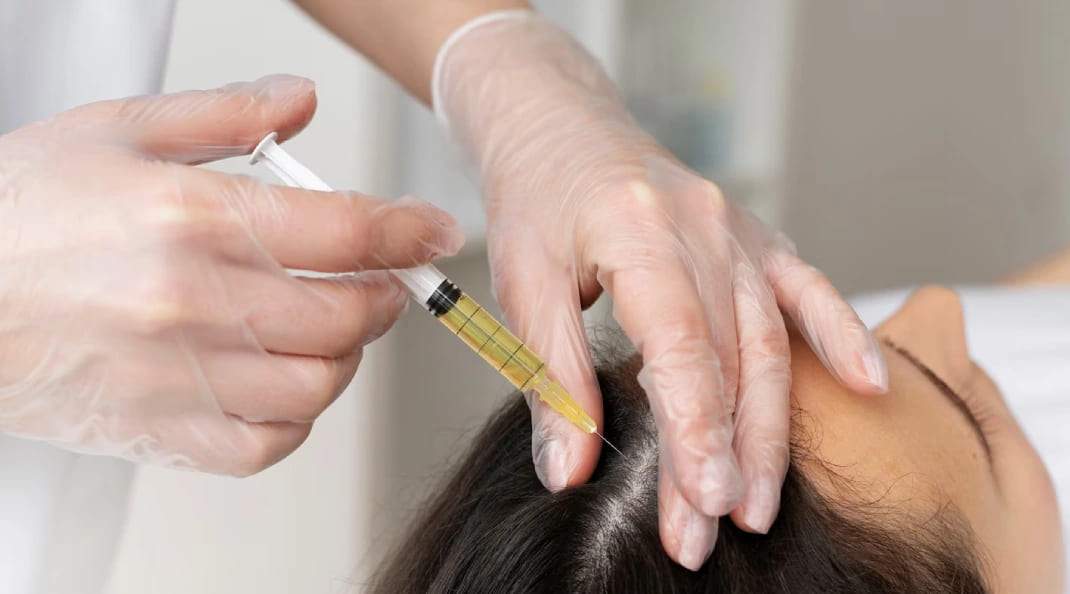
The prepared concentrate is then administered into selected areas of the scalp using controlled injections.
The procedure is minimally invasive, and patients can generally return to their routine relatively quickly. Specific instructions may be provided regarding scalp care immediately after treatment.

How Many Sessions Are Required?
The number of GFC sessions depends on the individual’s hair-loss pattern and treatment goals. A dermatologist may recommend a series of sessions rather than expecting significant improvement after a single treatment.
Hair growth is naturally slow, so visible changes may take time. Follow-up assessments can help determine how the scalp is responding and whether additional sessions or complementary treatments are appropriate.
Maintaining realistic expectations is essential because no hair restoration procedure can guarantee the same outcome for every patient.
GFC Treatment vs Hair Transplant
GFC and hair transplantation are different procedures.
A hair transplant involves surgically transferring hair follicles from a donor area to areas with significant hair loss. GFC, on the other hand, does not transplant follicles. It uses concentrated growth factors to support existing follicles.
GFC may therefore be considered when follicles are still present but weakened or thinning. Individuals with advanced hair loss or areas with little to no viable hair may require a different treatment approach.
A dermatologist can assess your scalp and explain which options may be appropriate.
GFC Treatment vs PRP
PRP, or Platelet-Rich Plasma, is another regenerative treatment used for hair loss. Both treatments use a patient’s own blood, but the preparation and concentration processes differ.
GFC focuses on preparing a concentrated growth-factor solution, while PRP uses platelet-rich plasma containing platelets and associated growth factors.
The most appropriate option depends on individual circumstances. Rather than choosing a treatment based only on popularity, it is better to have your scalp evaluated by a qualified professional.
Why Choose Neotis Clinic?
Choosing an experienced clinic is an important part of any hair restoration treatment. At Neotis Clinic, patients undergo a detailed consultation before GFC therapy is recommended.
The treatment approach can be customized according to:
- Hair-loss pattern
- Scalp condition
- Hair density
- Medical history
- Treatment goals
A personalized approach helps ensure that treatment decisions are based on individual needs rather than a standard protocol.
Consult the Best Dermatologist in Kalyan Nagar
Before starting GFC Treatment in Kalyan Nagar, consulting the Best Dermatologist in Kalyan Nagar can help you understand the actual cause of your hair loss.
A dermatologist can evaluate whether your hair loss is related to genetics, hormones, nutritional factors, scalp conditions, or other causes. This assessment is important because treating the underlying problem may be necessary alongside hair restoration procedures.
Your dermatologist can also explain expected results, potential side effects, treatment intervals, and whether GFC should be combined with other hair-loss treatments.
Aftercare Following GFC Treatment
Following your dermatologist’s instructions after treatment can support scalp comfort and recovery. Depending on your individual treatment plan, you may be advised to avoid vigorous scalp massage, excessive heat, or certain hair products for a short period.
Keeping the scalp clean and following prescribed skincare or hair-care recommendations is also important.
Final Thoughts
Hair loss can be frustrating, but modern dermatology offers several options for managing thinning hair. GFC Treatment in Kalyan Nagar is a minimally invasive hair restoration approach designed to support weakened hair follicles using concentrated growth factors derived from the patient’s own blood.
At Neotis Clinic, treatment begins with professional assessment and personalized planning. If you’re experiencing hair thinning or increased hair fall, consult the Best Dermatologist in Kalyan Nagar to determine the cause of your hair loss and whether GFC treatment is suitable for you.