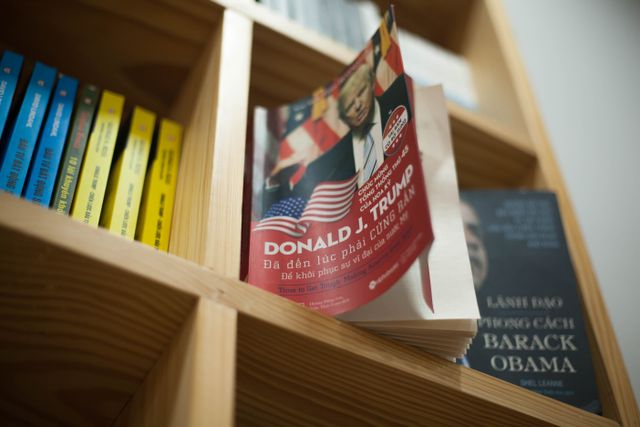
Donald Trump’s political journey is one of the most consequential and debated stories in modern American politics. Before entering politics, Trump was widely known as a businessman, real estate developer, television personality, and author. His transition from business and entertainment into national politics changed the Republican Party, influenced political communication, and created strong reactions among both supporters and critics.

Today, discussions surrounding Donald Trump News continue to attract significant public attention because his policies and political decisions affect domestic issues, the economy, immigration, foreign relations, and the future direction of the Republican Party.

From Businessman to Political Figure
Donald Trump was born in 1946 in New York City and built a public profile through real estate development, branding, media appearances, and entertainment. His name became closely associated with prominent properties and business ventures in New York and other locations.
His television career also expanded his national recognition. As host of The Apprentice, Trump became familiar to millions of Americans and developed a distinctive public persona centered on business, negotiation, leadership, and direct communication.
Although he had discussed political issues for years, his decision to seriously pursue the presidency represented a major shift in his career.
The 2016 Presidential Campaign
Trump formally entered the 2016 Republican presidential race with a campaign built around the slogan “Make America Great Again.”
His campaign emphasized several major themes, including immigration enforcement, economic nationalism, trade, border security, and skepticism toward established political institutions.
Rather than relying entirely on traditional political communication, Trump frequently used rallies, television appearances, and social media to communicate directly with voters.
His unconventional campaign style attracted millions of supporters while also generating significant criticism. He defeated a large Republican primary field and eventually faced Democratic nominee Hillary Clinton in the general election.
Trump won the Electoral College and became the 45th president of the United States in January 2017, despite losing the national popular vote.
His First Presidency
Trump’s first administration focused heavily on economic policy, immigration, trade, deregulation, and judicial appointments.
The administration pursued tax reductions and regulatory changes intended to encourage investment and economic activity. One of the most important legislative achievements was the 2017 Tax Cuts and Jobs Act.
Immigration and border security became central issues throughout the administration. Trump’s proposed border wall and efforts to change immigration policy generated intense political debate.
His administration also renegotiated the North American Free Trade Agreement, resulting in the United States-Mexico-Canada Agreement, commonly known as USMCA.
The White House credits the first administration with achievements including tax and regulatory changes, the creation of the Space Force, criminal justice reform, military investment, and the appointment of more than 250 federal judges, including three Supreme Court justices.
A Different Style of Presidential Communication
One of Trump’s most significant influences has been his approach to political communication.
He frequently communicated directly with the public through social media and public statements rather than relying exclusively on traditional press conferences or formal political speeches.
This approach changed expectations around how presidents interact with voters.
Supporters viewed his direct style as evidence that he was willing to challenge established political norms. Critics argued that his communication style often increased political polarization and created confusion around official policy positions.
Regardless of political viewpoint, Trump’s ability to dominate public discussion became a defining characteristic of his political career.
Influence on the Republican Party
Trump’s influence extends beyond his own presidential campaigns.
During and after his first presidency, the Republican Party increasingly adopted positions associated with his political movement, particularly on immigration, trade, national sovereignty, cultural issues, and skepticism toward traditional political institutions.
His influence also changed Republican primary politics. Candidates seeking Republican support increasingly had to consider their relationship with Trump’s political base.
The result has been a Republican Party that is significantly different from the party that existed before Trump’s rise.
The 2020 Election and Its Aftermath
Trump sought reelection in 2020 but lost to Democratic nominee Joe Biden.
The election and its aftermath became one of the most controversial periods in recent American political history. Trump disputed the election results and made claims of election irregularities, while courts and election officials rejected efforts to overturn the result.
The January 6, 2021 attack on the U.S. Capitol became another defining moment in Trump’s political legacy.
The events generated extensive investigations, legal proceedings, and political debate over presidential responsibility, election integrity, and the peaceful transfer of power.
These issues continue to influence American political discussions and remain an important part of how historians and voters assess Trump’s first presidency.
The Return to the White House
Trump remained a major force in Republican politics after leaving office. He announced another presidential campaign and ultimately won the 2024 election, returning to the White House in January 2025.

The White House identifies him as the 45th and 47th president of the United States.
His return made him the first U.S. president since Grover Cleveland to serve two nonconsecutive terms.
The second administration has continued several themes associated with Trump’s earlier political platform, including border security, deregulation, energy policy, trade, and restructuring parts of the federal government.
Major Priorities of His Second Administration
Trump’s second administration has placed strong emphasis on immigration and border security.
Economic policy has also remained central. The administration has promoted tax reform, deregulation, domestic investment, and American energy production as important components of its economic strategy.
Another major area is the federal workforce and government structure. The administration has pursued changes intended to give presidential leadership greater control over certain federal positions. Critics argue that these changes could weaken protections for career civil servants, while supporters describe them as necessary for government accountability.
Foreign policy has also remained prominent, with Trump’s administration emphasizing negotiations, military strength, trade relationships, and a broader “America First” approach.
Economic and Trade Influence
Trade policy has been one of the most recognizable features of Trump’s political philosophy.
He has repeatedly argued that the United States should use tariffs and trade negotiations to protect American industries and encourage domestic production.
Supporters believe such policies can strengthen American manufacturing and improve negotiating leverage with other countries. Critics argue that tariffs can increase costs for businesses and consumers and create international trade tensions.
The debate illustrates a broader question surrounding Trump’s economic approach: how much should the United States prioritize domestic production and protection over traditional free-trade policies?
Influence on American Political Culture
Trump’s influence is not limited to government policy.
He has changed political campaigning, media coverage, fundraising, social media communication, and voter engagement.
His political movement demonstrated that a candidate could build an enormous national following without following the traditional political career path.
His rallies and direct communication style also helped create a highly engaged political base.
At the same time, Trump’s approach has contributed to intense political polarization. Supporters often view him as a leader willing to challenge Washington’s political establishment, while opponents see his rhetoric and governing style as harmful to democratic norms.
This sharp divide is one reason his political influence remains so significant.
Trump’s Continuing Impact in 2026
Trump’s second presidency continues to shape American political debate. Current developments include debates over federal government restructuring, foreign policy, economic conditions, immigration, and the upcoming 2026 midterm elections.
Recent polling has also shown challenges for the administration. A Reuters/Ipsos poll published in August 2026 reported a 33% approval rating for Trump, his lowest level of the current presidency, with economic concerns and the conflict involving Iran contributing to voter dissatisfaction.
At the same time, the White House presents a substantially more positive assessment, highlighting border security, economic growth, energy production, deregulation, and other policy achievements.
These contrasting perspectives demonstrate why Trump’s presidency remains highly debated.
What Is Trump’s Political Legacy?
It may be too early to determine Trump’s final historical legacy because his second presidency is still ongoing.
However, several elements are already clear.
He transformed the Republican Party, changed presidential communication, influenced debates about immigration and trade, reshaped judicial appointments, and challenged traditional assumptions about how political campaigns and presidencies should operate.
His supporters argue that he has brought greater attention to issues that traditional politicians ignored. His critics argue that his political style has increased polarization and challenged established democratic norms.
Both perspectives are part of the broader discussion surrounding his influence.
Conclusion
Donald Trump political journey represents one of the most remarkable transformations in modern American politics. From businessman and television personality to the 45th and 47th president, his career has repeatedly challenged conventional expectations.
His influence can be seen in Republican Party politics, immigration debates, trade policy, presidential communication, federal government management, and America’s relationship with the rest of the world.
As his second presidency continues, Donald Trump News remains closely followed by voters, political analysts, businesses, and international observers.
Whatever opinions people hold about his policies or personality, Trump’s impact on American politics is difficult to ignore. His political movement has changed the Republican Party and influenced national debates that are likely to continue shaping the United States for years to come.