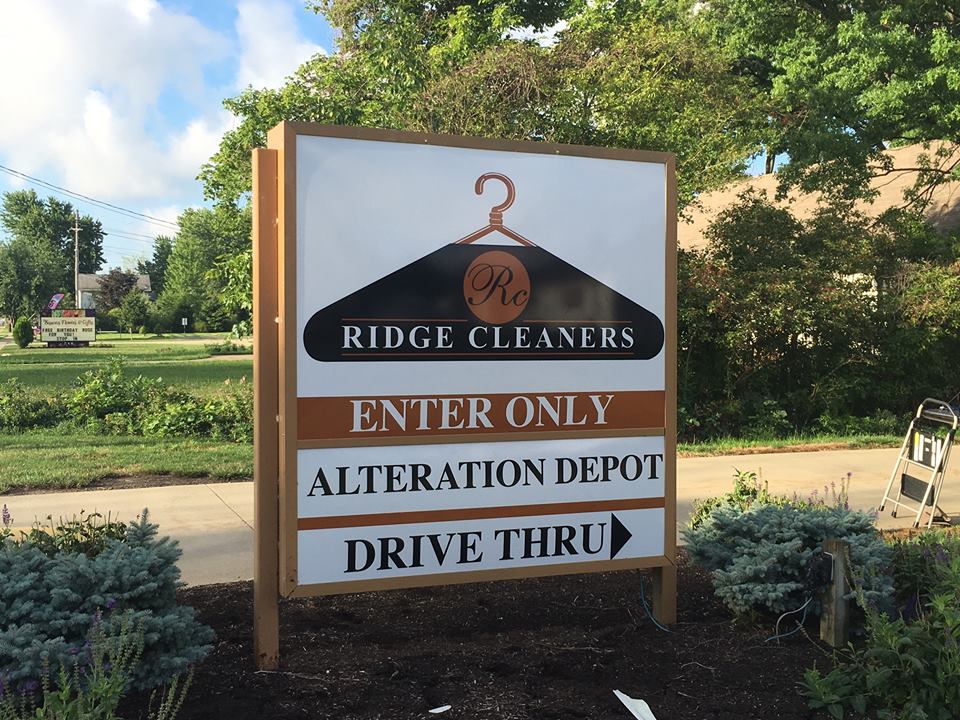
Introduction: Why Directional Signage Matters for Gurnee Businesses
In a busy commercial or industrial property, finding the correct entrance should not be a challenge. Delivery drivers need to locate loading docks, vendors need to reach receiving departments, employees need to identify parking areas, and visitors need to find the right building without repeatedly stopping for directions. For warehouses, distribution facilities, and business parks in Gurnee, Illinois, effective directional signage helps make these daily movements more organized.

Gurnee occupies an important position along the Chicago–Milwaukee transportation corridor. Commercial activity along Interstate 94, North Route 41, and South Route 41 includes a mix of retail, office, industrial, and logistics-related uses. As businesses operate across multi-building properties and shared access roads, clear wayfinding becomes an essential part of managing the customer and delivery experience.

SpeedPro Lake County, based in Gurnee, provides large-format printing, signage, and graphics solutions for businesses across Lake County and the surrounding northern suburbs. For organizations planning Directional Signage in Lake County, custom signage can help identify entrances, distinguish vehicle routes, mark loading zones, and guide visitors through complex commercial properties.
The goal is not simply to install more signs. It is to give people the right information at the point where they need to make a decision.
Understanding the Need for Directional Signage in Gurnee’s Commercial Corridors
Different commercial locations create different navigation challenges. A warehouse near a major transportation route may receive tractor-trailers, parcel carriers, contractors, and employee vehicles throughout the day. A multi-tenant business park may need to guide visitors to several buildings, offices, and parking areas from one entrance.
Gurnee’s commercial geography makes these distinctions particularly relevant.
Interstate 94 and the Regional Transportation Corridor
Interstate 94 connects the Chicago and Milwaukee metropolitan areas and provides access to major commercial and visitor destinations in Gurnee. Businesses located near this corridor may serve customers and suppliers arriving from outside Lake County, making recognizable entrances and clear property identification especially useful.
A roadside sign establishes the destination, but drivers often need additional information once they enter the property. Directional signs at internal intersections can identify truck access, visitor parking, receiving areas, and building numbers.
For facilities with multiple driveways, the sequence of signs matters. A sign placed after a driver has already passed the correct turn provides limited assistance. Advance identification, followed by confirmation at the entrance, creates a more logical navigation experience.
North Route 41: Mixed Commercial and Industrial Activity
The North Route 41 corridor includes industrial facilities, office and flex properties, multi-tenant retail, and highway-oriented commercial development. This variety means that one property may need to accommodate different groups of visitors.
Custom Directional Signage can separate employee parking from delivery access, identify individual tenant entrances, and direct visitors toward designated reception areas. Consistent building numbers and directional arrows also help delivery drivers distinguish between neighboring facilities.
South Route 41 and Commercial Connectivity
South Route 41 serves an established mix of industrial, office, and retail businesses. Properties with shared access points or multiple buildings can benefit from a coordinated sign system that explains how the site is organized.
For example, a business park could use an entrance directory to list tenants, directional signs to identify building ranges, and smaller identification signs at individual entrances. Each sign contributes a specific piece of information instead of forcing visitors to interpret the entire property at once.
These examples reflect common site-planning needs rather than claims about a particular business’s current signage or delivery performance.
What Is Custom Directional Signage?
Custom Directional Signage consists of signs designed to guide people and vehicles toward specific destinations. Unlike promotional signs, which primarily advertise a brand or product, directional signs communicate actionable information.
Common examples include:
- Entrance and exit signs: Identify the correct access point and help drivers avoid entering through restricted or unsuitable routes.
- Loading dock signs: Direct delivery vehicles to designated receiving areas and dock numbers.
- Truck and delivery route signs: Separate commercial vehicle movements from visitor or employee traffic where appropriate.
- Building identification signs: Make individual warehouses, office suites, and industrial units easier to recognize.
- Parking signs: Identify visitor, employee, accessible, reserved, and other designated parking areas.
- Internal wayfinding signs: Guide visitors through intersections, driveways, walkways, and multi-building campuses.
- Safety and restricted-access signs: Communicate site rules, pedestrian crossings, clearance restrictions, and authorized-access requirements.
The right combination depends on the property layout, the vehicles using the site, the number of destinations, and applicable safety and accessibility requirements.
How Directional Signage Supports Warehouse and Delivery Operations
Warehouse navigation is closely connected to operational efficiency. When drivers cannot identify the correct receiving entrance, they may circle the property, stop to ask for help, or enter an unsuitable driveway. Repeated confusion can create avoidable interruptions for warehouse employees and other drivers.
A planned directional sign system helps address these issues in several ways.
Separating Truck Traffic from Visitor Traffic
Warehouses and distribution facilities often have different routes for heavy vehicles, passenger cars, and pedestrians. Signs can identify truck entrances, employee parking, visitor check-in, and pedestrian crossings before routes intersect.
The exact arrangement should follow the site’s traffic-management plan and physical conditions. Signage supports that plan but cannot replace suitable road geometry, barriers, markings, or other necessary safety controls.
Identifying Loading Docks and Receiving Areas
Large facilities may have several docks serving different departments, products, or delivery schedules. A clear sign sequence can direct drivers from the main entrance to the correct loading zone and then identify the specific dock or receiving door.
For example, a warehouse with eight loading docks might group them into two clearly marked zones, such as Docks 1–4 and Docks 5–8, if that arrangement matches its actual layout. The entrance sign identifies the correct zone, while smaller signs confirm the individual dock number.
This is a practical design example, not a measured performance result. Its value comes from reducing the number of decisions drivers must make without adequate information.
Supporting First-Time Drivers and Contractors
Regular employees may know the property well, but new delivery drivers, maintenance contractors, and temporary staff may not. A consistent system of arrows, building numbers, recognizable colors, and concise labels helps make the site easier to understand without relying on familiarity.
For businesses receiving deliveries from multiple carriers, this can be especially useful during busy receiving periods or shift changes.
Choosing the Right Signage Format for Commercial and Industrial Properties
Directional signage is most effective when each sign type matches its environment and viewing distance.
| Signage format | Primary function | Best application |
|---|---|---|
| Freestanding entrance signs | Identify a property and its main access point | Business parks, warehouse campuses, multi-tenant facilities |
| Post-and-panel signs | Display directional messages or building information | Internal roads, driveway intersections, facility entrances |
| Wall-mounted signs | Identify doors, departments, docks, or receiving areas | Warehouse exteriors and loading zones |
| Overhead signs | Communicate information above vehicle or pedestrian routes | Suitable covered loading areas and designated clearance points |
| Pavement graphics and markings | Reinforce routes and identify designated ground areas | Parking lots, pedestrian paths, staging zones where permitted |
| Interior directional signs | Guide visitors after they enter a building | Reception areas, corridors, offices, and shared facilities |
No single format is ideal for every situation. A freestanding sign may be appropriate at a property entrance, while a wall-mounted sign is more practical beside a receiving door.
A coordinated system typically combines several formats so that the information remains consistent from the street to the final destination.
Designing Directional Signage for Readability and Durability
Commercial and industrial signs must perform under real operating conditions. Drivers may view them through a windshield, from an unfamiliar approach angle, in rain, during early morning deliveries, or after dark. Warehouse staff may encounter signs in areas with vehicle movement, outdoor exposure, and frequent handling.
Several design principles help improve performance.
Use Concise, Recognizable Messages
A driver approaching an intersection needs a quick instruction, not a paragraph. Messages such as “Truck Entrance,” “Receiving,” “Visitor Parking,” and “Building 3” are generally easier to interpret at a glance than lengthy descriptions.
Establish a Consistent Visual Hierarchy
Use clear typography, sufficient contrast, recognizable arrows, and consistent placement of information. If loading docks are identified with a specific numbering system, the same system should appear at the entrance directory and throughout the property.
Color can support navigation, but essential instructions should remain understandable without relying on color alone.

Select Materials for the Installation Environment
Gurnee experiences seasonal temperature changes, winter precipitation, moisture, and summer sun. Exterior directional signs should use suitable materials, finishes, mounting hardware, and printing methods for their exposure conditions.
Aluminum panels, appropriate composite materials, durable exterior graphics, and protective finishes may be suitable depending on the application. Interior signs can use different materials when weather resistance and structural demands are less significant.
Consider Nighttime Visibility
Facilities that receive early-morning or evening deliveries should consider viewing conditions after daylight fades. Reflective elements or appropriate illumination may improve visibility where permitted and suitable for the site.
Lighting should not create glare or distract drivers. Sign placement and contrast remain important even when illumination is available.
Plan for Maintenance and Future Changes
Tenant names, dock assignments, and building functions can change. Modular panels and replaceable graphics can make updates easier without requiring every sign to be rebuilt.
During planning, businesses should identify who is responsible for sign maintenance, how damaged signs will be replaced, and how new tenants or facility expansions will be incorporated into the existing system.
An Original Wayfinding Audit for Lake County Businesses
Before ordering new signs, property managers can use a simple audit to identify gaps in their current directional signage. This five-point framework is a practical planning tool, not an industry benchmark.
1. Entry clarity: Can a first-time visitor identify the correct entrance before reaching the driveway?
2. Route continuity: Does each major turn have the necessary directional information, or are there gaps between signs?
3. Destination identification: Are buildings, loading docks, reception areas, and parking zones clearly labeled?
4. Traffic separation: Can drivers distinguish truck routes, visitor access, and pedestrian areas where these routes differ?
5. Maintenance readiness: Are signs legible, undamaged, current, and consistent with the property’s actual layout?
A property manager can score each category from 0 to 2:
- 0 = Missing or ineffective
- 1 = Partially effective or inconsistent
- 2 = Clear and effective
The maximum score is 10. A low score indicates areas that deserve closer review; it does not represent a certified safety assessment. Any unclear truck route, hazardous intersection, or missing required safety sign should be addressed promptly regardless of the total.
This framework gives facility teams a repeatable way to prioritize signage improvements and compare conditions before and after an update.
How SpeedPro Lake County Can Help With Custom Directional Signage
SpeedPro Lake County is a Gurnee-based large-format printing, signage, and graphics studio serving commercial clients throughout Lake County and the surrounding region. Its signage and graphics capabilities make the business a relevant option for organizations planning visual communication improvements across offices, industrial facilities, and commercial properties.
For companies evaluating Directional Signage in Lake County, the planning discussion should begin with the actual navigation problem. A warehouse may need clearer receiving directions, while a business park may require consistent tenant identification across several buildings.
Before discussing a project with SpeedPro Lake County, property managers can prepare:
- A site plan showing entrances, internal roads, buildings, and loading areas.
- Photographs of existing signs and locations where visitors become confused.
- A list of required destinations, including dock numbers and parking zones.
- Brand guidelines, preferred colors, and any existing sign standards.
- Information about outdoor exposure, installation surfaces, and expected viewing distances.
- Known permitting, accessibility, traffic-management, or property-owner requirements.
These details help establish the scope of the work and identify the sign formats that may suit the property. Project-specific design, fabrication, installation, and regulatory requirements should be confirmed directly with the provider.
Conclusion: Build a Clearer Route Through Gurnee’s Commercial Properties
As commercial and industrial properties across Gurnee accommodate a mix of tenants, employees, visitors, and delivery vehicles, directional signage becomes an important part of the site experience. The Interstate 94 corridor, North Route 41, and South Route 41 illustrate why commercial access needs can vary from one property to another.
Effective Custom Directional Signage does more than point toward a destination. It creates a consistent sequence of instructions, identifies important access points, supports traffic organization, and helps visitors understand a property without unnecessary guesswork.
For warehouses, distribution facilities, and business parks, the strongest approach begins with a site assessment, a clear information hierarchy, durable materials, and a plan for future changes. Businesses seeking Directional Signage in Lake County can consider SpeedPro Lake County as a local signage and graphics resource when evaluating their next wayfinding project.
A well-planned system makes every sign part of a larger purpose: helping people reach the right place clearly and confidently.
Frequently Asked Questions
1. What is directional signage used for in commercial and industrial properties?
Directional signage guides drivers, employees, contractors, and visitors toward entrances, exits, loading docks, parking areas, reception desks, and individual buildings. It helps make large or unfamiliar properties easier to navigate.
2. Why is directional signage important for warehouses in Gurnee?
Warehouses may receive multiple delivery vehicles while also accommodating employees, contractors, and visitors. Clear signs help identify truck entrances, receiving areas, dock numbers, and designated parking, reducing avoidable confusion.
3. What types of Custom Directional Signage are suitable for business parks?
Business parks may benefit from entrance directories, post-and-panel signs, building identification panels, parking signs, and internal directional signs. The best combination depends on the number of buildings, road layout, visitor access, and tenant requirements.
4. Where should directional signs be placed on an industrial property?
Signs should be positioned where drivers or pedestrians need to make decisions, including entrances, intersections, driveway splits, parking access points, and approaches to loading areas. Placement must account for visibility, obstructions, traffic conditions, and applicable regulations.
5. Which materials work well for outdoor directional signage in Lake County, Illinois?
Weather-appropriate aluminum, suitable composite panels, durable exterior graphics, and protective finishes may be used depending on the sign’s size, location, and installation method. Material selection should account for seasonal temperature changes, moisture, sunlight, and maintenance needs.
6. Can directional signs help separate delivery vehicles from visitor traffic?
Yes. Signs can identify designated truck routes, visitor parking, employee entrances, and pedestrian crossings. They should be coordinated with the property’s traffic-management and safety plans rather than used as a substitute for necessary physical safety measures.
7. How can a business measure whether its wayfinding signs are effective?
Businesses can conduct a structured site audit, observe where first-time visitors hesitate or take incorrect turns, record recurring delivery-location questions, and inspect whether signs remain readable and accurate. Comparing these observations before and after an update can help assess improvement.
8. Does directional signage need to comply with local requirements?
Yes. Depending on its location and function, signage may be subject to local zoning and sign regulations, traffic-control standards, accessibility requirements, or property-specific rules. Requirements should be verified with the relevant authority before production and installation.
9. Can directional signage be updated when a warehouse or business park expands?
Yes. A planned signage system can accommodate additional buildings, revised dock assignments, new tenants, and changed traffic routes. Replaceable panels and consistent numbering conventions can make future updates easier.
10. Where can businesses discuss directional signage projects in Lake County?
Businesses can contact SpeedPro Lake County at its Gurnee studio to discuss their signage and graphics needs. A site plan, photographs, destination list, and details about vehicle access can help clarify the project requirements and potential next steps.