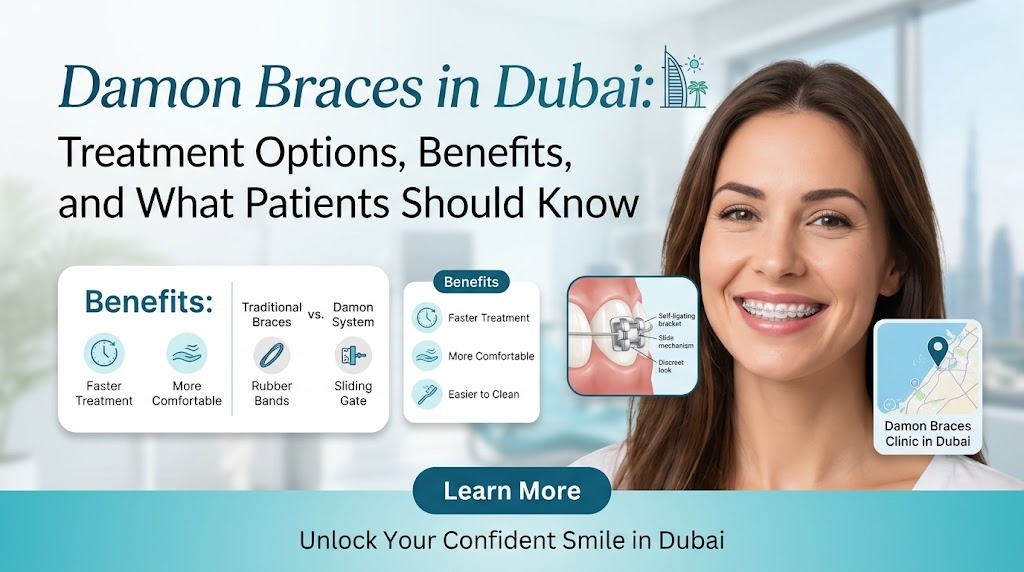
Orthodontic treatment can improve the alignment of teeth, correct bite problems, and make everyday oral hygiene easier. Damon braces in Dubai are an option for teenagers and adults who need fixed braces to address dental crowding, gaps, or certain bite irregularities. This system uses self-ligating brackets that hold the orthodontic wire through a built-in mechanism rather than conventional elastic ties.

For residents of Dubai, choosing an orthodontic treatment involves understanding how different braces work, what results may be realistic, and how much time and maintenance treatment requires. Patients in Jumeirah and surrounding neighbourhoods may encounter several orthodontic options, but the most suitable choice depends on individual dental anatomy, gum health, treatment goals, and professional assessment.

Understanding the technology behind Damon braces can help patients ask better questions and make informed decisions about their orthodontic care.
How Damon Braces in Dubai Work
Damon braces are a type of fixed orthodontic appliance designed to guide teeth into improved positions over time. The system uses brackets with a built-in sliding or self-ligating mechanism to hold an archwire in place. Traditional braces commonly use small elastic ties for this purpose.
The archwire applies controlled forces to the teeth. These forces stimulate changes in the surrounding bone, allowing teeth to move gradually as treatment progresses. The orthodontist monitors this movement and changes the wire or adjusts the appliance when necessary.
Some Damon systems use metal brackets, while others offer clear brackets for patients who prefer a less noticeable appearance. Both designs are intended to provide fixed orthodontic treatment, although the available options depend on the particular system and clinical requirements.
Self-ligating brackets do not mean that treatment runs automatically. Regular appointments remain necessary to assess tooth movement, check the appliance, monitor oral health, and determine whether the treatment plan needs modification.
For example, a patient with crowded front teeth may need a different sequence of tooth movements from someone whose primary concern is an overbite. The same bracket system can be used in different ways depending on the clinical situation.
It is also important to distinguish between the design of the appliance and the overall treatment outcome. The orthodontist’s diagnosis, treatment planning, experience, and the patient’s cooperation remain important factors in achieving the intended result.
Who May Be Suitable for Damon Orthodontic Treatment?
Damon orthodontic treatment may be considered for adults and teenagers who need fixed braces to correct common alignment problems. Suitability depends on the severity of the condition and whether the patient’s teeth, gums, and supporting structures are healthy enough for orthodontic movement.
Common concerns that may be addressed include:
- Crowded teeth: Overlapping or rotated teeth that do not have sufficient room to align properly.
- Gaps between teeth: Spaces that may be closed through controlled orthodontic movement.
- Overbite: A bite relationship in which the upper front teeth overlap the lower front teeth more than expected.
- Crossbite: A condition in which some upper teeth sit inside the lower teeth when the jaws meet.
- General misalignment: Teeth that sit outside their intended positions within the dental arch.
Consider an adult who has noticed that their lower front teeth have become increasingly crowded. An orthodontist would first assess the bite, tooth positions, gum condition, and any previous dental treatment. Damon braces might be appropriate, but another fixed appliance or clear aligner system could also be considered.
Not every orthodontic problem can be corrected with braces alone. Significant jaw discrepancies, impacted teeth, or complex dental conditions may require additional treatment or a different clinical approach.
Patients with untreated tooth decay or active gum disease may need to address those issues before braces are fitted. Good oral health helps reduce the risk of complications during treatment.
Finding Damon Braces in Jumeirah: What to Consider
Patients researching Damon braces in Jumeirah should look beyond the type of bracket used. The quality of the diagnostic assessment, the clarity of the treatment plan, and the arrangements for ongoing monitoring are equally important.
An initial orthodontic consultation usually involves discussing the patient’s concerns, reviewing their dental history, and examining the teeth and bite. Photographs, digital scans, and X-rays may be recommended when clinically appropriate.
These records help the orthodontist evaluate the amount of movement required and identify factors that could affect treatment. For example, moderate crowding may be managed differently from a case involving impacted teeth or a substantial discrepancy between the jaws.
Before beginning treatment, patients can ask the following questions:
- What specific dental or bite problems need to be corrected?
- Why are Damon braces suitable for this case?
- What alternative treatments are available?
- Is tooth extraction or another preparatory procedure likely to be necessary?
- How often will appointments be required?
- What is included in the total treatment fee?
- Are retainers and post-treatment reviews included?
AQR Orthodontics is a name patients may encounter when researching orthodontic care in Dubai. As with any orthodontic provider, patients should review the proposed treatment plan, understand the clinical reasoning behind it, and clarify the arrangements for follow-up care.
A useful consultation should explain both the expected benefits and the limitations of treatment. Patients should leave with a realistic understanding of the process rather than relying on general claims about a particular braces system.
Damon Braces Dubai Compared With Traditional Braces
Damon braces and conventional fixed braces share the same broad purpose: applying controlled forces to move teeth into planned positions. Their main difference is how the orthodontic wire is held within each bracket.
Traditional braces generally use elastic ligatures or other ligation methods, whereas Damon brackets incorporate a built-in closure mechanism. This design difference may influence certain aspects of treatment, including bracket maintenance and the experience of individual adjustments.

However, self-ligating technology should not automatically be considered faster or more comfortable in every case. Research has not established that self-ligating braces consistently produce substantially shorter overall treatment times than conventional braces.
Treatment duration depends on several factors, including the complexity of tooth movement, the severity of the bite problem, biological differences between patients, and the need for additional procedures. Missing appointments or damaging brackets can also interrupt progress.
Comfort varies between individuals. Patients may experience tenderness after braces are fitted or adjusted, regardless of the system used. The cheeks and lips may also need time to adapt to the brackets.
Appearance is another consideration. Some patients prefer clear Damon brackets, while others are comfortable with metal braces. Availability and suitability depend on the system and the clinical plan.
The most useful comparison considers expected results, treatment requirements, cost, hygiene, and the orthodontist’s assessment rather than relying on one feature alone.
Treatment Duration, Oral Hygiene, and Retainers
The duration of orthodontic treatment varies according to the patient’s needs. Some cases involving limited tooth movement may take less time than complex cases requiring extensive alignment or bite correction. An individual estimate can only be made after a suitable examination.
Treatment usually follows several stages.
Initial planning: The orthodontist evaluates dental alignment, bite relationships, oral health, and treatment goals before developing a plan.
Fitting the braces: The brackets are attached to the teeth, and the archwire is positioned. Patients may experience pressure or tenderness during the first few days.
Progress reviews: Follow-up appointments allow the orthodontist to monitor movement and make necessary adjustments. Patients should attend appointments as scheduled and report persistent discomfort or appliance damage.
Daily oral care: Brushing carefully around brackets and along the gumline is essential. Interdental brushes can help remove food debris from difficult areas. Patients should follow their dental team’s advice about flossing, cleaning products, and professional check-ups.
Hard, sticky, or very chewy foods may damage brackets or wires. Choosing suitable foods and maintaining good hygiene can help reduce avoidable problems.
Retention: Once the braces are removed, retainers help maintain the new tooth positions. Teeth can shift over time, so following the prescribed retainer schedule is an important part of treatment.
Patients should also understand the possible risks of orthodontic treatment, including gum inflammation, enamel decalcification when cleaning is inadequate, and root changes that may occur during tooth movement. The likelihood and significance of these issues vary between individuals.
Understanding the Cost of Damon Braces in Dubai
The cost of Damon braces in Dubai depends on several factors, including the complexity of the case, the type of brackets used, the expected treatment duration, diagnostic requirements, and the services included in the treatment package.
When comparing quotations, patients should check whether the fee covers initial records, routine adjustments, emergency visits, removal of the braces, and retainers. A lower starting price may not include the same services as a more comprehensive treatment plan.
It is also helpful to ask whether additional procedures could affect the final cost. Some patients may require tooth extractions, periodontal care, or other treatment before orthodontic work can proceed safely.
Payment arrangements vary between providers, so patients should request a clear breakdown of the fees and understand any applicable payment terms before committing.
Cost should be considered alongside clinical suitability and the quality of ongoing care. Choosing a braces system solely because it is advertised as faster or more advanced may not reflect the patient’s actual needs.
Conclusion
Damon braces provide a self-ligating approach to fixed orthodontic treatment for selected cases involving crowded teeth, gaps, and bite irregularities. For people considering Damon braces in Dubai, the main priorities should be an accurate diagnosis, a suitable treatment plan, realistic expectations, and consistent follow-up care.
Patients comparing orthodontic options in Jumeirah should evaluate clinical recommendations, total treatment costs, oral hygiene requirements, and long-term retention. Damon braces can be appropriate for many patients, but successful outcomes depend on individual dental conditions, careful planning, and cooperation throughout treatment.