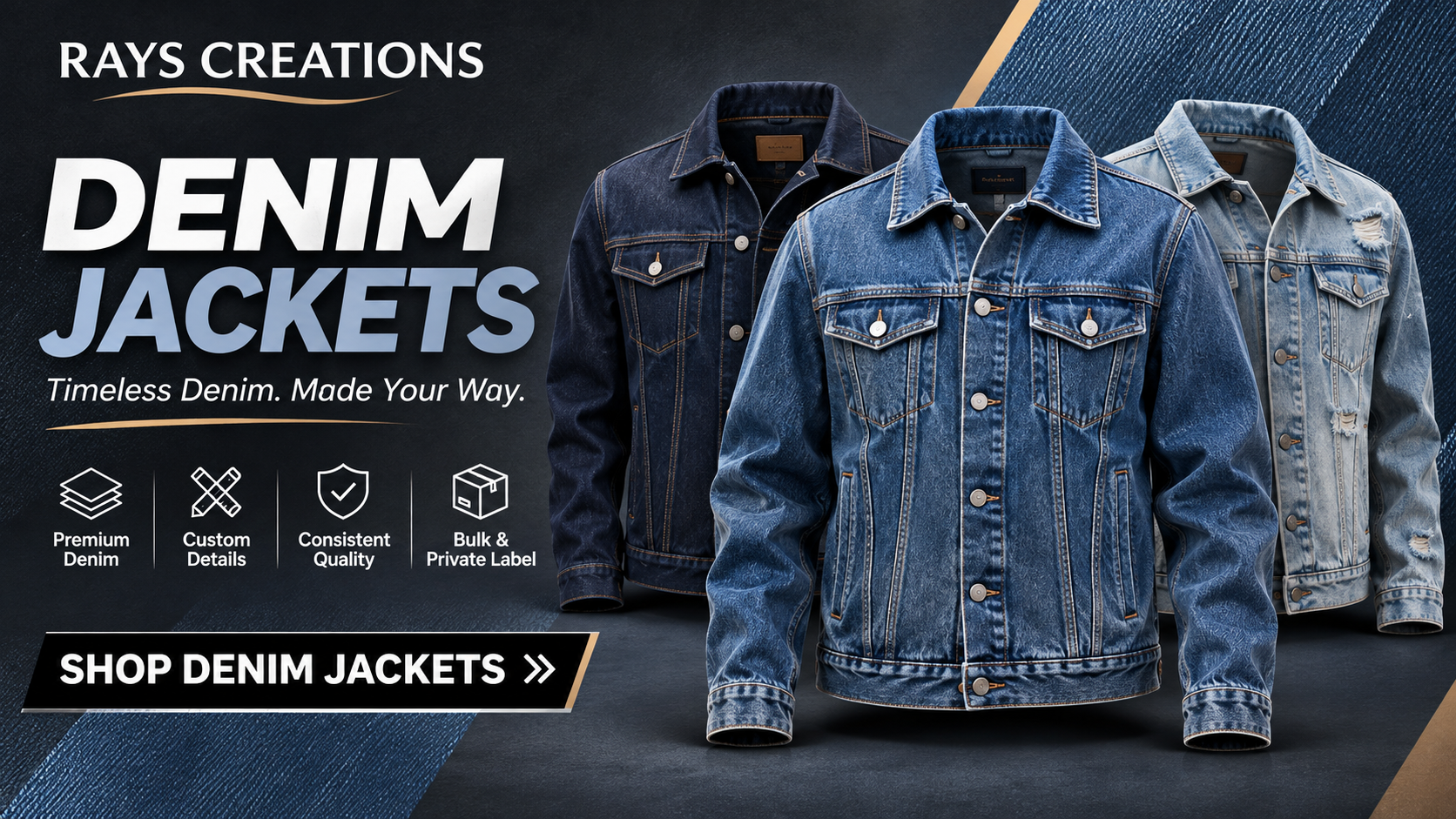
Custom and wholesale denim jackets are a practical choice for clothing brands, retailers, fashion startups, and businesses looking to offer durable, stylish outerwear. In New York, where fashion preferences range from classic streetwear to modern casual clothing, denim jackets remain a versatile product. Choosing the right manufacturer, fabric, design, and order quantity helps businesses create products that meet customer expectations while maintaining consistent quality and reasonable production costs.
Key Takeaways
- Denim jackets are suitable for fashion brands, retailers, boutiques, and promotional clothing businesses.
- Wholesale purchasing helps businesses manage costs and maintain inventory.
- Custom manufacturing allows brands to choose fabrics, colors, washes, labels, and designs.
- Quality denim, strong stitching, and durable hardware are essential for long-lasting jackets.
- Low minimum order quantities can help startups test new collections before expanding production.
Why Are Denim Jackets Popular in New York?
Denim jackets remain popular because they combine everyday comfort with timeless styling. Their versatility makes them suitable for different age groups, fashion preferences, and seasons. In New York, customers appreciate clothing that works for casual outings, travel, shopping, and everyday city wear.

Another reason for their popularity is their adaptability. A classic blue denim jacket can complement jeans, trousers, dresses, and casual outfits. Meanwhile, oversized designs, cropped cuts, distressed finishes, and customized details give businesses opportunities to target different customer groups.
For clothing retailers, denim jackets also offer year-round merchandising opportunities. Lightweight versions work well during spring and autumn, while fleece-lined and layered designs provide additional warmth during colder months.
What Should Businesses Look for in Custom Denim Jackets?
Businesses should evaluate fabric quality, construction, sizing, customization options, and manufacturing consistency before placing an order. These factors influence how a jacket looks, feels, and performs after repeated use.
The following considerations can help buyers make better decisions.
1. Denim Fabric Quality
Denim quality directly affects the jacket’s durability, appearance, and comfort. Common options include:
- 100% Cotton Denim: Provides a traditional denim feel with a structured appearance.
- Cotton-Blend Denim: Combines cotton with other fibers to create different comfort and performance characteristics.
- Stretch Denim: Includes elastane or similar fibers for additional flexibility.
- Lightweight Denim: Suitable for spring and summer collections.
- Heavyweight Denim: Offers a more structured feel and is useful for premium outerwear.
Buyers should also consider fabric weight, commonly measured in ounces per square yard. For example, 10–12 oz denim can work well for relatively lightweight jackets, while heavier fabrics can create a more substantial outerwear feel.
2. Stitching and Construction
Strong construction is essential for wholesale clothing because retailers need products that maintain their quality during regular wear.
Check important areas such as shoulder seams, armholes, cuffs, collars, pockets, and button attachments. Reinforced stitching in high-stress areas can help reduce seam damage.
3. Hardware and Finishing
Buttons, zippers, rivets, and other hardware contribute to both functionality and appearance. Buyers should check that buttons are securely attached, zippers operate smoothly, and metal components have a consistent finish.
Where Can You Find Custom and Wholesale Denim Jackets?
Businesses looking for custom denim jackets should work with manufacturers that offer flexible production, fabric selection, private labeling, and wholesale ordering. The right manufacturing partner should understand the requirements of retailers, startups, established brands, and bulk buyers.
For businesses exploring different styles and production possibilities, the denim jackets collection offers a relevant starting point for understanding denim outerwear options.
When comparing manufacturers, ask about production capabilities, sample development, available customization, quality checks, and shipping arrangements. A clear understanding of these details helps avoid misunderstandings once production begins.
Which Denim Jacket Styles Should Retailers Consider?
Offering different denim jacket styles allows retailers to reach customers with different preferences. Instead of stocking only one traditional design, businesses can develop a balanced collection.
Here are some popular options:
| Denim Jacket Style | Main Features | Suitable For |
|---|---|---|
| Classic Denim Jacket | Traditional collar and button front | Everyday fashion |
| Oversized Denim Jacket | Relaxed fit and extra room | Streetwear collections |
| Cropped Denim Jacket | Shorter body length | Contemporary fashion |
| Distressed Denim Jacket | Faded and worn-in details | Casual and urban wear |
| Trucker Denim Jacket | Structured design and chest pockets | Classic outerwear |
| Sherpa-Lined Denim Jacket | Warm inner lining | Colder seasons |
Retailers should select styles based on their target audience, price range, and seasonal requirements. A combination of classic and modern designs can help create a more balanced product selection.
How Does Custom Denim Jacket Manufacturing Work?
Custom manufacturing allows businesses to develop jackets that match their brand identity rather than relying entirely on ready-made designs. The process generally begins with an idea, reference image, or technical specification and continues through sampling, approval, production, and quality inspection.
A typical manufacturing process includes:
1. Design Development
The buyer shares design requirements, measurements, preferred colors, fabric choices, and other details. Technical sketches or reference images can help communicate the intended appearance.
2. Fabric and Material Selection
The manufacturer helps identify suitable denim weights, fabric compositions, linings, buttons, zippers, and other components.
3. Sample Production
A sample is developed to evaluate the fit, construction, appearance, and finishing. Buyers should review the sample carefully before approving bulk manufacturing.

4. Bulk Production
After approval, production begins according to the agreed specifications and order quantity.
5. Quality Inspection
Finished jackets should be checked for measurement accuracy, stitching quality, fabric defects, color consistency, and hardware performance.
This step-by-step approach helps businesses maintain better control over product quality and reduces the risk of costly production mistakes.
Why Is Private Label Manufacturing Important for Clothing Brands?
Private label manufacturing allows businesses to sell denim jackets under their own brand identity. Instead of offering generic products, companies can develop recognizable collections with customized labels, packaging, and design details.
Useful private label options include:
- Custom woven neck labels.
- Printed care and size labels.
- Branded buttons and hardware.
- Custom embroidery and patches.
- Personalized packaging.
- Exclusive fabric colors and washes.
These details can help create a consistent brand experience. For example, a New York-based streetwear business might choose oversized black denim jackets with embroidered back artwork and customized labels. A boutique retailer may prefer traditional blue denim jackets with subtle branding and classic buttons.
For businesses exploring custom apparel production, Rays Creations provides manufacturing options across different apparel and outerwear categories. Working with a manufacturer that understands bulk orders and customization can make collection development more organized. Learn more about Rays Creations and its apparel manufacturing services when evaluating production possibilities.
What Should You Consider Before Ordering Wholesale Denim Jackets?
Wholesale purchasing requires careful planning because order quantities, material selection, and production costs can influence business profitability.
Before confirming an order, consider these important factors:
Minimum Order Quantity (MOQ): Ask how many jackets must be ordered per style, color, or design. Smaller minimums can be helpful for startups and businesses testing new products.
Size Distribution: Plan quantities according to your target customers. Offering a balanced size range helps reduce the risk of excess inventory.
Color Selection: Classic blue, black, grey, and washed denim are useful starting points for many collections.
Sample Approval: Always evaluate a physical sample when possible. Product photographs alone may not reveal fabric weight, stitching quality, or fit issues.
Production Timeline: Confirm sampling, manufacturing, inspection, and shipping timelines before planning a launch.
Total Cost: Consider fabric, customization, labels, packaging, shipping, and other applicable expenses rather than comparing the jacket’s manufacturing price alone.
Common Mistakes to Avoid When Buying Custom Denim Jackets
Even experienced buyers can encounter problems when production requirements are not clearly communicated. Avoiding a few common mistakes can make the purchasing process smoother.
- Choosing fabric based only on appearance without checking its weight and composition.
- Approving bulk production without reviewing a sample.
- Providing incomplete measurements or unclear sizing instructions.
- Ignoring stitching, buttons, and zipper quality.
- Ordering excessive inventory before understanding customer demand.
- Failing to confirm customization costs and production timelines.
Clear specifications and regular communication help manufacturers understand expectations and deliver more consistent results.
Frequently Asked Questions
1. Can Small Clothing Businesses Order Custom Denim Jackets?
Yes, small clothing businesses can order custom denim jackets through manufacturers that support flexible minimum order quantities. Availability depends on the manufacturer’s production policies, design complexity, and material requirements. Startups should discuss their budget and expected quantities before beginning sample development.
2. What Is the Difference Between Wholesale and Custom Denim Jackets?
Wholesale denim jackets are purchased in larger quantities, often using existing designs and specifications. Custom denim jackets are developed according to specific requirements, including fabric, fit, color, branding, and finishing. Some manufacturers offer both options, allowing businesses to choose according to their needs.
3. Can Denim Jackets Be Customized With Embroidery?
Yes, denim jackets can feature embroidery on the chest, sleeves, pockets, or back panel. Businesses can also use patches, printed artwork, and customized labels. The placement and design should be planned carefully to ensure the decoration complements the jacket without affecting its comfort or construction.
4. How Can Businesses Maintain Consistent Quality Across Bulk Orders?
Businesses can maintain consistent quality by approving a production sample, documenting fabric and measurement specifications, and requesting quality inspections. They should also confirm that materials and construction methods remain consistent throughout manufacturing. Keeping approved samples and detailed product specifications makes repeat orders easier to manage.
Conclusion
Custom and wholesale denim jackets offer valuable opportunities for clothing brands, retailers, and fashion businesses in New York. From traditional trucker designs to oversized and customized outerwear, denim provides plenty of room for product development and creative branding.
The best results come from choosing suitable materials, understanding your customers, approving samples, and working with a manufacturer that can meet your quality and production requirements. With careful planning, businesses can build denim collections that combine durability, style, and a recognizable brand identity.