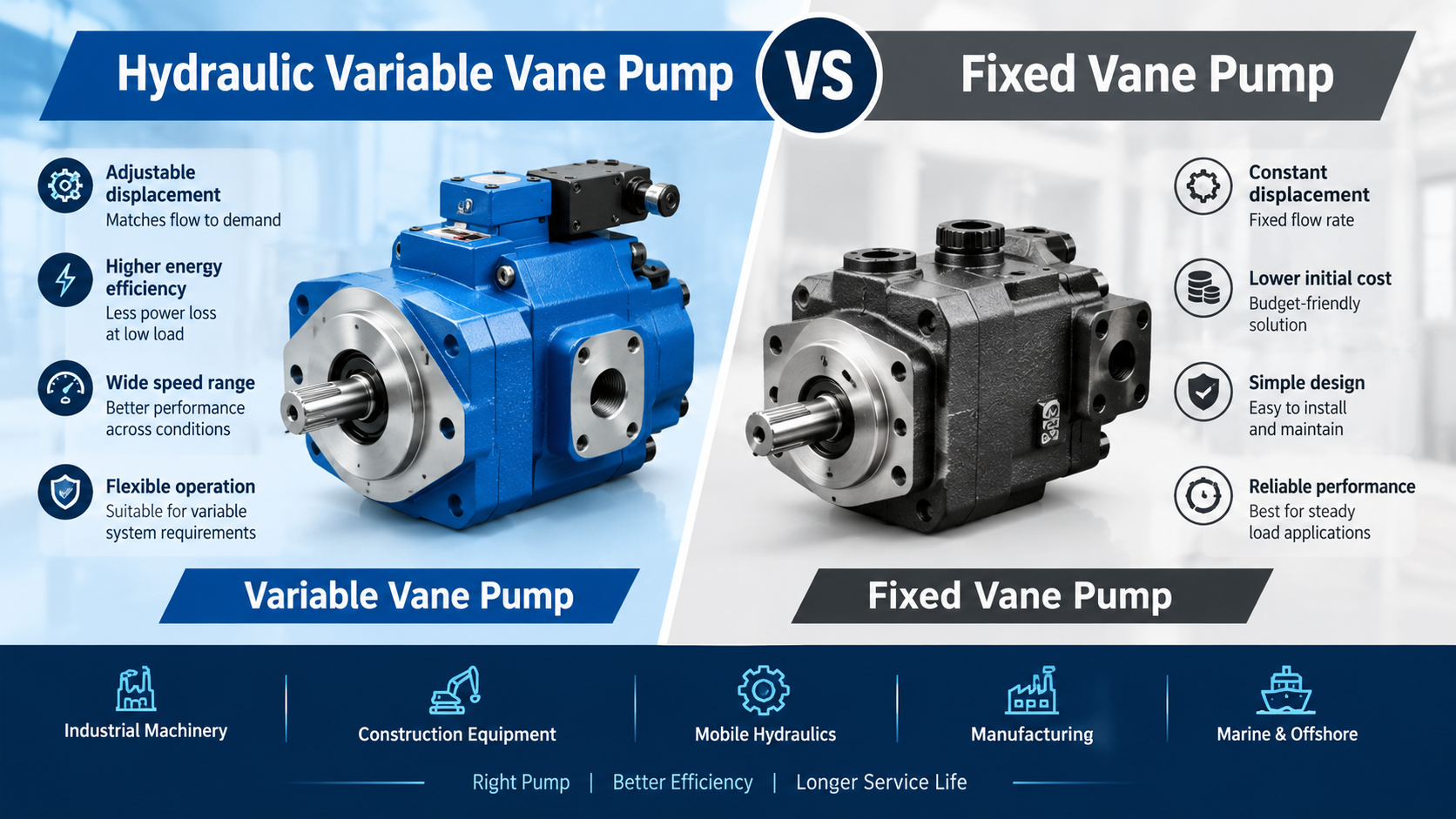
The article below focuses on troubleshooting, technical checks, and procurement decisions for Indian B2B buyers. Company-specific capabilities and commercial promises are excluded unless verified.

Common Hydraulic Variable Vane Pump Problems and Fixes
A machine that suddenly loses pressure, moves slowly, or develops unusual noise can disrupt production and increase maintenance costs. A Hydraulic Variable Vane Pump may be responsible, but replacing it before checking the hydraulic circuit can waste money and leave the actual fault unresolved.

The practical approach is to identify the symptom, inspect the operating conditions, and verify the pump against its approved specifications before ordering replacement parts.
Specification Checks Before Troubleshooting
A Hydraulic Variable Vane Pump must match the system’s flow demand, pressure requirements, drive speed, and hydraulic fluid conditions. A replacement that fits physically may still perform incorrectly.
Check these specifications first
- Flow and pressure: Compare the required operating values with the pump’s datasheet and machine requirements.
- Drive speed and rotation: Confirm motor speed, shaft rotation, and coupling compatibility.
- Fluid condition: Check the specified oil grade, contamination, and operating temperature.
- Mounting and connections: Verify shaft dimensions, mounting arrangement, and port positions.
- Control mechanism: Confirm the pump’s displacement-control arrangement and pressure-compensator settings, where fitted.
A common purchasing mistake is matching only the model name or connection size. Buyers should compare the complete part number and technical documentation before approving a replacement.
Common Problems, Fixes and Operational Benefits
Correct diagnosis can reduce unnecessary component replacement, but each repair must address the underlying cause.
Low flow or insufficient pressure
Possible causes: Restricted suction lines, low oil levels, internal wear, incorrect rotation, or a faulty pressure-control mechanism.
Fix: Check the reservoir level, suction connections, filter condition, and system settings. If these checks do not resolve the problem, arrange a qualified inspection of the pump and pressure-control components.
Excessive noise or vibration
Possible causes: Air entering the suction line, restricted oil supply, unsuitable fluid viscosity, misalignment, or cavitation.
Fix: Inspect suction-side connections, oil condition, inlet restrictions, and drive alignment. Do not continue operating a pump that develops severe noise or vibration, as further damage may occur.
Oil overheating
Possible causes: Excessive internal leakage, continuous operation against an unsuitable pressure setting, restricted cooling, or excessive system losses.
Fix: Check oil temperature against the equipment manufacturer’s limits, inspect the cooling circuit, and investigate unnecessary pressure losses. Replacing the pump without checking the rest of the circuit may not solve recurring overheating.
Unstable flow or pressure
Possible causes: Contamination, sticking internal components, unstable control settings, or inconsistent oil supply.
Fix: Inspect fluid cleanliness and the control circuit. Avoid adjusting compensator settings without the correct technical procedure and pressure-monitoring equipment.
Leakage and reduced efficiency
Possible causes: Damaged seals, loose connections, worn internal parts, or unsuitable installation conditions.

Fix: Identify whether leakage is external or internal, then inspect the affected components. Seal replacement may help with external leakage, but internal wear can require specialist assessment or pump replacement.
A critical trade-off: Repairing a worn pump may cost less initially, while replacement may be more appropriate when damage is extensive or compatible parts are unavailable. Compare repair cost, downtime, inspection findings, and replacement compatibility before deciding.
Benefits of a Structured Troubleshooting Process
A documented diagnostic process can help industrial buyers and maintenance teams achieve six practical outcomes:
- Lower repair risk: Fault identification reduces unnecessary part changes.
- Better cost control: Maintenance teams can compare repair and replacement costs before committing.
- Improved production planning: Early diagnosis helps teams plan downtime and spare-part requirements.
- More consistent procurement: Standardised inspection records make supplier comparisons easier.
- Fewer repeat failures: Checking oil condition, alignment, and operating settings helps address contributing causes.
- Better logistics planning: Confirming the model and packaging requirements before dispatch reduces avoidable ordering and transit problems.
One frequent mistake is ordering a replacement immediately after a pressure drop. Another is approving a sample without checking whether its mounting, shaft, and control configuration match the production requirement.
About Us
At N.T. Associates, we list hydraulic products, including the Hydraulic Variable Vane Pump, on our website for industrial buyers exploring hydraulic equipment options. Our contact details and business address are available online for enquiries.
Before finalising a purchase, we recommend confirming the exact model, operating requirements, and compatibility with your existing hydraulic system.
Request Product Information
To help us understand your requirement, share the following details when contacting us:
- Required quantity and pump model or nameplate photograph
- Required flow, operating pressure, and drive speed
- Machine application and hydraulic fluid details
- Mounting, shaft, and port specifications
- Sampling or inspection requirements, if applicable
- Packaging preference and delivery location
Contact N.T. Associates at +91-76786-03764 or ntat@rocketmail.com. Confirm current availability, quotation terms, and delivery timelines before placing an order.
Conclusion
Recurring pump faults often indicate a problem with fluid supply, contamination, control settings, or internal wear rather than a pump defect alone. A Hydraulic Variable Vane Pump should be selected against documented operating requirements, with compatibility and inspection details agreed upon before purchase. When evaluating Hydraulic Variable Vane Pump Manufacturers, industrial buyers should verify technical documentation and replacement specifications to reduce repeat downtime and support more reliable maintenance planning.
FAQs
What causes a hydraulic variable vane pump to lose pressure?
Possible causes include internal wear, restricted oil supply, incorrect settings, or a fault elsewhere in the hydraulic circuit. Testing is needed to identify the actual cause.
How can I reduce noise in a hydraulic vane pump?
Check oil level, suction restrictions, air leaks, fluid viscosity, and drive alignment. Persistent noise requires further inspection before continued operation.
Can contaminated oil damage a Hydraulic Variable Vane Pump?
Yes. Contamination can accelerate wear and interfere with moving components. Follow the equipment manufacturer’s fluid cleanliness and filtration requirements.
When should I repair or replace a vane pump?
Base the decision on inspection findings, repair cost, parts availability, and expected downtime. Severe internal damage may make replacement more practical, but the correct choice depends on the pump’s condition.
Does a replacement pump need identical specifications?
It must meet the system’s operating requirements and have compatible mounting, shaft, ports, rotation, and control arrangements. Confirm interchangeability with technical documentation rather than appearance alone.