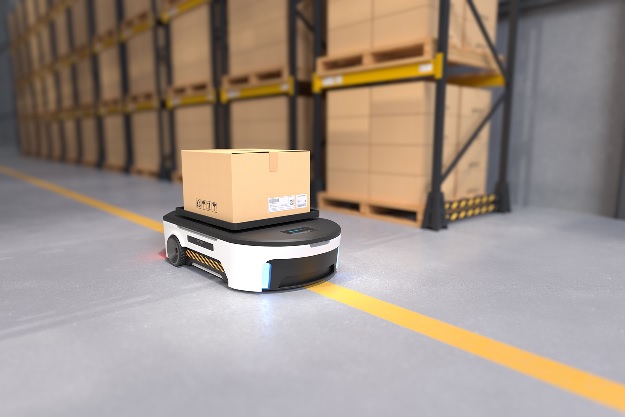
Mobile robots in modern U.S. warehouses are evolving beyond simple point-to-point transportation. Because of the increasing number of orders and variety of products that warehouses process, the robots are beginning to perform other tasks related to replenishing, assisting in picking, and material transport coordination. It is not enough for the robots just to move materials from one point to another.
This change is broadening the scope of automation within warehouses. By incorporating mobile robots into warehouse management software and fleet control, among other things, the operator will be able to manage tasks efficiently and better handle changes in the day-to-day operational process.

Why Are Warehouses Moving Beyond Point-To-Point Transport?
Traditional material movement follows predictable routes, but modern warehouse operations rarely remain predictable for long. One picking zone may require constant replenishment, whereas other areas have very few orders coming in. This means that the established system of transporting goods becomes hard to adapt to the changing situation in the workplace. For warehouses across the USA, flexibility matters when product demand, order volumes, and available floor space change throughout the day.
Mobile Robots introduce a different approach by travelling between designated destinations according to task requirements. Rather than assigning all movements to specific paths, the warehouse crew can use mobile robots to address the ever-changing transportation requirements and connect all work areas without necessitating manual transportation of items by workers.
How Do Mobile Robots Take on More Complex Warehouse Tasks?
Transport remains important, but the larger opportunity lies in giving a defined role to the robot in the process. Based on the robot and how it is configured, some of these tasks might be to transport totes, deliver materials to picking stations, tow carts, or move loads between different areas of operation. This makes robotic warehouse automation more useful when movement must respond to changing priorities rather than simply repeat a journey.
In the USA, these applications help warehouses reconsider how tasks are divided between people, fixed equipment, and mobile systems. For instance, a robot responsible for delivery of materials would make sure that the workstations are supplied as the human workers concentrate on order picking, verification, and packaging. The result depends on designing tasks around actual workflow requirements, not simply adding more robots to the floor.
What Makes Mobile Robots Useful Across Changing Workflows?
The requirements for the movement equipment depend on the size of the load, the routes involved, and the operational environment. Mobile robots have various purposes, and the selection process depends on the tasks at hand, not the equipment alone.

- Material transport: Robots move totes, cartons, or heavier loads between operational areas, depending on their payload and configuration.
- Picking assistance: Suitable robots help bring products or containers closer to employees, reducing unnecessary travel during order preparation.
- Cart and load movement: Towing configurations move carts between workstations, helping keep replenishment and production-related tasks organised.
When USA warehouses store different types of goods, these roles can be combined across one facility rather than relying on one machine to undertake all the activities. The best performance can be seen when the robots are selected based on the nature of loads, traffic, routes, and the work that needs to happen at each destination.
How Should Warehouses Integrate Mobile Robots Into Daily Operations?
For effective implementation, not only do teams have to select a robot and plan a route, but they must also recognize repetitive movement tasks, determine where there is downtime, and find out which activities can be improved with flexible transportation. Other factors that need consideration include aisle accessibility, foot traffic, loading points, and handover between robots and employees before expanding deployment.
A phased approach helps facilities test real operating conditions and refine task allocation before scaling up. Within the USA, warehouses can begin by defining their use cases, testing whether it allows for a decrease in unnecessary travel or increases the availability of materials, and then extend mobile operations to other suitable workflows. Task rules and collaboration between equipment become critical in the case of several robots within busy working areas.
How Addverb’s Mobile Robot Portfolio Extends Warehouse Movement
Addverb offers several mobile robot types for distinct material-handling requirements, giving warehouses options beyond a single autonomous mobile robot. Its mobile robot portfolio includes AMR, Dynamo, for material movement, picking, and tugging; an assembly line robot, Dash, for material handling around production lines; a multi-carton picking robot, Veloce; and autonomous forklifts for load movement. Each addresses a different operational need, so the right choice depends on the task, load, and warehouse layout.
Dynamo can be configured for applications such as tote transportation, pick assistance, and cart towing, while Dash is designed for movement between assembly-line stations. Veloce addresses multi-carton picking, and autonomous forklifts provide another option where loads need to be moved between locations. In USA facilities, aligning those solutions with the movement tasks allows for creating a flexible operation rather than treating every transport requirement as identical.
Conclusion
Mobility in the warehouse is no longer just about transporting products from point A to B, but rather about linking activities, keeping work areas supplied, and reacting to any changes in priorities. Mobile robots offer various ways to organise transport, picking support, cart movements, and loading processes depending on the requirements of the operation.
For facilities within the USA, the next stage involves pinpointing areas that result in unnecessary delays through fixed routing and manual transportation and then selecting suitable equipment for such tasks. Through its diverse mobile robotics lineup, Addverb offers options for warehouses looking to make material movement more adaptable, coordinated, and aligned with daily operational demands.