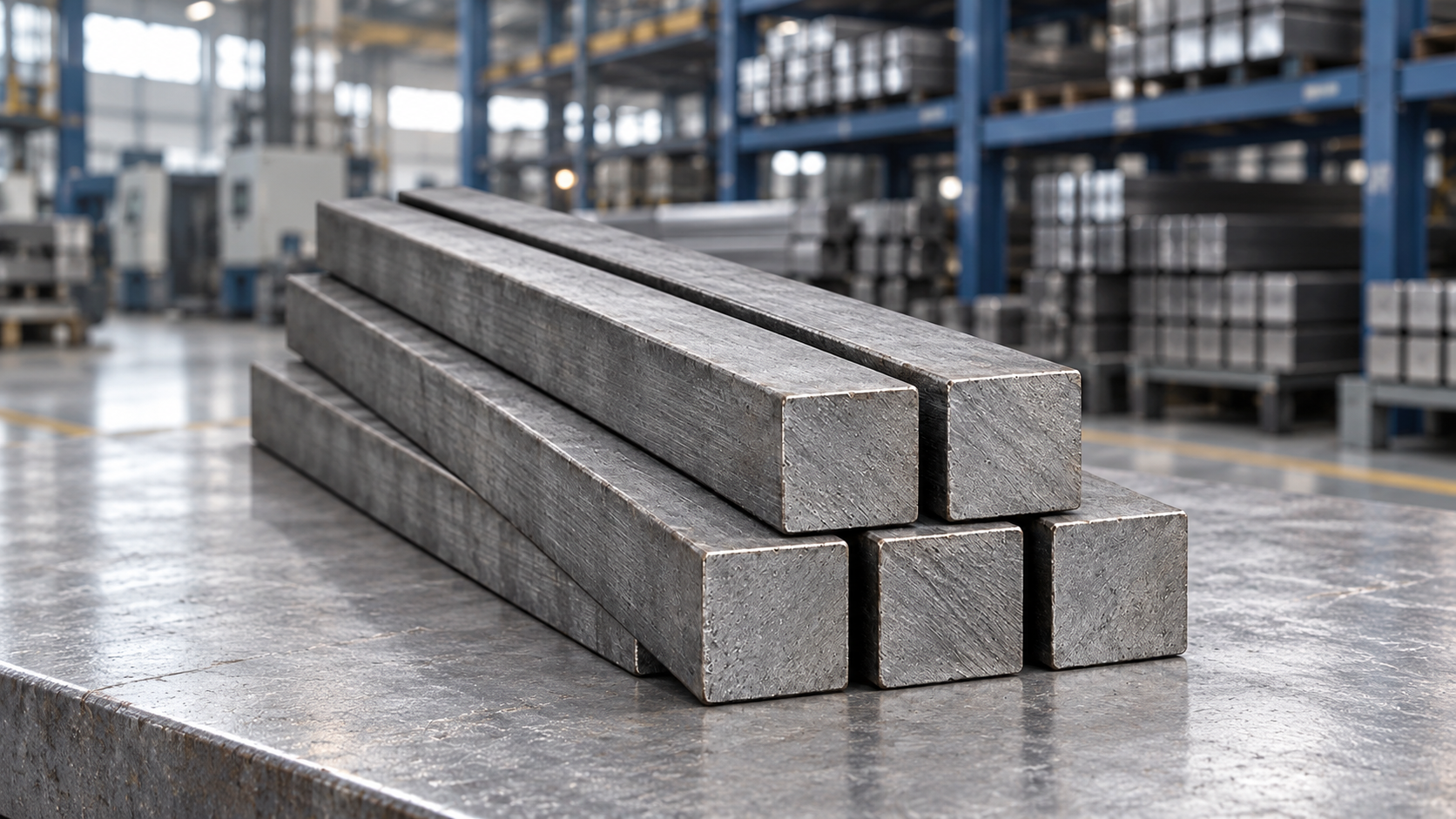

In modern manufacturing and engineering, selecting the right steel material is essential for achieving durability, dimensional accuracy and reliable performance. Industries involved in machining, forging, heavy equipment manufacturing and component production often require materials that can withstand demanding operating conditions. Alloy Steel Square Bars are a practical choice for applications that require a combination of strength, toughness, wear resistance and machinability, depending on the selected grade and heat treatment.

Understanding the characteristics, applications and purchasing considerations of alloy steel square bars helps manufacturers make informed material decisions. Working with an experienced steel supplier also makes it easier to identify suitable grades, verify specifications and source materials according to project requirements.
What Are Alloy Steel Square Bars?
Alloy steel square bars are solid steel products with a square cross-section, manufactured from steel containing alloying elements such as chromium, molybdenum, nickel, manganese or vanadium in varying proportions. These elements influence the material’s mechanical properties, hardenability, toughness and resistance to wear, depending on the chemical composition and processing conditions.
Unlike ordinary carbon steel, alloy steel can be engineered to meet more specific performance requirements through appropriate alloy selection and heat treatment. Square bars are particularly useful when the required component geometry involves flat surfaces, square profiles or machining operations that benefit from a square-section starting material.
Businesses seeking suitable material specifications can explore Alloy Steel Square Bars to learn more about available sourcing options and product requirements.
Key Benefits of Alloy Steel Square Bars
Choosing an appropriate alloy steel grade offers several advantages for industrial applications.
- Strength and durability: Certain alloy steel grades provide high tensile strength and resistance to mechanical stress, making them suitable for components exposed to substantial loads.
- Improved hardenability: Alloying elements can help steel develop the required hardness through heat treatment, depending on the grade, component dimensions and processing method.
- Versatile machining applications: Square bars provide a convenient starting shape for manufacturing machine components, tooling blanks, fixtures and other engineered parts.
- Application-specific performance: Different alloy compositions and heat-treatment conditions allow manufacturers to select materials according to their required combination of hardness, toughness and strength.
- Efficient material utilisation: Selecting appropriate dimensions and cut lengths can reduce unnecessary machining, material waste and preparation time.
These benefits are not identical across every grade. Buyers should evaluate the material’s specifications and intended service conditions before making a final selection.
Common Industrial Applications of Alloy Steel Square Bars
Alloy steel square bars serve several industries where reliable material performance is important.
Machinery and Engineering Components
Manufacturers use suitable alloy steel grades for machined components, shafts, keys, fixtures and other engineered parts. The selected grade should meet the component’s loading, dimensional and operating requirements.
Forging and Component Manufacturing
Square bars can serve as starting stock for forged components and other industrial products. Material selection should account for the intended forging process, required mechanical properties and subsequent heat treatment.
Tooling and Industrial Equipment
Depending on the grade, alloy steel square bars may be suitable for tooling-related components, holders, support blocks and specialised equipment parts. Applications requiring exceptional hardness or wear resistance may need a specifically engineered grade rather than a general-purpose alloy steel.
Agricultural and Heavy Equipment
Industrial machinery and heavy equipment manufacturers may use alloy steel components in assemblies subjected to repeated loads, vibration or demanding working environments. Appropriate material selection and processing help support dependable service performance.

Why Work with Reliable Alloy Steel Square Bars Suppliers?
Choosing dependable Alloy Steel Square Bars Suppliers can simplify procurement and reduce the risk of receiving material that does not match the required specifications.
A reliable supplier should be able to clarify available grades, explain applicable material standards, provide relevant documentation and communicate realistic delivery timelines. Buyers should also check whether additional services, such as cutting to length, dimensional inspection or independent testing, are available for their particular order.
Steel Exchange provides steel sourcing options for industrial and engineering requirements. Buyers can contact the company to discuss grade specifications, required dimensions, order quantities and documentation needs. Before confirming a purchase, it is advisable to verify current availability, material condition, certification and delivery terms directly with the supplier.
Quality Assurance and Material Verification
Quality assurance is an important part of steel procurement. A product description alone cannot establish whether a particular batch meets the requirements of a specific component.
Buyers should check the material grade against the purchase order, engineering drawing and applicable standard. Where necessary, they can request chemical composition reports, mechanical test results and other supporting documentation.
Additional inspections, including ultrasonic testing or magnetic particle testing, may be appropriate for certain applications when specified by the relevant standard or purchaser. These tests serve different purposes, so the inspection method should be selected according to the component’s risks and acceptance criteria.
Maintaining clear records of material certificates, batch identification and inspection results can also improve traceability throughout manufacturing and quality-control processes.
Frequently Asked Questions
What are alloy steel square bars commonly used for?
They are used in machining, engineering components, forging, industrial equipment and selected tooling applications. The appropriate use depends on the steel grade, dimensions and required mechanical properties.
How do alloy steel square bars differ from carbon steel square bars?
Alloy steel contains specified alloying elements beyond the basic iron-carbon composition. These additions can improve properties such as hardenability, strength or toughness, depending on the grade. Carbon steel may be more suitable for applications with different performance and cost requirements.
How can buyers verify the quality of alloy steel square bars?
Buyers should confirm the material grade, dimensions, material condition and applicable specifications. Mill Test Certificates and any required mechanical or non-destructive testing reports should be checked against the supplied batch.
What information should be provided when requesting a quotation?
Provide the required grade, square dimensions, length, quantity, material condition, applicable standard, certification requirements and delivery location. A technical drawing can be useful when special tolerances or cutting requirements apply.
Conclusion
Alloy steel square bars are valuable engineering materials for manufacturers seeking suitable combinations of strength, toughness, machinability and application-specific performance. However, their suitability depends on the selected grade, processing conditions, dimensions and intended operating environment.
By evaluating technical requirements, verifying material documentation and working with reliable suppliers, procurement teams can make better-informed purchasing decisions. Businesses looking for sourcing options can visit Steel Exchange’s Alloy Steel Square Bars product page to review the offering and enquire about their specific requirements.