India can feel overwhelming to plan for. The country is enormous, the culture is layered, and there’s no single itinerary that fits everyone.
But for first-time visitors, one route has quietly become the standard starting point: Delhi, Agra, and Jaipur. Travelers call it the Golden Triangle, and there’s a reason it keeps coming up in every serious India travel guide.
It’s not hype. It’s logistics, history, and variety, all packed into a route that’s manageable in a week or two.
This guide breaks down why this circuit works so well for newcomers, what to expect in each city, and how to avoid the mistakes that trip up a lot of first-time travelers.
Why the Golden Triangle is the Best Choice for First-Time Visitors
India has dozens of regions worth exploring, but most of them require either significant time or a very specific interest — beaches in Goa, backwaters in Kerala, mountains in the Himalayas.
The Golden Triangle is different. It’s compact enough to cover comfortably in six to eight days, yet it still delivers an accurate first impression of the country: a capital city, a Mughal-era monument city, and a royal desert city, all within a few hours of each other by road or train.
For someone visiting India for the first time, that combination matters. You get government buildings and colonial history in Delhi, the world’s most recognizable monument in Agra, and pink sandstone forts and palaces in Jaipur — without spending half your trip in transit.
Many travelers researching options for their first visit start by looking into structured Golden Triangle Tours, largely because the route removes the guesswork of stitching together a first itinerary from scratch.
What Makes Delhi, Agra, and Jaipur Special?
Each city in the triangle plays a distinct role, and none of them feel repetitive.
Delhi is where old and new India sit side by side. Within the same afternoon, you can walk through the narrow lanes of Old Delhi near Jama Masjid, then drive past government buildings in New Delhi designed under British colonial rule. The contrast is part of the experience.
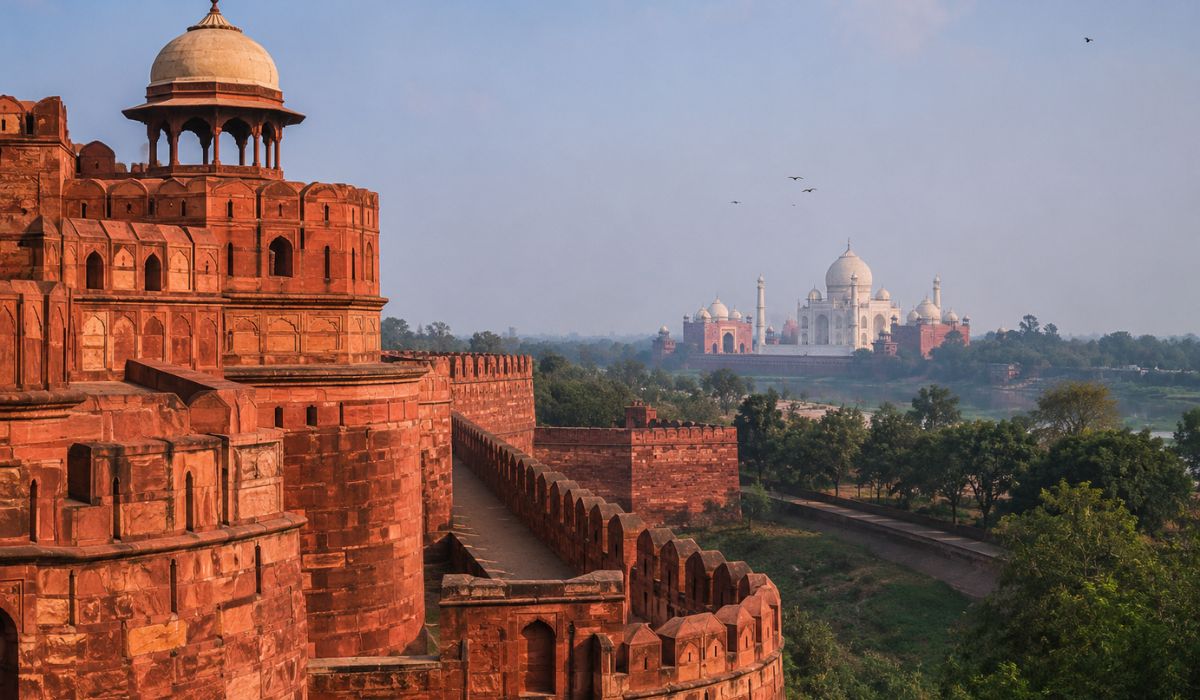
Agra is smaller and more singular in purpose. Most visitors come specifically for the Taj Mahal, but Agra Fort and the tomb of Itimad-ud-Daulah (often called the “Baby Taj”) are worth the extra half-day if your schedule allows it.
Jaipur, the “Pink City,” rounds out the trip with a completely different visual identity. Amber Fort, City Palace, and Hawa Mahal reflect Rajasthani royal history, and the city’s markets are known for textiles, jewelry, and handicrafts that aren’t as easily found in Delhi or Agra.
Together, the three cities avoid the repetition that can happen when an itinerary stays too narrowly focused on one region or one era of history.
Why the Taj Mahal is the Highlight of Every Journey
No discussion of the Golden Triangle is complete without addressing why the Taj Mahal remains the centerpiece, even for travelers who’ve seen photos of it a hundred times before arriving.
Photos don’t prepare you for the scale, the symmetry, or the way the white marble shifts color with the light throughout the day. Built by Emperor Shah Jahan as a mausoleum for his wife Mumtaz Mahal, the monument took over a decade to complete and remains one of the most precise examples of Mughal architecture anywhere in the world.
Most first-time visitors plan their Agra stop around a single day, but the Taj Mahal genuinely rewards a slower visit — one that includes the surrounding gardens, the mosque, and the guest house on either side of the main structure, not just the main photo spot.
If the Taj Mahal is the primary reason for your trip, it’s worth structuring your schedule around a dedicated Taj Mahal Tour rather than treating it as a quick stop between other activities.
Best Time to Visit the Golden Triangle
Timing matters more in North India than many travelers expect.
October through March is generally considered the most comfortable window, with cooler temperatures and clearer skies across Delhi, Agra, and Jaipur. December and January can get surprisingly cold at night, especially in Delhi, so packing layers is worth doing even in a country known for heat.
April through June brings intense heat, often exceeding 40°C (104°F) in Agra and Jaipur, which can make sightseeing physically draining, particularly for families with young children or older travelers.
Monsoon season, roughly July through September, brings humidity and occasional heavy rain, though it also means fewer crowds and lush, green landscapes that look different from the dry winter months.
Essential Travel Tips for International Tourists
A few practical details make a noticeable difference for first-time visitors.
Book Taj Mahal entry tickets in advance whenever possible. Long queues at the gate eat into your morning, especially during peak season.
Dress modestly when visiting religious sites and forts. Lightweight, breathable fabrics work well for both comfort and cultural appropriateness.
Keep a printed or downloaded copy of your visa and ID handy, since some monuments require ID verification at entry.
Stay hydrated and carry basic medication for stomach sensitivity, which is a common (and usually mild) adjustment for first-time visitors to India.
Factor in traffic. Distances that look short on a map can take longer than expected, particularly in Delhi and Jaipur during peak hours.
Common Mistakes to Avoid
A handful of mistakes come up repeatedly with first-time travelers on this route.
Rushing the itinerary is the most common one. Trying to see all three cities in four days often means arriving exhausted and skipping meaningful time at each site.
Not accounting for internal travel time is another. Delhi to Agra is roughly three to four hours by road, and Agra to Jaipur is similar. Treating these as quick hops rather than half-day commitments leads to a rushed schedule.
Skipping local food out of caution is a mistake many travelers regret later. Reputable restaurants and hotels generally serve safe, well-prepared meals, and missing out on regional cuisine is missing a large part of the experience.
Finally, underestimating the value of context is easy to overlook. Walking through Agra Fort or Amber Fort without understanding their history reduces the visit to just architecture, rather than a window into centuries of political and cultural change.
Why Many Travelers Prefer Private Tours
Group tours work for some travelers, but a private itinerary solves a specific problem: pacing.
With a private tour, the schedule adjusts to your interests rather than a fixed group timeline. Families with children can take breaks when needed. Photography enthusiasts can spend extra time at specific viewpoints. Couples and solo travelers can slow down or speed up without coordinating with strangers.
Private tours also tend to include a knowledgeable local guide at each stop, which matters more than it might sound. A guide who can explain why a particular fort was built where it was, or what a specific inscription means, adds context that’s easy to miss when reading a plaque alone.
For a first trip to India specifically, this flexibility often makes the difference between a trip that feels exhausting and one that feels genuinely enjoyable.
Frequently Asked Questions
How many days do I need for the Golden Triangle? Six to eight days is typically enough to see Delhi, Agra, and Jaipur without rushing. Some travelers extend this to ten days for a more relaxed pace.
Is the Golden Triangle suitable for families with children? Yes. The route involves manageable travel distances and a mix of activities, though it’s worth building in extra rest time for younger children.
Do I need a visa to visit India? Most international travelers from the USA, UK, Canada, Australia, and Europe need a visa, which can typically be arranged online through India’s e-Visa system before travel.
What is the best way to travel between Delhi, Agra, and Jaipur? Private car transfers and trains are the two most common options. Trains are efficient for the Delhi-Agra leg, while road travel offers more flexibility for stops along the way.
Is it safe for solo travelers, including women, to do this route? Yes, with standard travel precautions. Sticking to reputable tour operators, avoiding late-night solo travel in unfamiliar areas, and dressing modestly at religious sites are generally recommended.
Can I customize a Golden Triangle itinerary? Yes. Most operators offer flexibility to add extra days, additional cities, or specific activities based on your interests.
Conclusion
The Golden Triangle earns its reputation honestly. It’s not the only way to experience India, but for a first visit, it offers the clearest, most efficient introduction to the country’s history, architecture, and culture.
Delhi, Agra, and Jaipur each bring something different to the trip, and together they avoid the common trap of a first-time itinerary that’s either too rushed or too narrowly focused.
If you’re still mapping out your first trip, starting with this route — and giving yourself enough time to actually slow down at each stop — is one of the more reliable ways to make sure the trip lives up to the research you put into planning it.