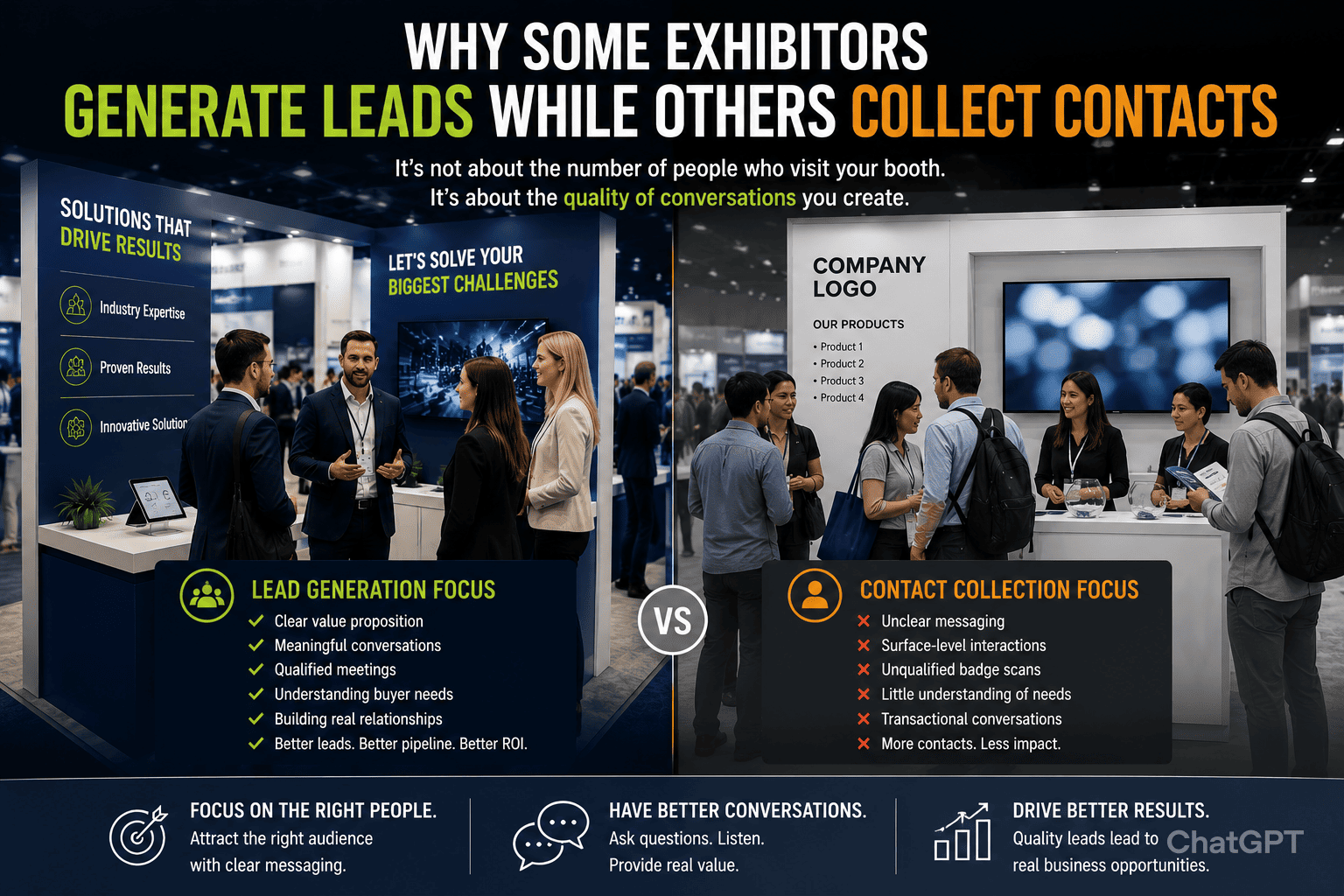
Many exhibitors measure trade show success by booth traffic.

At the end of an event, conversations often sound like this:
“We had a packed booth.”
“We scanned hundreds of badges.”
“Traffic was great this year.”
But there is a question that often gets overlooked:
How many of those visitors were actually potential customers?
The difference between attracting visitors and attracting buyers can determine whether a trade show becomes a profitable investment or simply an expensive marketing activity.
The Traffic Trap
A busy booth looks successful.
Crowds create energy, attract attention, and help build brand visibility. However, high traffic does not automatically translate into business opportunities.
Some exhibitors spend so much effort attracting visitors that they forget to consider who those visitors are.
A booth filled with students, competitors, vendors, and curious attendees may look impressive, but it may contribute little to the sales pipeline.
The most successful exhibitors focus less on volume and more on relevance.
Why Qualification Starts Before the First Conversation
Many companies wait until after a lead is collected to determine whether a visitor is a good fit.
Top-performing exhibitors do the opposite.
They design their exhibit experience to naturally attract the right audience.
This becomes especially important for companies exhibiting at SupplySide West 2026, where attendees often include buyers, manufacturers, distributors, formulators, and brand owners with very different objectives.
The clearer the messaging, the easier it becomes for the right visitors to identify themselves.
The Most Valuable Booth Space Isn’t the Front Edge
Most exhibitors focus heavily on attracting attendees into the booth.
What happens after visitors enter is often far more important.
High-performing exhibits typically create multiple engagement zones:
- Initial discovery areas
- Demonstration spaces
- Consultation zones
- Private meeting areas
These spaces allow conversations to evolve naturally as visitor interest increases.
A Trade Show Booth Design in Las Vegas strategy often succeeds when it helps exhibitors guide visitors through a structured experience rather than a random interaction.
The objective is to move prospects closer to a business conversation, not simply keep them occupied.
Why Serious Buyers Behave Differently
Experienced buyers rarely spend time collecting promotional giveaways or attending every demonstration.
Instead, they tend to:
- Ask specific questions
- Compare solutions
- Discuss implementation challenges
- Evaluate suppliers
- Schedule follow-up discussions
Understanding these behaviors helps exhibitors identify valuable opportunities more quickly.
When teams recognize buying signals, they can spend more time with qualified prospects and less time chasing unproductive conversations.
Trade Shows Are Becoming Decision-Making Events
Many exhibitors still treat trade shows as awareness campaigns.
Increasingly, attendees arrive prepared to evaluate potential suppliers.
Companies preparing for trade show booth builder for NACS Show 2026 projects are finding that buyers often complete significant portions of their research before arriving at the event.
This means exhibitors have less time to explain who they are and more responsibility to demonstrate why they are different.
The booths generating the strongest results are often those that provide clarity rather than complexity.
Measuring What Actually Matters
Lead quantity remains an important metric.
However, some of the most valuable event insights come from questions such as:
- How many decision-makers visited?
- How many qualified meetings occurred?
- How many opportunities entered the sales pipeline?
- How many prospects requested follow-up discussions?
A Trade Show Booth Design Company in USA can help create environments that support these deeper business objectives rather than focusing solely on visitor volume.
The goal is not to generate the most leads.
The goal is to generate the right leads.
The Real Question After Every Event
Instead of asking:
“How many people visited our booth?”
Exhibitors should ask:
“How many future customers did we meet?”
That single shift in thinking can transform how companies approach exhibit design, staffing, messaging, and event strategy.
Conclusion
The most successful trade show programs are not built around attracting crowds. They are built around attracting the right audience.
When exhibitors focus on buyer intent, qualification, and meaningful engagement, trade shows become far more than marketing events. They become powerful opportunities to build relationships, create sales opportunities, and accelerate business growth.
A crowded booth may look impressive for a few days. A booth that consistently attracts future customers creates value long after the event ends.