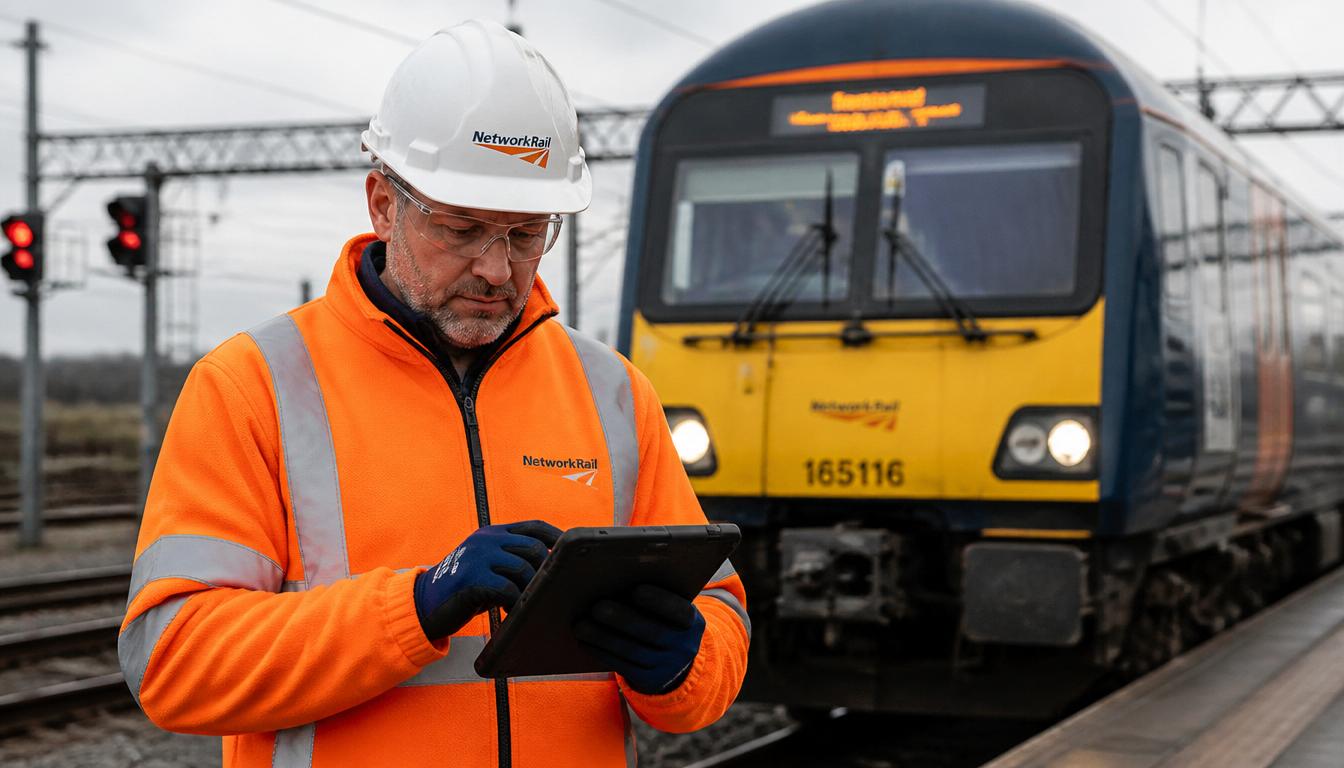
The UK railway network is a masterpiece of modern civil engineering, moving millions of passengers and tons of commercial freight every single day. Behind this seamless logistical operation lies a dedicated workforce of engineers, maintenance crews, and track operatives who keep the infrastructure functional. However, the environment they operate in is one of the highest-risk industrial workplaces in the world.

On a live rail track, hazards are constant, fast-moving, and unforgiving. Moving trains weighing hundreds of tons cannot swerve and require substantial distances to come to a complete stop. Additionally, thousands of volts of live electricity run continuously through overhead lines and third rails. In such a high-consequence environment, minor oversights can result in critical accidents.

This is why safety awareness is not just a regulatory checklist in the rail sector—it is an absolute culture. Enrolling in accredited PTS training courses in London is the mandatory first step to understanding this culture and protecting your life while working trackside.
The Reality of the Trackside Environment
A live rail corridor is a complex, high-pressure workspace. Unlike traditional construction environments where hazards are relatively static, railway risks change dynamically second by second.
Developing a deep safety awareness alters how you view a track layout. It moves your mindset from casual observation to constant hazard scanning, ensuring you treat every line as open, live, and potentially dangerous at all times.
1. Navigating the Boundaries of the Danger Zone
The primary lesson taught in track safety programs is the exact spatial definition of where danger lies. Many newcomers assume they are safe as long as they aren’t standing directly between the rails. This is a dangerous misconception.
-
The Danger Zone Definition: Under Network Rail rules, the danger zone extends at least 4 feet (1.25 meters) from the nearest running rail, unless a robust safety barrier or permanent fence is present.
-
The On-Path Tracking Rule: Safety awareness teaches you to calculate your distance from the tracks accurately. Step inside that 4-foot boundary without an authorized lookout or a blocked line, and you are legally and physically exposed to passing trains.
-
Aerodynamic Suction Hazards: Modern high-speed trains generate immense aerodynamic force. Standing too close to a passing train can cause you to lose your balance or pull loose equipment into the path of the train, making strict adherence to distance rules vital.
2. Respecting Electrification Mechanics (AC and DCCR Systems)
A substantial portion of the UK rail network relies on high-voltage electrical currents to power train movements. Respecting these power sources is a cornerstone of trackside risk mitigation.
Overhead Line Equipment (OLE)
Main lines utilize overhead cables carrying 25,000 volts of alternating current (AC). Safety-conscious workers know that electricity can arc across open gaps. You do not have to touch an overhead wire to receive a fatal shock; simply bringing a tool, ladder, or material within 2.75 meters of live OLE can trigger a catastrophic electrical arc.
Direct Current Conductor Rails (DCCR)
Suburban and southern routes frequently use a ground-level third rail carrying 750 volts of direct current (DC). This rail looks identical to regular steel tracks but carries constant, uninsulated power. Professional safety awareness means never stepping over a third rail without insulated protection, and treating every conductor rail as fully live even during planned track possessions.
3. Implementing Safety-Critical Communication Frameworks
In a loud environment filled with heavy plant machinery, passing trains, and structural wind noise, casual conversation can easily lead to misunderstandings. The rail industry relies on a strict, standardized communication code to prevent dangerous errors.

-
The Repeat-Back Protocol: When receiving safety directions from a Controller of Site Safety (COSS), you must repeat the instructions back word-for-word. This ensures there is zero ambiguity regarding which tracks are safe to walk on.
-
The Absolute Phonetic Alphabet: All asset numbers, signal plates, and track miles are spoken using the NATO phonetic alphabet (Alpha, Bravo, Charlie) to prevent similar-sounding numbers or letters from causing confusion over radio channels.
-
No Marketing or Casual Jargon: Communications must remain brief, factual, and entirely focused on operational movements. Eliminating vague language ensures critical instructions are understood instantly by everyone on the network.
4. Protecting Career Longevity and the Sentinel System
Safety awareness is also deeply tied to your legal right to work in the UK transport sector. All tracking permissions are managed digitally through the Sentinel system.
If an operative chooses to bypass safety protocols, ignore a COSS warning, or enter a danger zone without proper authorization, their Sentinel profile can be suspended or revoked entirely. A clean safety record is your most valuable asset, serving as your passport to high-paying, long-term infrastructure contracts.
Integrating Rail Safety with Multi-Industrial Competences
The strict discipline, risk mitigation, and clear communication habits developed through railway safety training can be highly beneficial across multiple related industries.
For instance, managing access points, perimeter gates, and logistics yards near transport hubs requires a strong understanding of security regulations. Pairing your rail safety credentials with targeted SIA CCTV training courses enables you to manage high-tech control rooms, monitor multi-screen arrays, and track asset perimeters in strict compliance with UK GDPR data laws.
Similarly, if your career path moves toward leading civil projects, building developments, or infrastructure teams, matching your safety awareness with structural site management is an excellent progression. Completing an accredited five-day CITB SMSTS course provides the senior legislative knowledge needed to run complex, multi-trade sites. To keep those management credentials valid over time, supervisors must complete a two-day SMSTS refresher course to stay aligned with current HSE standards.
Furthermore, because transport infrastructure involves high-risk tasks, emergency medical readiness is vital. Ensuring your teams or ground guards finish accredited First Aid Training in London ensures they can provide immediate, life-saving trauma care the moment an accident or medical emergency occurs on site.
Start Your Rail Career with JFK Tech Training
Developing an exceptional safety mindset requires high-quality, professional instruction. At JFK Tech Training, located at our premier Barking hub, we don’t just help you pass a test—we prepare you to work safely and confidently every single day.
Our accredited courses are led by experienced rail industry veterans who translate complex rule books into clear, practical strategies. Combining intensive classroom theory with hands-on, supervised practical track simulations, we ensure you gain a thorough understanding of track geometry, electrification rules, and emergency protocols. With our modern facilities, flexible course scheduling, and consistent student support, we provide everything you need to earn your Sentinel credentials with confidence.
Ready to launch a rewarding career in the UK rail network? Contact our specialist enrollment team or book your accredited PTS Training courses in London package with JFK Tech Training today.