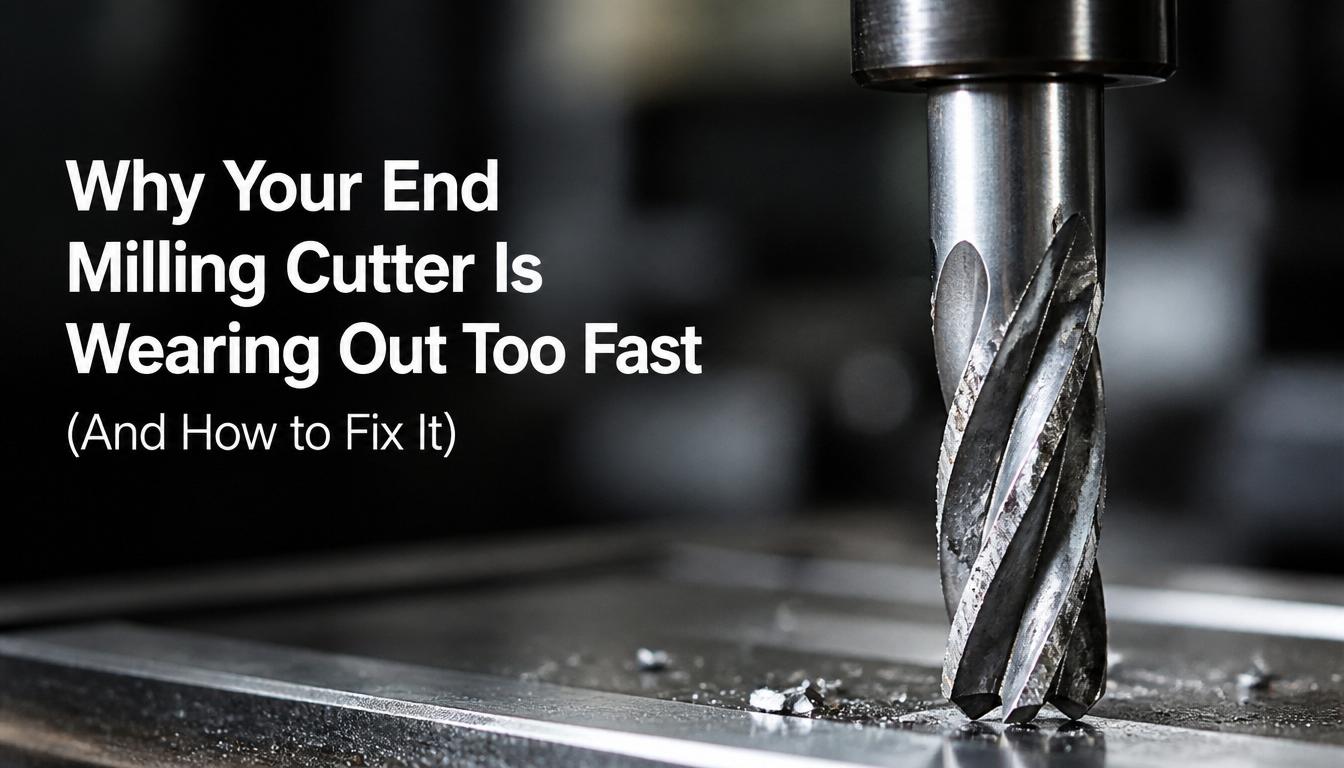
If your End milling cutters are failing sooner than expected, you’re not alone. Tool wear is one of the most common issues in machining operations, and it often leads to poor surface finish, higher production cost, and frequent machine downtime.

The good news? In most cases, premature tool wear is not caused by the cutter itself—but by how it’s being used.

Let’s break down the real reasons and how you can fix them.
1. Incorrect Cutting Speed and Feed Rate
One of the biggest reasons for fast wear is running tools at the wrong cutting parameters.
- Too high speed → excessive heat → rapid tool wear
- Too low feed → rubbing instead of cutting → edge dulling
- Wrong combination → vibration and chipping
Fix:
Always match speed and feed with material type and tool coating. Carbide tools perform best when parameters are optimized, not guessed.
For better selection of tool types, see: Types of Carbide Cutting Tools
2. Using the Wrong Cutter for the Material
Not all End milling cutters are designed for the same job. Using a general cutter on hardened steel or abrasive materials can drastically reduce tool life.
Fix:
Choose cutters based on application:
- Steel → coated carbide end mills
- Aluminum → high-flute polished cutters
- Heavy roughing → strong geometry end mills
You can explore performance-optimized options here: Best End Milling Cutters for Steel & Aluminum
3. Poor Machine Setup or Alignment Issues
Even the best cutting tool will fail early if the machine setup is not stable.
Common issues:

- Spindle runout
- Loose tool holding
- Poor fixture clamping
- Excess vibration
Fix:
Ensure your setup is rigid and properly aligned before machining. Stability directly impacts tool life.
4. Overheating Due to Poor Cooling
Heat is the biggest enemy of cutting tools. Without proper coolant, friction increases and tool edges degrade quickly.
Fix:
- Use proper coolant flow
- Ensure correct nozzle positioning
- Avoid dry cutting unless tool is designed for it
5. Wrong Tool Engagement (Too Much Load)
Engaging too much material at once increases stress on the cutter and leads to chipping or breakage.
Fix:
- Reduce depth of cut
- Use step-down milling strategies
- Avoid aggressive side loads unless tool supports it
Advanced tool strategies can be paired with high-performance cutters like shell-type designs: Maximizing Efficiency with Shell End Mills cutting tools
6. Low-Quality or Wrong Grade Tools
Cheaper tools often use lower-grade carbide or poor coatings, which leads to faster wear.
Fix:
Invest in high-quality industrial-grade tools designed for durability and precision. The right tool selection significantly improves ROI over time.
7. Ignoring Tool Geometry
Helix angle, flute design, and coating type all impact cutting performance. Wrong geometry causes:
- Heat buildup
- Poor chip evacuation
- Edge failure
Fix:
Always match geometry with application requirements instead of using a “one-size-fits-all” cutter.
Best Practices to Extend Tool Life
To get maximum life from your End milling cutters, follow these proven practices:
- Maintain correct RPM and feed rate
- Use proper coolant system
- Ensure rigid machine setup
- Select tool based on material
- Avoid overloading the cutter
- Inspect tools regularly for wear signs
Conclusion
Premature wear of End milling cutters is rarely random. It’s usually caused by incorrect machining parameters, poor tool selection, or unstable setups. By optimizing your cutting conditions and choosing the right tools, you can significantly improve tool life, reduce downtime, and increase machining efficiency.
If you’re looking for high-performance industrial tooling solutions, explore the full range of precision cutting tools designed for durability and efficiency.