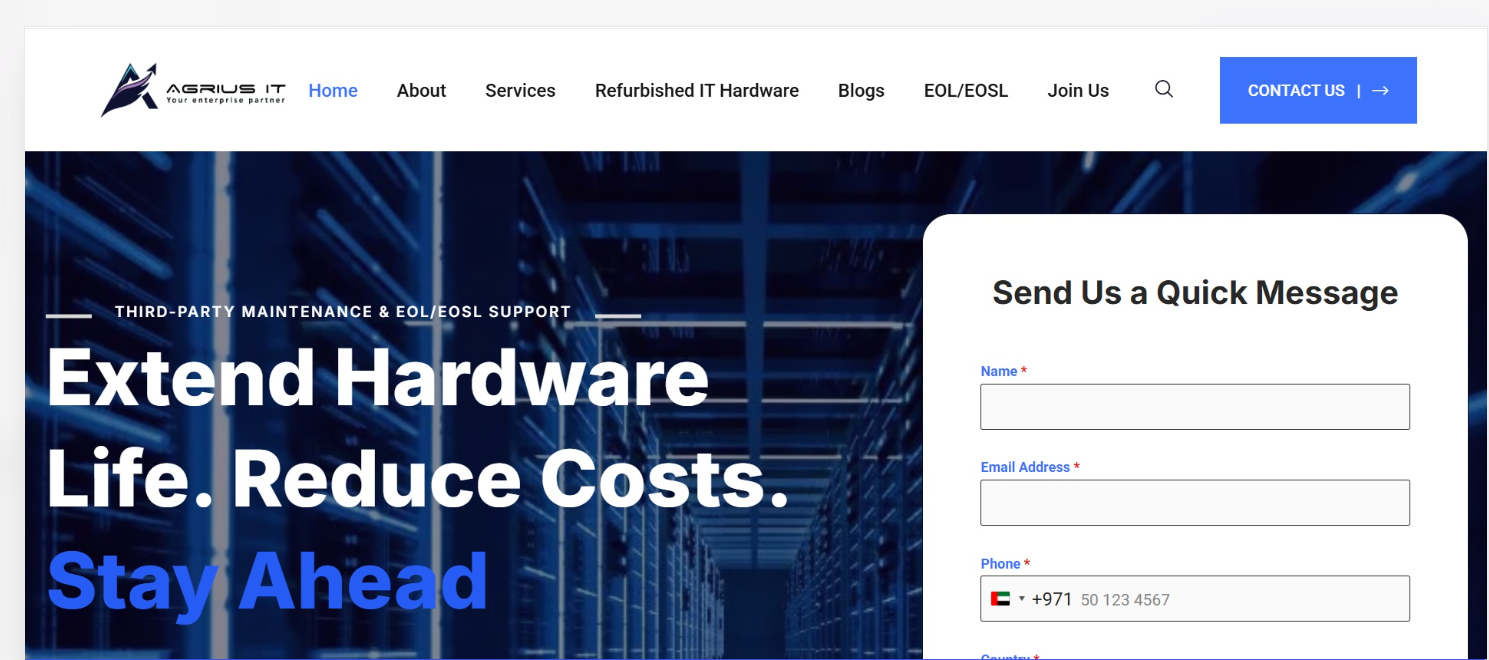
Third-party IT maintenance helps businesses maintain their IT equipment without relying only on the original equipment manufacturer (OEM). In 2027, companies can use third party maintenance (TPM) to reduce hardware maintenance costs, extend equipment life, and keep their IT infrastructure running. Agrius IT provides third-party maintenance for servers, storage systems, network equipment, and tape libraries, helping businesses maintain their existing hardware after manufacturer support ends.
What Is Third-Party IT Maintenance?
Third-party IT maintenance is a service provided by an independent company rather than the original hardware manufacturer. These providers offer technical support, hardware repairs, replacement parts, and maintenance for eligible IT equipment.
Businesses use these services to maintain their existing infrastructure instead of replacing equipment simply because the manufacturer has stopped supporting it. Third-party maintenance can cover equipment from different brands, depending on the provider’s capabilities and service agreement.
Why Is Third-Party IT Maintenance Important in 2027?
Many businesses depend on servers, storage devices, and network equipment for their daily operations. Replacing this equipment can require a large budget, even when the hardware still meets business needs.
Third-party maintenance gives businesses another option for maintaining older equipment. It can help reduce maintenance expenses, extend hardware life, and support business continuity.
Companies with equipment approaching end-of-life (EOL) or end-of-service-life (EOSL) can consider TPM to continue using suitable hardware beyond the manufacturer’s support period.
What Are the Main Benefits of Third-Party IT Maintenance?
1. Lower Maintenance Costs
Third-party maintenance can cost less than some OEM maintenance contracts. Depending on the equipment and service requirements, businesses may reduce maintenance expenses while continuing to use their existing infrastructure.
2. Extended Hardware Life
Businesses do not always need to replace older equipment immediately. Regular maintenance and access to suitable replacement parts can help extend the useful life of servers, storage systems, and network devices.
3. Multi-Vendor Support
Businesses often use equipment from several manufacturers. A third-party maintenance provider may support multiple brands through one service arrangement, depending on the equipment and contract.
4. Support for EOL and EOSL Equipment
When manufacturers stop providing support, finding technical assistance and replacement parts can become more difficult. Third Party Maintenance services may offer continued maintenance for eligible equipment after OEM support ends.

5. Flexible Service Agreements
Businesses can choose maintenance coverage based on their equipment, operational needs, and required response times. Service-level agreements (SLAs) define the agreed service scope and response commitments.
Which IT Equipment Can Be Covered?
Third-party IT maintenance can cover different types of business hardware, including:
- Servers: Equipment used to run applications and business systems.
- Storage systems: Hardware used to store and access business data.
- Network equipment: Routers, switches, and related networking devices.
- Tape libraries: Equipment used for data backup and long-term storage.
Available services depend on the equipment model, condition, parts availability, location, and maintenance agreement.
How Does Agrius IT Help Businesses?
Agrius IT provides third-party maintenance for servers, storage systems, network equipment, and tape libraries. Its services help businesses maintain existing IT infrastructure and manage hardware costs.
Agrius IT supports eligible equipment from brands such as Cisco, HPE, Dell EMC, IBM, Lenovo, NetApp, and other major manufacturers, subject to service availability.
Businesses can discuss their hardware requirements with Agrius IT to understand available maintenance options, service coverage, and support arrangements. Before selecting a provider, companies should review the SLA, response times, replacement-parts availability, and supported equipment list.
Is Third-Party IT Maintenance Right for Your Business?
TPM may be suitable for businesses that want to continue using reliable existing hardware, manage maintenance budgets, or maintain equipment after OEM support ends. However, companies should assess equipment condition, business requirements, and future capacity needs before making a decision.
Newer equipment may still require OEM support, while older equipment may benefit from an independent maintenance arrangement.
Conclusion
Third-party IT maintenance offers businesses another way to maintain servers, storage systems, network equipment, and tape libraries in 2027. It can help control costs, extend hardware life, and provide support for eligible EOL and EOSL equipment.
Visit AgriusIT.com to learn more about third-party IT maintenance and discuss your hardware maintenance requirements with the Agrius IT team.