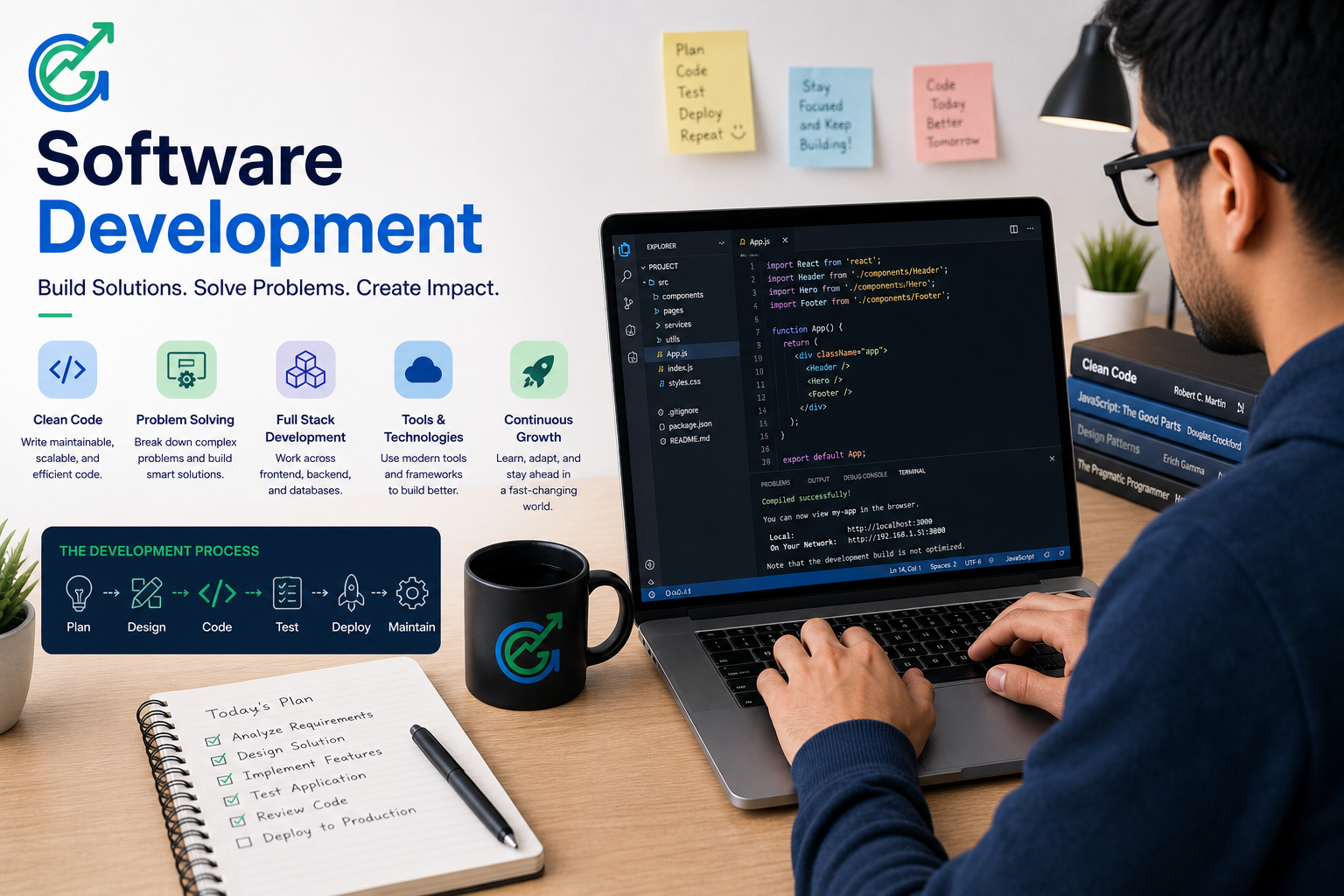
In our modern world, we are surrounded by technology. From the smartphone in your pocket to the complex systems that manage global air traffic, everything relies on code. But have you ever paused to ask, what is software development? Is it just typing lines of text into a black screen, or is it something more? Whether you are a business owner looking to build a custom application or an aspiring coder ready to launch a career, understanding the fundamentals of software development is the first step toward digital literacy.
In this 1,000-word guide, we will break down the definitions, processes, types, and future of software development.
Defining Software Development: More Than Just Coding
At its core, software development is the process of conceiving, specifying, designing, programming, documenting, testing, and bug fixing involved in creating and maintaining applications, frameworks, or other software components.
While people often use the terms “coding” and “software development” interchangeably, coding is actually just one phase of the development lifecycle. Software development is an umbrella term that encompasses the entire journey of a digital product—from a rough idea to a functional tool used by millions.
The Three Main Categories of Software
To understand software development, you must understand what is being built. Software generally falls into three categories:
- System Software: This provides core functions such as operating systems (Windows, macOS, Android), disk management, and hardware interfacing.
- Programming Software: These are tools for developers, including text editors, compilers, and debuggers.
- Application Software: These are the programs we interact with daily, such as web browsers, Spotify, Microsoft Word, and mobile games.
The Software Development Life Cycle (SDLC): How Software is Made
Software isn’t built overnight. Professional developers follow a structured process known as the Software Development Life Cycle (SDLC). This ensures the final product is efficient, secure, and meets user needs.
1. Requirement Analysis
Before a single line of code is written, developers and stakeholders must define what the software needs to achieve. Who is the target audience? What problems does it solve? This stage creates the roadmap for the entire project.
2. Design
In the design phase, architects create the blueprint. This includes the UI (User Interface)—how the software looks—and the UX (User Experience)—how the software feels and functions. It also involves technical architecture, such as database structures and API integrations.
3. Development (Coding)
This is where the “magic” happens. Developers use programming languages like Python, Java, C++, or JavaScript to build the actual product. This is usually the longest phase of the cycle.
4. Testing
Software must be rigorous. During testing, QA (Quality Assurance) engineers look for “bugs” or errors. They ensure the software works across different devices and handles unexpected user inputs without crashing.
5. Deployment and Maintenance
Once the software is polished, it is released to the public. However, the work doesn’t stop there. Developers must constantly update the software to fix new bugs, improve security, and add features based on user feedback.
Popular Programming Languages in 2024
If you are looking to enter the world of software development, choosing the right language is crucial. Here are the heavy hitters:
- Python: Known for its simplicity and readability. It is the go-to for Data Science, AI, and backend development.
- JavaScript: The king of the web. If you want to build interactive websites, JavaScript is mandatory.
- Java: A versatile, “write once, run anywhere” language used heavily in corporate environments and Android app development.
- Swift: The primary language for iOS (Apple) development.
- SQL: Essential for managing and querying databases.
Types of Software Developers
The field is vast, and most professionals specialize in a specific area:
- Frontend Developers: They focus on the “client-side”—everything the user sees and interacts with in a browser or app.
- Backend Developers: They work on the “server-side”—the databases and logic that power the frontend but remain invisible to the user.
- Full-Stack Developers: The “jack-of-all-trades” who can handle both frontend and backend development.
- Mobile Developers: Specialists in creating apps for iOS and Android.
- DevOps Engineers: They bridge the gap between development and IT operations, focusing on the speed and reliability of software releases.
Why is Software Development Important for Business?
In today’s economy, every company is essentially a tech company. Whether you are in retail, healthcare, or finance, software development offers several competitive advantages:
- Efficiency: Custom software can automate repetitive tasks, saving thousands of man-hours.
- Scalability: Digital solutions allow businesses to grow without a linear increase in physical costs.
- Data Insights: Software allows for better data collection, helping businesses make informed, “data-driven” decisions.
- Customer Engagement: Apps and websites provide a direct line of communication with your audience.
The Intersection of Software and Security
As software becomes more integrated into our lives, security has become a top priority. A single vulnerability in a piece of software can lead to massive data breaches. This is why many developers are now transitioning into specialized fields like cybersecurity.
If you are interested in the protective side of tech, learning how software is built is the first step toward learning how to defend it. For those curious about this path, exploring a step-by-step guide for beginners can provide clarity on how to pivot from general development to security-focused roles.
The Future of Software Development: AI and Low-Code
The landscape of software development is shifting rapidly. Two major trends are defining the future:
- Artificial Intelligence (AI): AI is not replacing developers; it’s empowering them. Tools like GitHub Copilot help write code faster, while AI-driven testing tools find bugs more efficiently than humans.
- Low-Code/No-Code Platforms: These allow non-technical users to build basic applications using “drag-and-drop” interfaces. While great for simple tasks, complex, high-performance systems will always require professional software developers.
Conclusion: Starting Your Journey
So, what is software development? It is the creative and technical process of solving problems through digital tools. It is a career path that rewards logic, continuous learning, and creativity.
Whether you want to build the next big social media platform or secure a company’s private data through platforms like Gradus, the world of software development offers endless opportunities. The digital frontier is still expanding, and there has never been a better time to be a part of it.