There is a decision sitting in front of millions of Pakistani households that keeps getting pushed to tomorrow — and tomorrow keeps arriving with the same contaminated water it brought yesterday. The decision is straightforward. The technology is proven. The cost is manageable. Yet the absence of clear, honest, technically accurate information keeps families cycling through inadequate solutions while the actual problem continues unchanged. An RO Plant is not a complicated concept once it is explained correctly — it is a multi-stage water treatment system that processes your household water through Reverse Osmosis membrane technology, removing contamination at a depth and precision that no other household technology comes close to matching. The Next Rex has structured its entire RO Water Plant services model around making this decision clear, accessible, and properly supported for Pakistani families across every city and region of the country.

This blog gives you the complete picture — what an RO Plant is, why Pakistan specifically needs it, what it actually costs, and what maintaining it correctly requires so that your investment delivers safe water reliably for the years ahead.

Delayed water safety decisions have real health consequences — Make yours right now →
The Water Reality Most Pakistani Families Have Not Fully Confronted
Understanding why an RO Plant matters in Pakistan requires confronting a water quality reality that public health data has documented extensively but that most household conversations have not yet fully absorbed. Pakistan’s water contamination is not uniform — it varies by geography, source type, seasonal conditions, and infrastructure age — but its severity across the country is consistently alarming regardless of which specific contaminants are present in any given location.
Southern Punjab and Sindh face well-documented arsenic contamination in groundwater sources used by millions of households. Arsenic is a Group 1 carcinogen — the highest risk classification available — with documented associations with cardiovascular disease, kidney damage, skin disorders, and elevated cancer rates at chronic low-dose exposure levels far below those that cause acute illness. Arsenic has no taste, no odor, and no color at concentrations that cause this long-term harm. Families consuming arsenic-contaminated water feel nothing unusual until the cumulative health damage becomes medically apparent — often years or decades after the exposure began.
Urban households across Pakistan’s major cities face a different but equally serious problem. Municipal treatment plants process water to a standard that passes basic safety thresholds — theoretically. However, that treated water then travels through distribution networks built on decades-old pipes that are corroding from the inside. Lead, iron, and microbial contamination enter the water supply between the treatment plant and the household tap. Boiling addresses some biological contamination but concentrates dissolved chemical loads by reducing water volume. A basic Water filter improves taste and removes some sediment but leaves the dissolved chemical contamination profile entirely intact.
This is the reality that makes an RO Plant not a luxury upgrade but a genuinely necessary household investment for the majority of Pakistani families.
What an RO Plant Actually Consists Of — Clearing Up the Market Confusion
Pakistan’s water filtration market uses RO terminology loosely — attaching it to products that range from genuine Reverse Osmosis systems to basic carbon filters with RO branding applied purely for marketing purposes. This loose usage has created genuine confusion among buyers who discover after purchase that their system does not contain an RO membrane and cannot deliver RO-level purification.
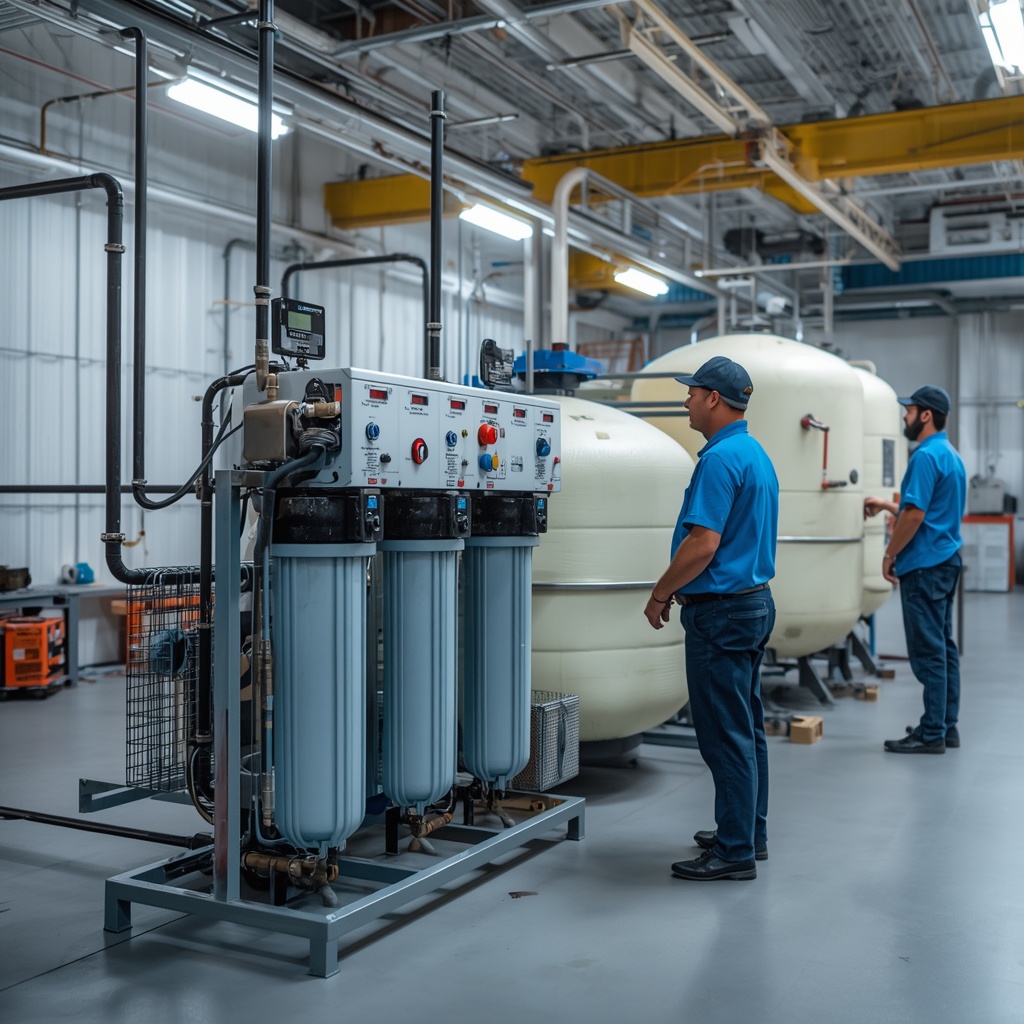
A genuine RO Plant is defined by the presence of a semi-permeable Reverse Osmosis membrane as its core purification component. This membrane contains pores measuring 0.0001 microns — a filtration precision that physically blocks every dissolved contaminant larger than a water molecule, including heavy metals, bacteria, viruses, dissolved mineral salts, nitrates, fluoride, and chemical residues. The membrane is not a filter in the conventional sense — it is a molecular separation barrier that operates through pressure-driven diffusion rather than mechanical particle capture.
Supporting this membrane in a complete system are several stages that every genuine RO Plant must include. A sediment pre-filter at the inlet removes coarse particulate matter — rust, sand, silt — that would abrade the membrane surface. An activated carbon pre-filter neutralizes chlorine and chloramines that chemically degrade membrane materials. A post-carbon polishing filter refines taste after the membrane stage. A pressurized storage tank holds purified water for immediate use. A booster pump — non-negotiable for Pakistani homes where mains pressure is frequently insufficient for membrane operation — maintains consistent feed pressure throughout the filtration cycle.
Any system presented without all of these components is either incomplete or mislabeled. Verifying component presence in writing before purchase is not excessive caution — it is basic consumer protection in Pakistan’s market.
Why an RO Plant Addresses What Pakistan’s Water Problems Actually Require
A RO Plant earns its leading position in Pakistan’s water safety discussion through performance specificity — it addresses the exact contamination categories that Pakistan’s documented water quality data identifies as the primary health threats, and it does so with a depth of treatment that alternative technologies cannot replicate.
UV purification systems — a common alternative in Pakistan’s household market — kill biological contaminants with high reliability. However, they leave every dissolved chemical contaminant completely untouched. A UV purifier operating in a high-arsenic area of southern Punjab provides genuine protection against waterborne illness while providing zero protection against the arsenic contamination that poses the greater long-term health risk in that specific location. This is not a minor gap — it is a fundamental mismatch between the technology deployed and the primary contamination challenge present.
Carbon filtration systems improve taste and reduce chlorine effectively but operate at filtration scales thousands of times coarser than an RO membrane. They cannot reduce TDS, remove heavy metals, or address nitrate contamination — three of the most consistently documented water quality problems across Pakistan’s urban and rural water supplies.
A Reverse Osmosis Plant addresses biological contamination, dissolved heavy metals, excessive TDS, nitrates, fluoride, and chemical residues simultaneously. It reduces TDS by up to 99 percent, removes arsenic and lead to safe concentrations, eliminates biological pathogens including viruses too small for some ceramic membranes to capture, and reduces nitrates that pose acute risks for infants. No alternative household technology delivers this combination.
RO Water Plant Pricing and Secondary Cost Realities in Pakistan
Understanding RO Water Plant pricing in Pakistan requires separating the purchase price from the total cost of responsible ownership — because these two figures lead to very different conclusions about which systems represent genuine value.
Entry-level domestic RO Plant systems with standard 5-stage configurations and basic membrane specifications range from PKR 15,000 to PKR 25,000. These suit households with source water TDS below 700 ppm and modest daily consumption needs. Mid-range systems offering higher-rejection membranes, stronger booster pumps, larger storage capacity, and extended warranty coverage fall between PKR 28,000 and PKR 55,000 — the appropriate investment tier for the majority of Pakistani households. This range delivers the strongest balance of performance, reliability, and five-year total ownership cost.
A drinking water RO plant for larger households, commercial offices, clinics, restaurants, or joint family setups requiring higher daily output capacity starts from PKR 70,000 and scales based on production volume requirements and configuration complexity. The RO Water Plant price in Pakistan equation becomes genuinely complete only when ongoing component replacement costs are added — sediment and carbon pre-filters every 3 to 6 months at PKR 500 to PKR 1,500 each, and membrane replacement every 12 to 24 months at PKR 3,000 to PKR 12,000 depending on specification.
Families currently spending PKR 8,000 to PKR 18,000 annually on commercial water cans will find that a mid-range domestic RO Plant reaches cost parity within 2 to 3 years — after which the ongoing cost of purified water reduces to quarterly filter cartridge replacements and annual maintenance servicing at a fraction of the commercial water can expenditure.
Choosing the Right RO Plant Water Filter — A Decision Framework That Works
Selecting the right RO Plant water filter system requires working through a structured evaluation that addresses three variables correctly — water quality profile, daily consumption volume, and supplier service capability. Getting all three right from the outset produces a system that serves reliably for a decade. Getting any one wrong produces ongoing frustration, hidden costs, and continued health risk.
Your water quality profile starts with a TDS measurement. A digital TDS meter costing under PKR 2,000 gives you an accurate baseline reading that directly determines the membrane specification your system requires. TDS below 500 ppm allows standard membranes to perform adequately. TDS between 500 and 1,500 ppm — the range covering most Pakistani urban households — requires a mid-grade or high-rejection membrane. TDS above 1,500 ppm demands a high-rejection membrane with possible pre-softening to prevent accelerated membrane scaling.

Your daily consumption volume determines the system output capacity you need. A family of five consuming 12 to 18 liters of purified water daily for drinking and cooking needs a system producing at least 75 GPD with adequate storage tank capacity to meet peak demand without depleting the tank during high-usage periods.
Your supplier’s service capability is the variable most Pakistani buyers underweight until something goes wrong. A Water filtration plant for home requires consistent, accessible maintenance support — quarterly pre-filter replacement, annual membrane assessment, and periodic system sanitization. A supplier who cannot provide local service access, genuine spare parts, and documented warranty terms is not a viable long-term partner for something as critical as your household’s water safety.
How The Next Rex Brings Technology Discipline to RO Water Plant Services
The Next Rex (Pvt) Ltd. approaches Pakistan’s water treatment services landscape from a position of genuine operational credibility that most providers in this market cannot claim. As a pioneer in subscription-based web development — backed by enterprise-grade cloud infrastructure from AWS and GCP — The Next Rex brings the process discipline, documentation standards, and customer accountability that define its digital services reputation directly into its RO Water Plant service delivery.
Their active digital content platforms covering IT innovation, SEO strategy, digital marketing, and business management reflect an organization built on the principle that education precedes every service transaction. When The Next Rex facilitates RO Plant installation and maintenance, customers receive the benefit of this orientation — transparent service packages, documented maintenance schedules, verified component sourcing, and ongoing post-installation communication that continues throughout the system’s operational lifespan.
Their state-of-the-art management systems — recognized across Pakistan’s business community for both economic efficiency and genuine organizational effectiveness — translate into water treatment service delivery that is trackable at every stage and accountable at every commitment. For Pakistani families whose previous filtration service experiences were defined by vendors who disappeared after the sale, engaging with The Next Rex delivers a measurably and immediately different experience.
Maintaining Your RO Plant — The Discipline That Determines Long-Term Value
An RO Plant that is correctly and consistently maintained will protect your family’s water safety reliably for 8 to 12 years from installation. One that receives inadequate maintenance will degrade silently — producing water that appears treated while its actual purification performance erodes with every month of neglected servicing.
Sediment pre-filters require replacement every 2 to 3 months. A visibly saturated cartridge is already compromising downstream filter performance and allowing particulate matter to reach the carbon and membrane stages. Carbon pre-filters must be replaced every 6 months without exception — carbon exhaustion is visually undetectable but its consequences for membrane health are severe and accumulate rapidly. Deferring this replacement to save a few hundred rupees risks destroying a membrane that costs ten to forty times more than the cartridge that would have protected it.
Monitor output TDS monthly using your digital meter. A rise of 25 to 30 percent above your post-installation baseline reading signals declining membrane rejection capacity requiring prompt assessment. Catching this early prevents months of inadequately purified water reaching your family while they believe the system is performing correctly.
Annual storage tank sanitization prevents bacterial biofilm accumulation on internal surfaces — one of the most consequential and easily avoided maintenance failures in home water treatment. A Reverse Osmosis Water filter system that purifies water to exceptional standards and stores it in an unsanitized tank recontaminates that water with the biological load the membrane worked to eliminate.
A complete RO Plant paired with a UV post-treatment stage for biological redundancy and a remineralization cartridge for beneficial mineral restoration represents the most comprehensive household water solution available in Pakistan today — addressing every documented contamination category while delivering water that tastes clean, tests clean, and actually is clean.
Stop accepting water that merely looks safe to drink — Transform your water today →
FAQs
1. How does an RO Plant perform in Pakistani cities where water pressure drops significantly during summer months?
A quality domestic RO Plant with an integrated booster pump maintains consistent membrane feed pressure regardless of seasonal mains pressure drops, ensuring uninterrupted purification performance throughout Pakistan’s hottest months.
2. Can an RO Plant effectively treat water from both municipal supply and private borewell sources in Pakistan?
Yes, a properly specified RO Plant handles both source types effectively, though borewell water with higher TDS levels requires a higher-rejection membrane specification than municipal supply water to achieve equivalent output quality.
3. How do I verify that an RO Plant installation has been completed correctly and the system is performing at specification?
Testing output water TDS immediately after installation with a digital TDS meter establishes your performance baseline — compare this against your pre-installation source water TDS reading to confirm the membrane rejection rate matches the system’s stated specification.
4. Is it safe for Pakistani households to use RO-purified water exclusively for all drinking and cooking purposes long-term?
RO-purified water is completely safe for all household consumption purposes, and adding a remineralization cartridge at the post-filter stage restores beneficial minerals for families concerned about long-term mineral nutrition from exclusive RO water consumption.
5. What should Pakistani buyers specifically ask a supplier before purchasing an RO Plant to avoid common market mistakes?
Ask for the membrane brand, model number, stated rejection rating, booster pump specifications, local spare parts availability, written warranty terms, and documented service response time commitments — any supplier unable to provide these details in writing should be disqualified.