Introduction to Ready Mix Concrete
The Indian construction industry has changed rapidly over the last decade. From high-rise apartments to expressways and smart city developments, builders today demand speed, quality, and consistency. This is where RMC Ready Mix Concrete has become an essential part of modern construction.
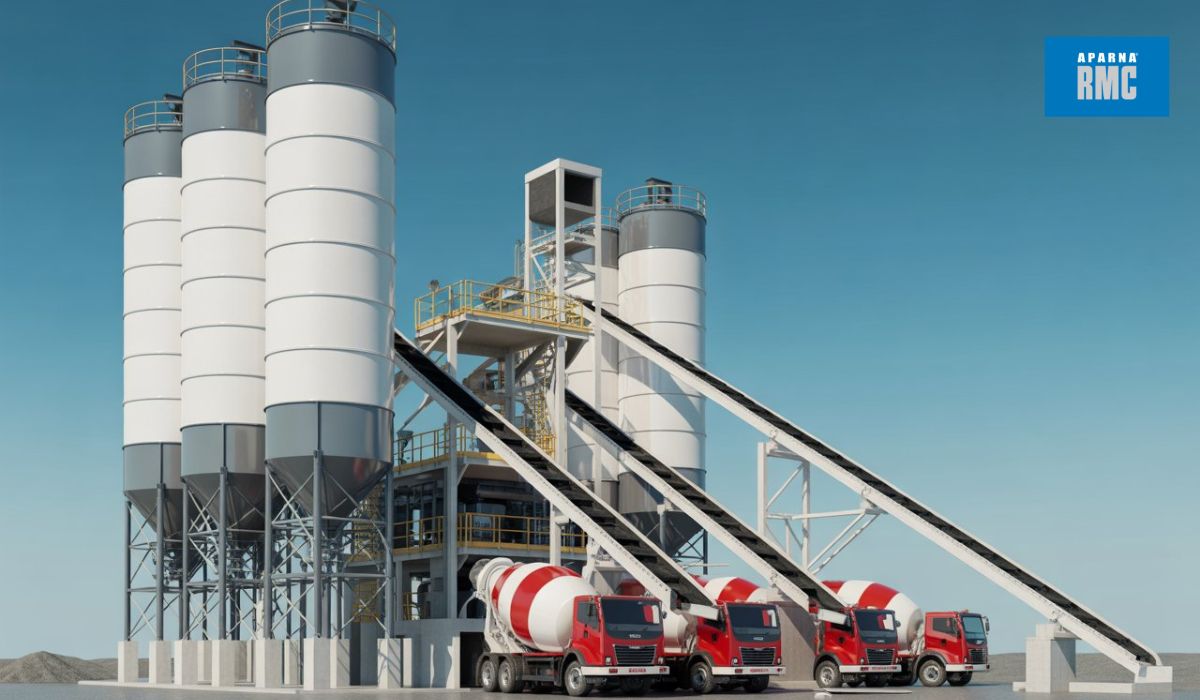
Unlike traditional site-mixed concrete, ready mix concrete is manufactured in a controlled batching plant using precise proportions of cement, aggregates, water, and admixtures. It is then delivered directly to the construction site using transit mixers. This process improves concrete quality and reduces human errors during mixing.
Today, developers, contractors, and engineers prefer ready mix concrete because it saves time, improves structural performance, and supports sustainable construction practices. As construction timelines become tighter and quality standards increase, the role of professional concrete suppliers continues to grow across India.
Importance of RMC in Modern Construction
Modern construction projects require strong planning and reliable materials. Concrete is one of the most important construction materials used in buildings, bridges, highways, industrial plants, airports, and metro projects. Poor-quality concrete can lead to cracks, delays, and long-term structural problems.
This is why builders increasingly rely on professional RMC suppliers that can deliver consistent quality at scale.
A well-designed concrete mix provides better compressive strength, durability, and workability. It also improves construction speed because the material arrives ready for immediate use. This becomes extremely important in large infrastructure projects where delays can increase overall project costs significantly.
Today, many developers prefer working with experienced suppliers offering RMC Ready Mix Concrete because of their focus on quality control, timely delivery, and advanced concrete solutions.
Better Quality Control
Traditional on-site concrete mixing often depends heavily on labour skills and manual measurements. This can create inconsistencies in the mix ratio. In contrast, ready mix concrete plants use automated systems and laboratory testing to ensure accuracy.
As a result, the final concrete performs better under different environmental and structural conditions.
Faster Project Completion
Construction delays are a major challenge in India. Ready mix concrete helps reduce delays by eliminating on-site batching activities. Contractors can pour concrete immediately after delivery, which improves productivity and speeds up project execution.
Improved Site Management
Large construction sites often struggle with material storage and waste management. Since ready mix concrete arrives in the required quantity, there is less wastage of cement, sand, and aggregates. This helps maintain a cleaner and safer construction site.
Benefits of Using High-Quality Ready Mix Concrete
Using high-quality concrete has a direct impact on the strength and lifespan of a structure. Whether it is a residential apartment or a commercial complex, quality concrete improves overall structural reliability.
Consistent Strength and Durability
One of the biggest advantages of ready mix concrete is consistency. Every batch is prepared using controlled proportions and tested for quality standards. This ensures uniform strength throughout the project.
High strength concrete is especially important for high-rise buildings, flyovers, industrial flooring, and heavy-load structures.
Reduced Labour Dependency
Construction companies today face labour shortages and rising labour costs. Ready mix concrete reduces dependence on manual mixing teams. This helps contractors improve operational efficiency while maintaining construction quality.
Better Workability
Modern construction designs often involve complex structural elements. Ready mix concrete provides better workability and flow properties, making it easier to place concrete in difficult sections.
Advanced admixtures also improve setting time and pumping efficiency during large-scale construction.
Cost Efficiency in the Long Run
Although some builders initially compare only material costs, ready mix concrete often becomes more economical over time. It reduces material wastage, rework, and maintenance costs caused by poor-quality concrete.
For infrastructure developers, this translates into better lifecycle performance and long-term savings.
Applications in Residential and Commercial Projects
Ready mix concrete is widely used across different segments of the construction industry. Its flexibility and performance make it suitable for both small and large projects.
Residential Construction
In residential projects, ready mix concrete is commonly used for:
- Foundations
- Columns and beams
- Roof slabs
- Driveways and pavements
- Retaining walls
Builders prefer ready mix concrete because it improves finishing quality and reduces construction timelines.
In urban areas where space is limited, on-site concrete mixing can create logistical challenges. Ready mix solutions help solve these problems efficiently.
Commercial Construction
Commercial construction projects require high-performance concrete capable of handling heavy loads and complex designs.
Applications include:
- Shopping malls
- Office buildings
- Hotels
- Warehouses
- IT parks
- Hospitals
These projects often require continuous concrete pouring operations. Reliable concrete supply becomes critical for maintaining construction schedules and structural integrity.
Infrastructure Projects
India’s infrastructure sector is expanding rapidly with investments in highways, airports, railways, and smart cities.
Ready mix concrete plays an important role in:
- Metro rail projects
- Bridges and flyovers
- Dams
- Industrial corridors
- Ports and logistics hubs
Large infrastructure projects require consistent concrete quality across thousands of cubic meters. Automated batching plants help achieve this efficiently.
Sustainable Construction and Concrete Innovation
Sustainability has become an important focus area in the global construction industry. Builders are now looking for environmentally responsible materials and construction practices.
Ready mix concrete supports sustainable construction in several ways.
Reduced Material Wastage
Traditional site mixing often leads to excess material usage and wastage. Controlled batching processes help optimize raw material consumption and reduce waste generation.
Lower Dust and Noise Pollution
Since mixing occurs at a centralized plant, construction sites experience lower dust and noise pollution. This improves environmental compliance, especially in urban areas.
Use of Advanced Materials
Modern concrete plants use supplementary cementitious materials such as fly ash and slag to improve sustainability. These materials reduce cement consumption while enhancing durability.
Energy-Efficient Construction
Advanced concrete technologies improve insulation and thermal performance in buildings. This contributes to energy-efficient structures and better environmental performance.
As India moves toward greener infrastructure development, ready mix concrete suppliers are investing in innovative and sustainable production methods.
Common Construction Challenges Solved by RMC
Construction projects often face technical and operational challenges. Ready mix concrete helps address many of these issues effectively.
Inconsistent Concrete Quality
Manual site mixing frequently causes variations in concrete strength. Automated batching systems eliminate this problem through accurate proportioning and testing.
Time Delays
Project delays can increase labour costs and affect profitability. Ready mix concrete improves project speed by ensuring timely supply and faster placement.
Material Theft and Wastage
Construction sites often experience cement and aggregate wastage. Centralized concrete production reduces material handling losses and improves inventory control.
Weather-Related Challenges
Extreme weather conditions can affect concrete quality during site mixing. Ready mix suppliers use specialized admixtures and mix designs suitable for different weather conditions.
Skilled Labour Shortage
India’s construction sector continues to face skilled labour shortages. Ready mix concrete reduces dependence on manual operations and improves productivity.
Future of Ready Mix Concrete Industry in India
The future of the ready mix concrete industry in India looks highly promising. Rapid urbanization, infrastructure investments, and smart city initiatives are driving strong demand for quality construction materials.
Several trends are shaping the future of the industry:
Growth of Smart Cities
India’s smart city developments require durable and high-performance construction materials. Ready mix concrete will continue to play a central role in urban infrastructure expansion.
Increasing Demand for High Strength Concrete
Modern buildings and infrastructure projects increasingly require specialized concrete grades capable of handling higher structural loads.
Adoption of Automation and Digital Monitoring
Advanced batching plants now use digital systems for quality tracking, production monitoring, and logistics management. This improves efficiency and consistency.
Focus on Sustainability
Green building certifications and environmental regulations are encouraging the use of eco-friendly concrete technologies.
Expansion in Tier-2 and Tier-3 Cities
Construction growth is no longer limited to metro cities. Demand for professional concrete solutions is increasing rapidly in smaller cities and industrial regions as well.
Conclusion
The Indian construction industry is becoming more quality-driven, technology-focused, and sustainability-oriented. In this changing environment, ready mix concrete has emerged as a reliable solution for modern construction needs.
From residential buildings to large infrastructure projects, RMC provides better strength, faster construction, improved site management, and long-term durability. It also supports sustainable construction practices and reduces operational inefficiencies.
As infrastructure development continues across India, the demand for reliable concrete suppliers and advanced concrete solutions will grow even further. Builders and developers who prioritize quality concrete supply today will benefit from stronger, safer, and more durable structures in the future.
FAQs
1. What is RMC Ready Mix Concrete?
RMC Ready Mix Concrete is concrete manufactured in a batching plant using controlled proportions of cement, aggregates, water, and admixtures before being delivered to the construction site.
2. Why is ready mix concrete better than site-mixed concrete?
Ready mix concrete offers better quality control, consistent strength, reduced wastage, faster construction speed, and improved durability compared to manual site mixing.
3. Where is ready mix concrete commonly used?
It is widely used in residential construction, commercial buildings, highways, bridges, metro projects, airports, industrial flooring, and infrastructure developments.
4. How does ready mix concrete support sustainable construction?
It reduces material wastage, lowers pollution at construction sites, improves resource efficiency, and supports the use of eco-friendly materials like fly ash.
5. What factors should builders consider while choosing a ready mix concrete supplier?
Builders should evaluate quality standards, production capacity, delivery efficiency, technical expertise, testing procedures, and overall industry experience before selecting a supplier.