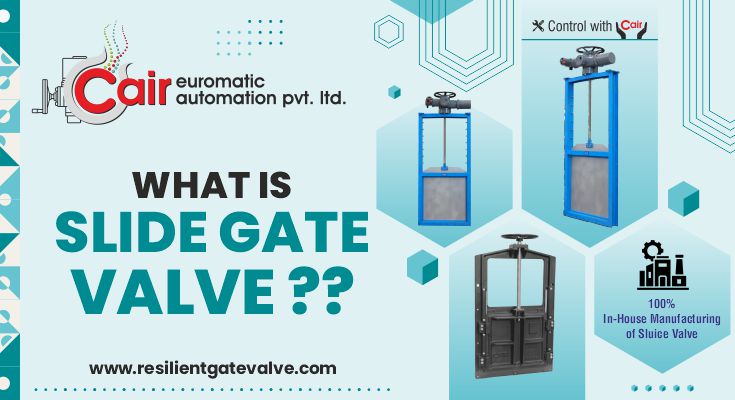
When it comes to water flow control and industrial pipeline systems, both Resilient Seated Gate Valves and Sluice Gates play an important role. Many people think these two products are the same, but they are designed for different applications and operating conditions. Understanding the difference helps industries choose the right solution for water management and flow control systems.
As a trusted sluice gate manufacturer in India, Cair Euromatic Automation provides high-quality flow control solutions for water treatment plants, dams, irrigation systems, industries, and infrastructure projects.
What is a Resilient Seated Gate Valve?
A Resilient Seated Gate Valve is a pipeline valve mainly used to start or stop the flow of water inside a closed piping system. It contains a rubber-coated gate that creates a tight seal and prevents leakage.
These valves are widely used in:
- Municipal water supply systems
- Industrial pipelines
- Irrigation systems
- Fire protection systems
- Water treatment plants
The valve operates by lifting or lowering the gate inside the valve body. When fully open, water flows smoothly with minimal pressure loss.
Main Features of Resilient Seated Gate Valve
- Leak-proof rubber sealing
- Corrosion-resistant body
- Smooth flow operation
- Low maintenance
- Long service life
- Suitable for underground pipelines
What is a Sluice Gate?
A Sluice Gate is a gate-type flow control system mainly used in open water channels and large water management applications. It controls the flow of water by raising or lowering a gate plate.
Sluice gates are commonly used in:
- Dams and reservoirs
- Irrigation canals
- Sewage treatment plants
- Water treatment plants
- Flood control systems
- Industrial water flow systems
As a leading sluice gate manufacturer in India, Cair Euromatic Automation manufactures manual and motorized sluice gates designed for reliable water flow management and remote fluid control applications.
Main Features of Sluice Gates
- Controls water in open channels
- Suitable for large water flow applications
- Available in manual and motorized designs
- Strong construction for heavy-duty use
- Remote operation with electric actuators
- Ideal for dam and canal systems
Difference Between Resilient Seated Gate Valve and Sluice Gate
| Feature | Resilient Seated Gate Valve | Sluice Gate |
|---|---|---|
| Application | Closed pipeline systems | Open channels and water systems |
| Main Purpose | Start or stop pipeline flow | Control water inflow and outflow |
| Sealing Type | Rubber-coated resilient sealing | Metal or rubber sealing gate |
| Installation | Installed inside pipelines | Installed in channels, dams, and openings |
| Operation | Manual or motorized | Manual or motorized |
| Flow Type | Pressurized pipeline flow | Open water flow |
| Common Use | Water supply systems | Dams, canals, reservoirs |
| Maintenance | Low maintenance | Heavy-duty maintenance depending on use |
Which One Should You Choose?
The selection depends on the type of application and water control requirement.
Choose a Resilient Seated Gate Valve if:
- You need flow control inside pipelines
- Leak-proof sealing is important
- The system works under pressure
- You need a compact and low-maintenance valve
Choose a Sluice Gate if:
- You need water control in open channels
- The project involves dams or reservoirs
- Large water flow management is required
- Remote fluid control is necessary
Importance in Water Management Systems
Both resilient seated gate valves and sluice gates are important for modern water infrastructure projects. They help industries and municipalities control water safely and efficiently.
Resilient seated gate valves are mainly used for reliable shut-off in pipeline systems, while sluice gates are essential for controlling large volumes of water in open-flow applications. Together, they support effective water distribution, flood management, and industrial operations.
Why Choose Cair Euromatic Automation?
Cair Euromatic Automation is known for manufacturing durable and high-performance flow control solutions for industrial and water management projects. The company offers:
- High-quality resilient seated gate valves
- Heavy-duty manual and motorized sluice gates
- Customized flow control solutions
- Electric actuator-operated systems
- Reliable products for long-term use
As a trusted sluice gate manufacturer in India, the company focuses on quality, durability, and efficient water management solutions for different industries and infrastructure projects.
Conclusion
Although Resilient Seated Gate Valves and Sluice Gates are both used for flow control, their applications and working systems are different. Resilient seated gate valves are best for closed pipeline systems, while sluice gates are ideal for open water management applications like dams, canals, and treatment plants.
Choosing the right product improves system efficiency, safety, and long-term performance. With reliable manufacturing, durable materials, and advanced automation solutions, Cair Euromatic Automation provides trusted flow control products for modern industrial and water management needs.
Frequently Asked Questions (FAQs)
1. What is the difference between a Resilient Seated Gate Valve and a Sluice Gate?
A Resilient Seated Gate Valve is mainly used in closed pipeline systems to stop or start water flow, while a Sluice Gate is used in open water systems like dams, canals, and reservoirs to control water inflow and outflow.
2. Where are Resilient Seated Gate Valves used?
These valves are commonly used in water supply pipelines, irrigation systems, fire protection lines, industrial plants, and water treatment systems.
3. What are the applications of Sluice Gates?
Sluice gates are used in dams, irrigation canals, sewage treatment plants, flood control systems, reservoirs, and industrial water management projects.
4. What are the benefits of a Resilient Seated Gate Valve?
Key benefits include:
- Leak-proof sealing
- Corrosion resistance
- Smooth operation
- Long service life
- Low maintenance
5. Why are motorized sluice gates preferred?
Motorized sluice gates allow remote fluid control through electric actuators, reducing manual work and improving operational efficiency.
6. Which industries use sluice gates?
Sluice gates are widely used in:
- Water treatment plants
- Power plants
- Irrigation systems
- Chemical industries
- Cement industries
- Wastewater management systems
7. How do sluice gates help in dams?
Sluice gates regulate the release of water from dams and reservoirs. They help control water levels, manage floods, and support irrigation and hydropower operations.
8. Why choose Cair Euromatic Automation?
Cair Euromatic Automation is a trusted sluice gate manufacturer in India offering durable, high-quality, and customized flow control solutions for industrial and water management applications.
9. Can sluice gates be customized?
Yes, sluice gates can be manufactured according to project requirements, including size, pressure rating, operation type, and automation needs.
10. What materials are used in sluice gates and gate valves?
Common materials include cast iron, ductile iron, stainless steel, and corrosion-resistant coated materials for long-lasting performance.