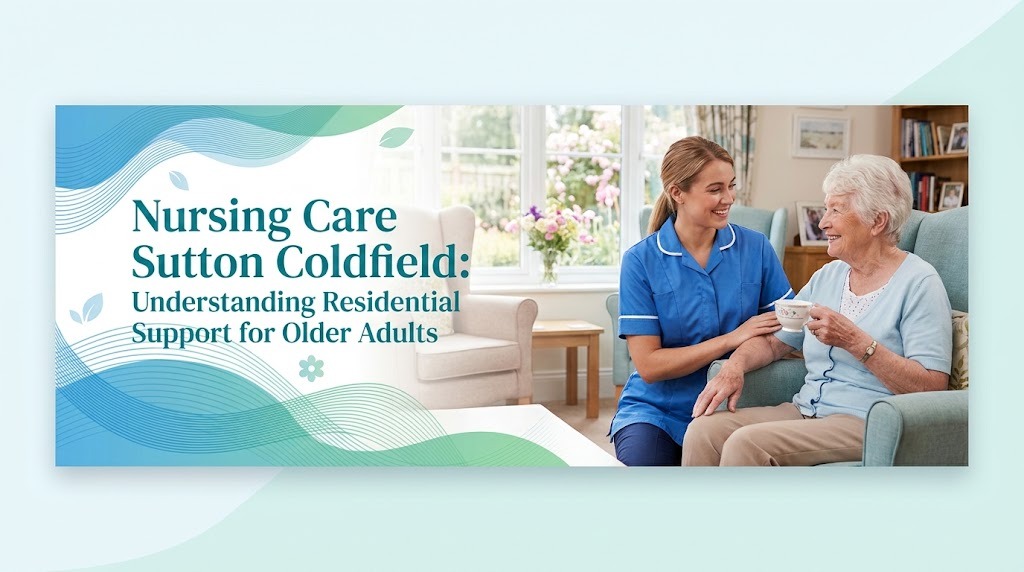
Choosing the right care setting for an older family member is an important decision that requires careful consideration of health needs, personal preferences, and everyday routines. Nursing care Sutton Coldfield is an important option for families seeking professional support for relatives who need regular medical attention alongside assistance with daily activities. Understanding how nursing homes operate, what services they provide, and how to compare local care options can help families make decisions with greater confidence.

Across Sutton Coldfield and the wider West Midlands, older adults may require different levels of support as their circumstances change. Some need help with mobility, dressing, and personal hygiene, while others require ongoing nursing supervision, dementia support, or assistance managing complex health conditions. The most appropriate care arrangement depends on an individual’s assessed needs rather than age alone.

For families beginning this process, learning about the differences between residential care, nursing care, and specialist support is a useful first step.
What Does Nursing Care Sutton Coldfield Include?
Nursing care Sutton Coldfield combines assistance with everyday activities and clinical support from qualified nursing professionals. It is generally intended for people whose health needs require a level of supervision or treatment that may be difficult to manage safely at home or in a residential care setting without nursing provision.
Depending on the individual’s assessment and the home’s services, nursing support may include medication management, wound care, monitoring long-term conditions, assistance with mobility, and coordination with healthcare professionals.
Personal care is another important part of daily life. Residents may receive help with bathing, dressing, eating, continence care, and moving safely around the home. The level of assistance should reflect the person’s abilities, preferences, and changing needs.
For example, an older adult recovering from an illness may need help with personal care while also requiring nurses to monitor medication and changes in their condition. Another resident may live with a long-term neurological condition that affects mobility and requires regular clinical oversight.
Nursing care plans should be individualised rather than based on a standard routine for every resident. Staff need to understand medical histories, communication preferences, dietary requirements, mobility limitations, and personal routines.
Families should also ask how a care home responds when a resident’s health changes. Clear procedures for contacting healthcare professionals, communicating with relatives where appropriate, and arranging additional assessment are important elements of safe care.
Understanding the Differences Between Nursing Homes and Residential Care
When comparing a nursing home in Sutton Coldfield with other local care options, families should understand the distinction between residential care and nursing care.
Residential care generally provides accommodation, meals, personal assistance, supervision, and support with everyday living. It may be suitable for people who cannot manage independently but do not require ongoing nursing care within the home.
Nursing care includes these forms of support alongside care delivered by registered nurses. It may be appropriate for residents with more complex health needs, although eligibility and suitability depend on an individual assessment.
The distinction is not simply about how much assistance someone needs. A person may require extensive help with dressing, eating, and mobility without necessarily needing nursing care. Another person may remain relatively independent with daily tasks but require regular clinical monitoring.
Consider a resident who can walk with a frame and manage most personal activities but needs a nurse to oversee a complex medication regime and monitor a chronic wound. A nursing placement may be more suitable, depending on the clinical assessment.
By contrast, someone who mainly needs companionship, prepared meals, and help with bathing may be better suited to residential care.
Families should discuss these circumstances with healthcare professionals and the care provider before making a decision. It is also sensible to establish whether the home can continue meeting a resident’s needs if their health deteriorates.
What to Look for When Comparing Sutton Coldfield Care Homes
The quality of a care home depends on several factors, including staff skills, management, the care planning process, the living environment, and the way residents are treated. Comparing Sutton Coldfield care homes therefore involves more than looking at photographs, facilities, or advertised services.
A visit provides an opportunity to observe how staff interact with residents and whether the environment feels comfortable and respectful.
Important areas to consider include:
- Staffing and qualifications: Ask about registered nursing cover, staff training, supervision, and how staffing levels are managed during nights and weekends.
- Individual care planning: Find out how assessments are completed, how often plans are reviewed, and how residents and families contribute to decisions.
- Medication procedures: Ask how medicines are stored, administered, recorded, and reviewed.
- Meals and nutrition: Check whether menus accommodate dietary restrictions, allergies, cultural preferences, and individual support needs.
- Activities and social contact: Look for meaningful opportunities to participate in hobbies, group activities, outdoor time, and personal interests.
- Communication with families: Understand how updates are shared and whom relatives should contact if they have concerns.
It is also important to review the home’s latest inspection information from the Care Quality Commission (CQC), which regulates health and adult social care services in England. Inspection findings can provide useful information about safety, effectiveness, caring practice, responsiveness, and leadership.

However, an inspection report should be considered alongside a visit and a discussion about the prospective resident’s specific needs. Families should confirm that the services currently offered match the person’s clinical requirements.
A home that suits one individual may not be appropriate for another, even when both residents are of a similar age.
Dementia Care, Personal Dignity, and Emotional Wellbeing
Dementia can affect memory, communication, decision-making, and the ability to carry out familiar activities. As the condition progresses, some people need more structured support to remain safe and maintain their quality of life.
When assessing dementia care, families should ask how staff respond to distress, confusion, changes in behaviour, and difficulties communicating. Good care focuses on understanding the reasons behind a person’s behaviour rather than treating every incident as a problem to control.
Familiar routines, personal belongings, music, photographs, and activities linked to previous interests may help residents feel more settled. For example, someone who enjoyed gardening may respond positively to time outdoors or simple gardening activities adapted to their abilities.
Staff should also understand the person’s life history, preferences, and communication style. A calm approach, adequate time for conversations, and consistent routines can help preserve dignity and reduce unnecessary distress.
Not every nursing home provides the same level of specialist dementia support. Families should establish whether the home has suitable staff training, an appropriate environment, and experience meeting the person’s particular needs.
Emotional wellbeing matters for relatives as well. Moving a loved one into care can bring uncertainty, sadness, and concerns about whether the right decision has been made. Regular communication, opportunities to participate in care discussions, and clear explanations from staff can help families remain involved.
Marian House is a care provider associated with Sutton Coldfield, where families researching local care options may wish to consider how a home’s approach to personal support, nursing needs, and daily life aligns with their relative’s circumstances. As with any provider, current services, staffing arrangements, and suitability should be confirmed directly.
Costs, Funding, and Preparing for a Care Home Assessment
Care home fees vary according to the level of support required, the type of room, the services included, and the provider’s pricing arrangements. Nursing care may cost more than residential care because of the additional clinical support involved.
Before agreeing to a placement, families should request a clear breakdown of fees. Questions should cover accommodation, meals, personal care, nursing support, specialist services, and any additional charges for activities or particular facilities.
It is also important to understand how fees may change if a resident’s needs increase. Written terms should explain payment arrangements, notice periods, annual increases, and what happens if the current placement is no longer suitable.
Funding may be available through local authority support, personal savings, or other arrangements, depending on the individual’s financial circumstances and assessed needs. In England, a local authority financial assessment helps determine whether someone qualifies for financial assistance with eligible care costs.
Where nursing needs meet the relevant criteria, NHS-funded Nursing Care may contribute towards the cost of registered nursing care in an eligible care home. This is different from NHS Continuing Healthcare, which is subject to a separate assessment and may cover the full cost of an eligible person’s assessed health and associated social care needs.
Families should speak with the relevant local authority and healthcare professionals to understand the available assessments and funding routes.
Preparing for a care assessment can make the process more straightforward. Useful information includes current medications, medical history, mobility requirements, dietary needs, communication preferences, and details of any recent changes in health.
It can also help to write down the person’s daily routines, hobbies, and personal preferences. These details allow care staff to understand the individual beyond their medical needs and support a more comfortable transition.
Conclusion
Choosing appropriate sutton coldfield care homes requires an understanding of clinical needs, personal preferences, care standards, and long-term costs. Families comparing a nursing home Sutton Coldfield option with other local services should consider staffing, individual care plans, dementia support, inspection findings, and communication with relatives.
The most suitable setting is one that can meet the person’s assessed needs while protecting their dignity, independence, and quality of life. Careful assessment, open discussions with professionals, and visits to potential providers help families make a well-informed decision about nursing care Sutton Coldfield and the support available for older adults in the local community.