The True Cost of Jaw Wear
Every machine shop wants to reduce costs and improve productivity. However, many shops overlook one important part of their setup—Hard Jaws. Worn chuck jaws can cause poor gripping, damaged parts, and unexpected machine downtime. Replacing jaws too often also increases maintenance costs and reduces profits.

Jaw wear does not happen overnight. Small problems such as dirt buildup, incorrect clamping pressure, and poor maintenance slowly damage the jaws over time. Eventually, the jaws lose accuracy and can no longer hold workpieces correctly.

The good news is that a few simple habits can greatly increase the lifespan of your hard jaws. Proper setup, daily inspections, and preventive maintenance can help you avoid expensive repairs and keep your machines running smoothly.
Prevent Wear With Proper Setup
Match the Jaw to the Workpiece
Choosing the correct jaw for the job is one of the easiest ways to reduce wear.
Hard jaws are designed for strong gripping and heavy-duty machining. However, they are not always the best choice for delicate or finished parts. Using hard jaws on soft materials like aluminum can damage the surface and create unnecessary stress on the jaws.
For finished parts, many shops switch to soft jaws to prevent marring and reduce wear.
The hardness of the jaw should also match the material being machined. Very hard materials require stronger gripping forces, while softer materials need less pressure.
A machine shop that regularly machined aluminum parts found that its jaws were wearing out quickly. After changing to a different jaw type for finished components, the company reduced jaw wear by nearly 30%.
Optimize Clamping Pressure
Many operators believe tighter is better. Unfortunately, over-tightening can damage both the workpiece and the chuck jaws.
Too much pressure can:
- Deform the workpiece
- Cause surface crushing
- Increase metal fatigue
- Speed up jaw wear
Using a torque wrench helps apply consistent pressure every time. Proper torque settings reduce stress on the jaws and improve part accuracy.
Studies in metalworking environments show that excessive clamping force significantly increases material fatigue and shortens component life.
Ensure Correct Alignment
Jaw alignment is essential for long-lasting performance.
Before starting a job, check that the jaws are parallel and properly seated. Even a small alignment problem can cause uneven gripping pressure.
Off-center gripping creates:
- Increased vibration
- Uneven wear patterns
- Poor surface finishes
- Reduced machining accuracy
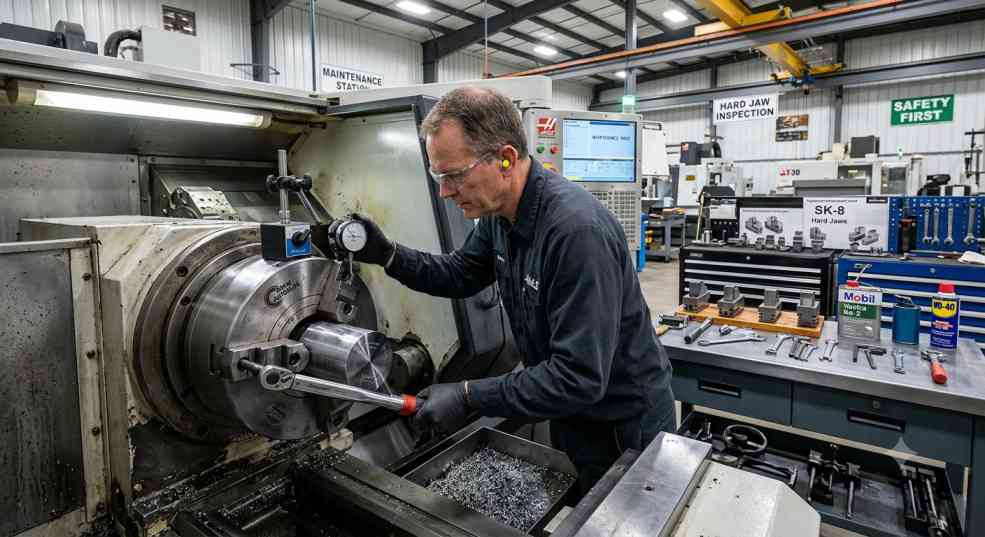
Many experienced machinists use a dial indicator to verify jaw alignment before beginning production. This simple step can prevent major wear issues later.
Daily Maintenance Habits
Clear Debris From the Slots
Metal chips and dirt are major causes of jaw damage.
Small chips often become trapped inside jaw slots and prevent the jaws from seating correctly. This creates uneven pressure and causes premature wear.
Operators should clean the jaws at the end of every shift.
Common cleaning tools include:
- Air guns
- Brushes
- Cleaning cloths
Air guns remove loose chips quickly, while brushes work better for stubborn debris.
Never ignore hidden chips. A small piece of metal can create major alignment problems.
Lubrication Points and Schedules
Lubrication is essential for smooth jaw movement.
Apply the correct grease to:
- Sliding surfaces
- Guideways
- Contact points
Dry surfaces create friction, which leads to galling and accelerated wear.
Signs of poor lubrication include:
- Rough movement
- Grinding noises
- Discoloration
- Excessive heat
A simple daily lubrication checklist can dramatically increase jaw life and improve machine performance.
Inspecting for Micro-Cracks
Tiny cracks can quickly become major failures.
Operators should inspect jaws regularly using:
- Magnifying glasses
- Flashlights
- Visual inspections
Warning signs include:
- Flaking metal
- Hairline cracks
- Unexpected gaps
- Surface discoloration
Any jaw showing signs of cracking should be removed from service immediately. Continuing to use damaged jaws can lead to part failure and serious safety risks.
Advanced Protection Techniques
Applying Protective Coatings
Protective coatings can greatly improve the lifespan of hard jaws.
Hard Chrome Plating
Benefits include:
- Better corrosion resistance
- Improved wear protection
- Easier cleaning
Nitride Coatings
Nitride coatings are ideal for high-production environments because they provide:
- Extreme hardness
- Lower friction
- Better resistance to abrasion
Although coatings increase initial costs, they often save money by extending jaw life and reducing replacement frequency.
Implementing Custom Shims
Shims are an excellent solution when holding irregular workpieces.
Custom shims help:
- Spread loads evenly
- Prevent point loading
- Reduce stress on jaw edges
Heavy-duty boring operations often use shims to improve gripping stability and reduce wear.
Proper load distribution protects both the workpiece and the jaws.
Rotating Jaw Sets
Many shops use multiple jaw sets but fail to rotate them properly.
Rotation spreads wear evenly across all sets.

A simple tracking system can record:
- Operating hours
- Production cycles
- Maintenance dates
By rotating jaw sets regularly, shops prevent one set from wearing out too quickly.
This simple habit can significantly reduce replacement costs.
Troubleshooting Common Failures
Fixing Surface Galling
Galling occurs when metal surfaces rub together under pressure.
Symptoms include:
- Rough jaw faces
- Scratches
- Material transfer
Minor galling can often be repaired by:
- Dressing the jaw face with a mill
- Using abrasive stones
- Polishing damaged areas
However, severely damaged jaws should be replaced immediately.
Trying to repair heavily worn jaws often creates more problems and reduces machining accuracy.
Solving Vibration Issues
Machine vibration, also called chatter, causes significant jaw wear.
Excessive vibration damages:
- Jaw edges
- Contact surfaces
- Mounting points
To reduce vibration:
- Check mounting bolt tightness
- Verify machine setup
- Inspect tool conditions
- Confirm proper workpiece support
A stable setup reduces friction and improves jaw life.
Handling Thermal Expansion
Heat can change the way jaws grip a workpiece.
As temperatures increase, metal expands. This expansion can affect:
- Clamping force
- Part dimensions
- Machining accuracy
Using coolant correctly helps maintain stable temperatures and reduces unnecessary stress on the jaws.
Experienced machinists always consider temperature changes when working with tight tolerances.
Long-Term Storage and Care
Proper Storage Racks
Improper storage damages many jaws before they are ever installed.
Avoid stacking jaws in piles.
Instead, use:
- Padded trays
- Dedicated storage racks
- Individual storage slots
Keeping jaw sets together is also important. Matched sets wear together and should remain together throughout their service life.
Rust Prevention for Idle Jaws
Moisture is a major enemy of hard jaws.
For long-term storage:
- Apply a light oil coating
- Store in dry areas
- Control humidity levels
Many shops now use VCI (Vapor Corrosion Inhibitor) bags because they provide better protection than traditional grease methods.
Proper storage prevents corrosion and extends tool life.
Establishing a Replacement Cycle
Every shop should have a planned replacement schedule.
Waiting until jaws fail often causes:
- Emergency downtime
- Production delays
- Increased repair costs
Create a baseline for expected jaw life by tracking:
- Production hours
- Materials machined
- Maintenance history
Planned replacements are always less expensive than unexpected failures.
Quick Wins to Extend Hard Jaw Life
If you want to improve the lifespan of your hard jaws immediately, follow these simple steps:
✅ Clean chips and debris daily.
✅ Lubricate moving surfaces regularly.
✅ Check jaw alignment before machining.
✅ Avoid excessive clamping force.
✅ Inspect for cracks and damage.
✅ Rotate jaw sets evenly.
✅ Store jaws properly when not in use.
✅ Create a replacement schedule.
Final Thoughts
The condition of your hard jaws directly affects machining accuracy, surface finish, and shop productivity. Small maintenance habits can prevent expensive failures and significantly extend jaw life.
By using proper setup techniques, maintaining cleanliness, applying protective measures, and planning replacements, you can reduce downtime and lower operating costs.
Start with a simple jaw inspection today. A quick audit of your chuck jaws could save your shop thousands of dollars in repairs and lost production tomorrow.