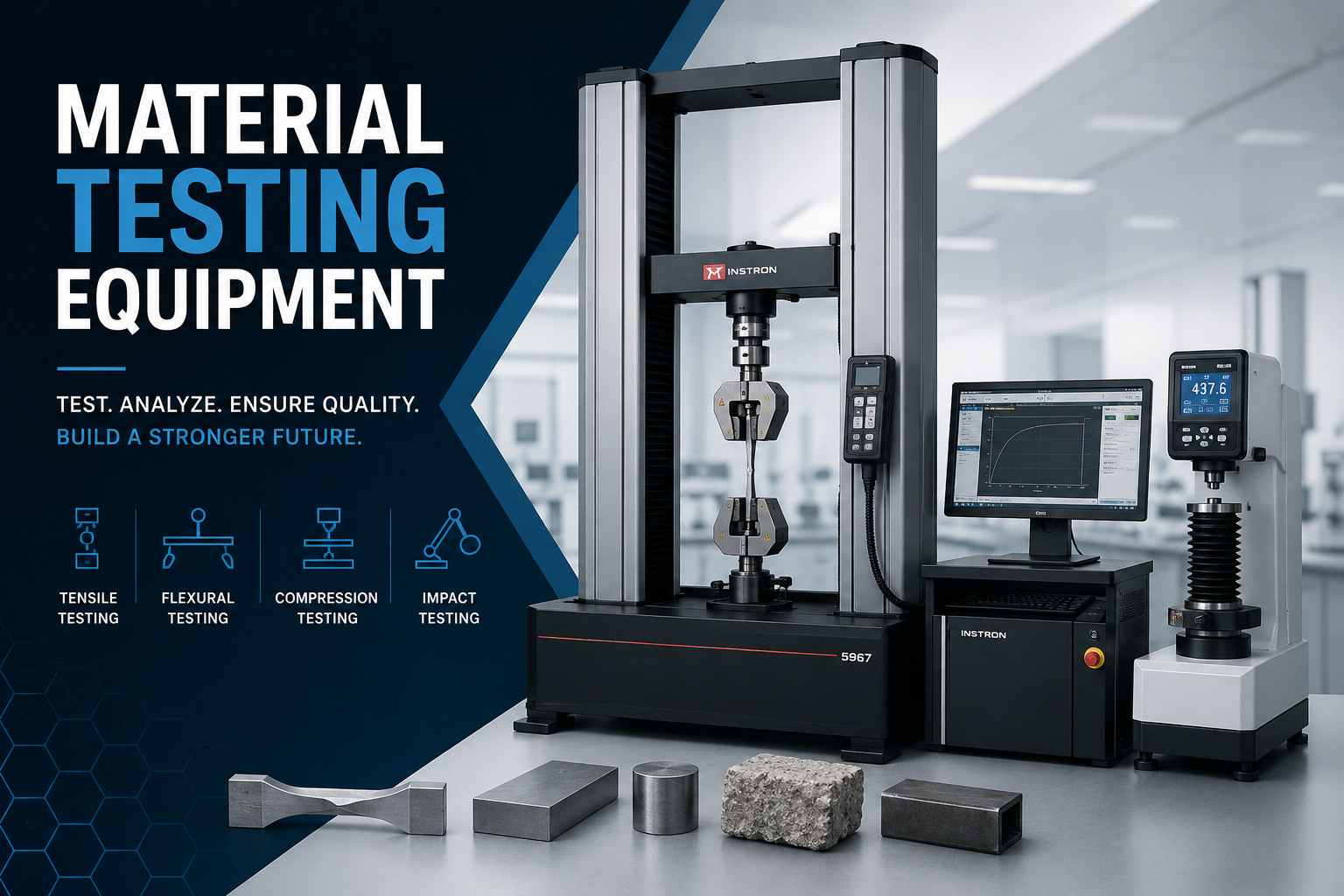
Investing in material testing equipment is a critical decision for businesses involved in manufacturing, construction, research, quality control, and product development. Whether you operate a laboratory, construction company, industrial facility, or testing center in the UAE, selecting the right equipment directly impacts product quality, regulatory compliance, operational efficiency, and long-term profitability.
The UAE’s rapid infrastructure growth, expanding manufacturing sector, and stringent quality standards have increased the demand for reliable material testing solutions. However, with numerous options available in the market, choosing the right equipment requires careful evaluation of several important factors.
In this guide, we’ll explore the key considerations that can help you make an informed investment and maximize the return on your material testing equipment purchase.
Why Material Testing Equipment Matters
Material testing equipment helps organizations evaluate the physical, mechanical, thermal, and chemical properties of materials. These tests ensure that products meet industry standards and perform as expected under real-world conditions.
According to industry research, poor quality control can increase manufacturing costs by up to 15-20% due to product failures, rework, and warranty claims. Reliable testing equipment helps businesses reduce these risks while maintaining consistent quality standards.
Common applications include:
- Construction material testing
- Metal and alloys analysis
- Plastic and polymer testing
- Concrete and cement testing
- Soil and geotechnical investigations
- Aerospace and automotive quality control
- Research and development laboratories
1. Define Your Testing Requirements
Before purchasing any equipment, clearly identify your testing objectives.
Ask yourself:
- What materials will you test?
- Which industry standards must you comply with?
- How frequently will testing be performed?
- What level of accuracy is required?
For example, a construction company in the UAE may require concrete compression testing machines, while a manufacturing facility may need tensile testing systems for metals and plastics.
A detailed understanding of your testing needs helps avoid overspending on unnecessary features or investing in equipment that lacks essential capabilities.
2. Compliance with International Standards
One of the most important factors when selecting material testing equipment is compliance with recognized standards.
Look for equipment designed to meet standards such as the following:
- ASTM (American Society for Testing and Materials)
- ISO (International Organization for Standardization)
- BS EN Standards
- DIN Standards
- AASHTO Standards
Compliance ensures test results are accepted by regulatory authorities, clients, consultants, and certification bodies.
In the UAE, where many projects follow international specifications, standards-compliant equipment is often a mandatory requirement.
3. Accuracy and Reliability
Testing results are only valuable when they are accurate and repeatable.
High-quality material testing equipment should offer:
- Precise measurement capabilities
- Consistent performance over time
- Low margin of error
- Reliable calibration systems
Investing in highly accurate equipment reduces the risk of incorrect results that could lead to costly project delays, product recalls, or compliance issues.
When evaluating suppliers, request calibration certificates and performance validation reports before making a purchase.
4. Consider Future Scalability
Many businesses purchase equipment based solely on current requirements, overlooking future growth.
Consider whether the equipment can accommodate:
- Increased testing volumes
- Additional test methods
- Software upgrades
- Expanded reporting capabilities
A scalable system may have a higher upfront cost but often provides better long-term value by eliminating the need for frequent replacements.
For growing laboratories and industrial facilities in the UAE, scalability is a particularly important consideration.
5. Automation and Software Integration
Modern testing laboratories increasingly rely on automation to improve productivity and reduce human error.
Advanced material testing equipment may include:
- Automated test execution
- Digital data acquisition
- Cloud-based reporting
- Laboratory Information Management System (LIMS) integration
- Real-time monitoring
Automation can significantly reduce testing time while improving data accuracy and traceability.
Organizations handling large testing volumes often achieve substantial efficiency gains through automated systems.
6. Environmental Conditions and Durability
The UAE’s climate presents unique challenges, including high temperatures, humidity variations, and dust exposure.
When selecting equipment, Evaluate:
- Operating temperature range
- Dust protection features
- Corrosion resistance
- Build quality
- Environmental certifications
Durable equipment designed for demanding environments typically offers a longer service life and lower maintenance costs.
7. Calibration and Maintenance Requirements
Regular calibration is essential for maintaining testing accuracy.
Before investing, consider:
- Calibration frequency
- Availability of local service support
- Maintenance requirements
- Replacement part availability
- Downtime implications
Equipment with accessible maintenance services in the UAE can significantly reduce operational disruptions and service costs.
A reliable supplier should offer ongoing technical support and preventive maintenance programs.
8. Supplier Reputation and Technical Support
The quality of after-sales support is often just as important as the equipment itself.
Evaluate suppliers based on:
- Industry experience
- Customer reviews
- Technical expertise
- Response times
- Training services
- Warranty coverage
An experienced supplier can help ensure proper installation, operator training, calibration, and troubleshooting throughout the equipment’s lifecycle.
Request references from existing customers whenever possible.
9. Total Cost of Ownership
Many buyers focus only on the initial purchase price, but the total cost of ownership includes much more.
Factors to consider include:
- Purchase cost
- Installation expenses
- Training costs
- Calibration fees
- Maintenance costs
- Software licensing
- Spare parts
- Energy consumption
A lower-priced machine may ultimately cost more if maintenance and downtime expenses are high.
Calculating the total lifecycle cost provides a more accurate basis for comparison.
10. Data Management and Reporting Features
Modern quality control systems require comprehensive documentation and traceability.
Look for equipment that offers:
- Automated report generation
- Secure data storage
- Audit trails
- Customizable reporting formats
- Regulatory compliance support
Effective data management helps organizations improve decision-making and simplify audits and certification processes.
The Growing Importance of Material Testing in the UAE
The UAE continues to invest heavily in infrastructure, industrial development, renewable energy projects, and advanced manufacturing. As quality requirements become increasingly stringent, organizations are placing greater emphasis on testing, validation, and certification.
Reliable material testing equipment enables businesses to:
- Improve product quality
- Meet regulatory requirements
- Reduce operational risks
- Enhance customer confidence
- Increase competitiveness
For organizations operating in highly regulated sectors, testing capabilities are no longer optional—they are essential.
Conclusion
Investing in the right material testing equipment requires more than simply comparing specifications and prices. Accuracy, compliance, durability, scalability, automation, supplier support, and total ownership costs all play crucial roles in determining long-term value.
By carefully evaluating these factors, businesses in the UAE can select testing solutions that improve quality control, support regulatory compliance, and deliver reliable performance for years to come.