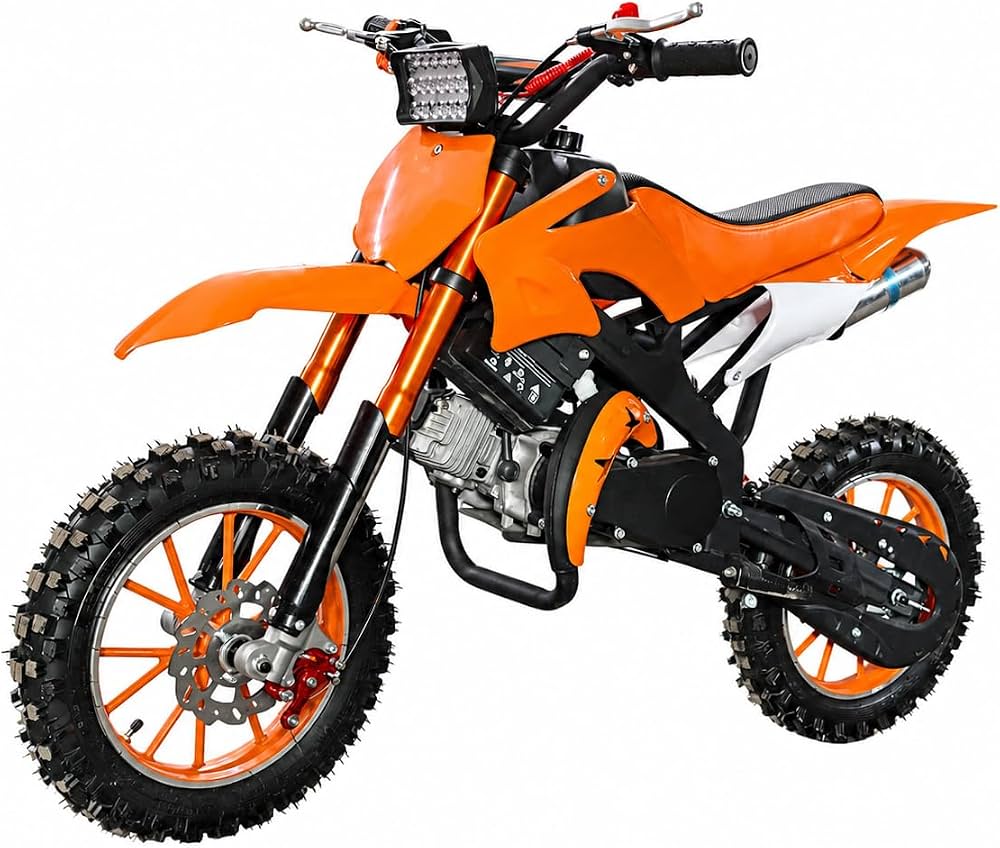
Spend an afternoon at any motocross track, and you will see grown adults zipping around the pits on small bikes built for kids. That sight leads plenty of shoppers to wonder whether they can buy one machine to share with their children, or pick up an inexpensive bike for themselves without stepping up to full size.

The honest answer depends on three things: rider weight, rider height, and how you plan to ride. A 110 dirt bike can carry many adults around a campsite or backyard, but it was designed for growing riders, and pushing it past that purpose brings real trade-offs in comfort, power, and durability.

Weight Limits Come First
Every small bike lists a maximum rider weight, and that number is the first thing to check. Many bikes in this class carry a capacity of around 220 pounds, though ratings vary by model. Exceeding the limit strains the suspension, frame, and clutch, and it shortens the life of parts never meant to carry a full-grown rider.
Weight also changes performance. An engine that feels lively under an 80-pound child can struggle with a 200-pound adult, especially on hills or in soft sand. Expect slower acceleration and a lower top speed, and plan for more frequent maintenance if a heavier rider uses the bike regularly.
Height and Fit on a Small Frame
Seat heights on these bikes usually fall between roughly 24 and 27 inches, which leaves most adults with their knees close to their chest. Short rides feel fine, even fun, but longer sessions bring cramped legs and sore backs. Handlebars sit low as well, forcing taller riders to hunch forward and making it awkward to stand on the pegs.
Fit affects control, too. Riders who cannot shift their weight properly have a harder time steering through turns and absorbing bumps. Shorter, lighter adults tend to fit best, while taller riders usually feel more at home on a frame with a seat height near 30 inches or above.
When a Small Bike Works for Grown-Ups

A small bike makes sense for adults in a handful of situations. In each case, the riding stays slow and short, which keeps stress on the machine low and the rider comfortable.
- Pit riding at tracks or campgrounds
- Casual laps around a large yard or private field
- Riding alongside kids at slow speeds while they learn
- Lighter adults cruising flat, easy terrain
- Beginners practicing basic throttle and brake control
Anything involving jumps, steep climbs, or long trail days calls for a bigger bike sized to adult weight and height. Using a youth frame for that kind of riding wears it out quickly and leaves the rider with less control than they need.
Better Options for Adult Riders
Adults who want one bike for regular riding should look at the 125cc to 140cc range, where seat heights climb toward 29 to 33 inches and frames, brakes, and suspension handle more weight. These bikes still feel approachable for beginners, and many families buy one for a parent while a young child starts on a 50cc dirt bike nearby.
California buyers should check CARB certification on any off-road bike before purchase. Emissions status determines whether the bike receives a green or red sticker, and red sticker models face seasonal riding restrictions at state off-highway parks.
Choosing the Right Size for Your Household
Think about who will ride most. If the bike mainly serves a child, buy for the child and accept that adult rides will be occasional and short. If a parent plans to ride every weekend, a second, larger bike costs less over time than repairing a small one pushed past its limits. Families with a very young rider often begin on a 50cc dirt bike, move up as skills and size grow, and add a full-size bike for the parent along the way.
The best 110 dirt bike for your family is one that fits the rider who uses it most, with a reliable engine and a weight rating that matches real-world use. MotoBuys has sold powersports vehicles since 1989 and stocks top choices across every size class, from starter bikes to adult-ready pit bikes, with free standard shipping to the contiguous USA.
