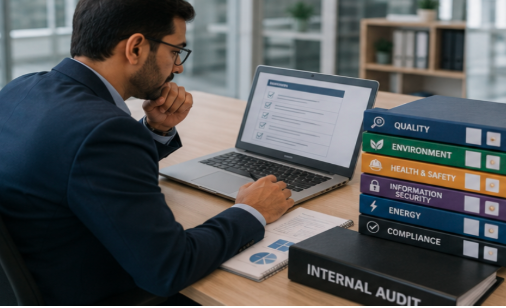
Organizations often manage several business requirements at the same time. Quality, environmental controls, workplace safety, information security, and other processes may overlap across departments. An integrated management system helps bring these activities into a more connected structure.

However, a management system is only useful when people know how to check whether it actually works. This is where internal auditing becomes important. A trained auditor can review processes, collect evidence, identify gaps, and communicate findings clearly.
An IMS internal auditor course can help professionals build these skills and understand how integrated audits can support better process performance.
Why Internal Auditing Matters in an Integrated System
An internal audit gives management a closer look at how processes operate in practice. Policies may look clear on paper, but daily activities can tell a different story.
Auditors review records, speak with employees, observe processes, and compare actual practices with planned requirements. This approach can reveal gaps that may otherwise remain hidden.
The purpose isn’t simply to find faults. A useful audit helps the organization understand where controls are working, where they aren’t, and what needs attention.
For this reason, internal auditing should be viewed as a learning and improvement activity rather than a fault-finding exercise.
What Is an Integrated Management System?
An integrated management system combines related management system processes within one coordinated structure. Instead of managing every requirement separately, an organization can identify shared processes and controls.
For example, document control, employee training, internal audits, corrective action, and management review may support several areas of the business.
This can make management system activities easier to coordinate. At the same time, it creates a need for auditors who can understand how different processes connect.
That’s why IMS auditing requires a broad view.
What Does an IMS Internal Auditor Do?
An IMS internal auditor evaluates processes using defined audit criteria and objective evidence. The auditor doesn’t simply read documents and tick boxes.
A typical audit may involve reviewing procedures, interviewing employees, checking records, observing activities, and following a process from beginning to end.
A capable auditor should know how to:
- Define audit objectives and scope.
- Prepare an effective audit plan.
- Ask relevant questions.
- Collect reliable evidence.
- Identify and record nonconformities.
- Prepare clear audit reports.
- Review corrective actions.
These skills can make audits more consistent and useful.
Learning to Plan an Effective Internal Audit
Good auditing starts with good preparation. Before an audit begins, the auditor should understand the scope, processes, requirements, previous findings, and areas that may need closer attention.
An audit plan provides structure. It helps the auditor manage time and ensures important processes aren’t overlooked.
Planning also helps the audit team decide who should be interviewed and which records should be reviewed.
A rushed audit can miss important information. A well-planned audit gives the auditor room to investigate properly.
Evidence Makes an Audit Stronger
Audit findings should be based on evidence rather than assumptions.
Evidence can come from several sources. Records may show what happened. Interviews can explain how employees perform a task. Observation can show whether the process is actually followed.
Suppose a procedure says employees must complete a particular inspection before releasing a product. An auditor may review the procedure, speak with the responsible employee, and check completed inspection records.
If the evidence supports the process, the auditor can record that observation. If the evidence doesn’t match the procedure, further investigation may be needed.
This is the heart of effective auditing: ask, observe, verify, and record.
Communication Can Make or Break an Audit
Technical knowledge matters, but communication matters too.
Employees may feel uncomfortable when an auditor starts asking questions. A professional auditor should create a calm environment where people can explain their work without feeling blamed.
Instead of making assumptions, auditors can ask open questions such as:
“Can you show me how this process is performed?”
“What record demonstrates that this activity was completed?”
“How do you handle the process when something goes wrong?”
These questions encourage employees to provide evidence naturally.
Good communication can also help auditors identify issues that aren’t obvious from documents alone.
Corrective Action Is More Than a Quick Fix
Once a nonconformity is identified, the organization needs to decide what action should be taken.
The first response may fix the immediate problem. However, the organization should also consider why the issue occurred.
Was the procedure unclear? Was training insufficient? Was a responsibility not defined? Was the process difficult to follow?
Finding the cause helps the organization choose a more useful corrective action.
Auditors can then follow up to determine whether the action was completed and whether it addressed the issue effectively.
Who Should Take an IMS Internal Auditor Course?
This training can be useful for professionals who participate in management system activities or internal audits.
Typical learners include:
- Quality assurance professionals
- Compliance officers
- Internal auditors
- Process owners
- Management representatives
- Environmental and safety professionals
- Department managers
- Management system consultants
The course can also suit professionals who want to expand their audit knowledge and take on wider responsibilities within their organizations.
How the Course Can Support Professional Development
Audit skills can be useful across many industries because organizations need people who can review processes objectively.
Learning how to plan audits, interview employees, evaluate evidence, and report findings can strengthen a professional’s workplace capabilities.
There is also a practical advantage. An auditor who understands integrated systems can look beyond a single department and recognize how processes affect one another.
For example, a training issue may affect quality performance, workplace safety, and compliance records at the same time. A broader audit perspective can help identify these connections.
Choosing the Right Training Program
The quality of training matters. Professionals should look for a course that matches their current knowledge and workplace responsibilities.
A useful program should include practical learning rather than focusing only on theory. Participants should have opportunities to work with audit scenarios, prepare questions, examine evidence, and develop findings.
Before enrolling, consider the learning objectives, course structure, assessment approach, trainer experience, and practical activities.
A course should challenge learners without making the subject unnecessarily complicated.
Why Choose This Course?
An IMS internal auditor course provides a structured way to develop practical audit knowledge. It can help professionals understand integrated management system processes and become more confident when reviewing workplace activities.
The biggest benefit comes when the learning is applied after training. Participants can use their skills during internal audits, process reviews, corrective-action follow-ups, and management system evaluations.
Rather than treating auditing as a paperwork exercise, professionals can learn to see it as a way to understand how an organization really works.
Building a Positive Audit Culture
A strong audit culture begins with trust.
Employees should understand that internal audits aren’t designed to blame individuals. The purpose is to check processes, identify gaps, and help the organization improve.
When employees feel comfortable sharing information, auditors can gather better evidence. When managers respond constructively to findings, corrective actions are more likely to produce useful results.
Over time, regular audits can become part of normal business improvement rather than an activity that employees fear.
Turning Training Into Practical Skills
Completing an IMS internal auditor course is only the starting point. Real confidence develops through practice.
New auditors can begin by assisting experienced audit teams. They can prepare checklists, participate in interviews, review evidence, and help prepare reports.
With each audit, professionals become better at recognizing relevant evidence and asking focused questions.
Practice also improves judgment. An experienced auditor learns when to investigate further and when the available evidence is enough to support a conclusion.
Why Choose Integrated Assessment Services?
Integrated Assessment Services supports organizations and professionals through management system training and certification-related services.
A practical training approach can help participants connect management system concepts with real workplace situations. This matters because internal auditing requires more than theoretical knowledge.
Auditors need to communicate well, understand processes, evaluate evidence, and write findings that people can act upon.
Training becomes more valuable when participants can take what they’ve learned and apply it during real internal audits.
Making Internal Audits More Valuable
An internal audit shouldn’t end when the report is issued. Management should review findings, corrective actions, recurring issues, and improvement opportunities.
Auditors can also look for patterns. If similar findings appear across several departments, the issue may involve a wider process rather than one isolated mistake.
This type of analysis helps organizations move beyond individual corrections and focus on stronger process control.
Conclusion
An IMS internal auditor course can help professionals develop the knowledge and practical skills needed to conduct effective internal audits. From planning and evidence collection to reporting and corrective-action follow-up, each stage plays an important role.
A good auditor doesn’t simply look for mistakes. They listen, observe, verify, and ask thoughtful questions. Most importantly, they help the organization understand how its processes perform.
With structured training and regular practice, professionals can become more confident auditors and contribute more effectively to an integrated management system.