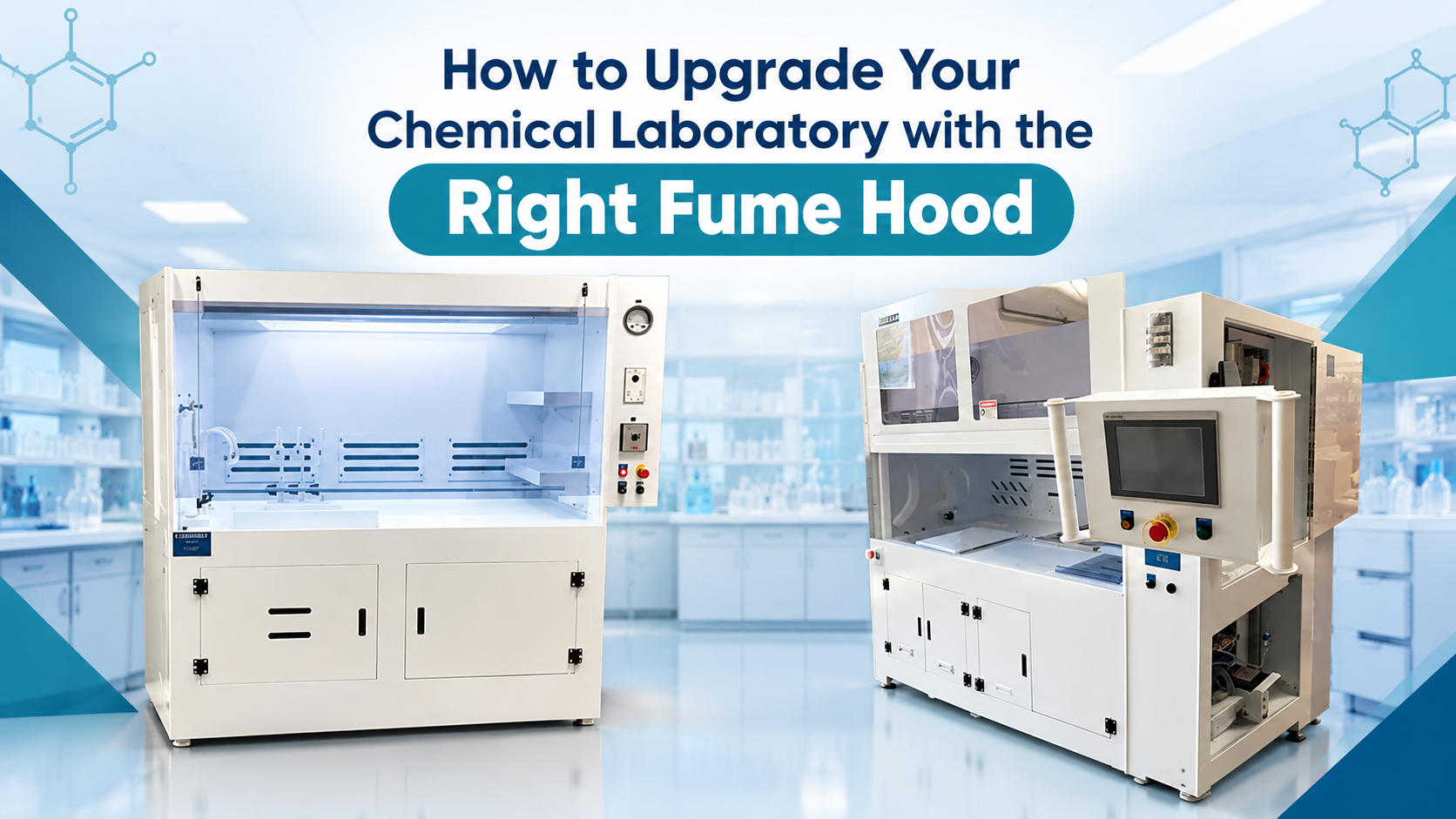
Upgrading a chemical laboratory requires careful planning, particularly when the facility handles hazardous chemicals, volatile compounds, or substances that release harmful vapors. The right equipment can help laboratories control airborne contaminants, protect personnel, and maintain safe working conditions. Selecting a fume hood for chemical laboratory applications involves evaluating chemical compatibility, airflow requirements, available space, and the type of work performed.

Laboratory managers, research scientists, safety officers, and facility planners should assess their current ventilation systems before investing in new equipment. A suitable fume hood can support daily laboratory operations while meeting the facility’s safety and performance requirements. By identifying operational needs and comparing available configurations, laboratories can make informed decisions about equipment upgrades.

1. Assess Your Laboratory’s Current Safety Requirements
Before replacing an existing fume hood, evaluate its current performance and identify any operational limitations. Older equipment may lack modern airflow indicators, suitable chemical-resistant surfaces, or the capacity to support current laboratory activities.
Start by reviewing the chemicals used in the facility, the procedures performed inside the hood, and the potential hazards associated with each activity. A laboratory that handles corrosive acids may require different construction materials from a facility that works primarily with organic solvents.
Laboratory managers should also review maintenance records, ventilation performance, sash operation, and previous safety concerns. Qualified professionals can assess whether the existing system provides adequate containment under actual working conditions.
This initial assessment helps laboratories establish clear upgrade priorities. It also prevents facilities from purchasing equipment that fails to address their specific operational requirements.
2. Select the Right Type of Chemical Fume Hood
Chemical fume hoods use airflow to help contain and remove hazardous vapors from the work area. However, different designs serve different applications. Laboratories should select a configuration based on their chemical inventory, building ventilation system, and operating procedures.
Ducted Fume Hoods
Ducted fume hoods connect to a building’s exhaust system, which carries contaminated air away from the laboratory. These systems often suit laboratories that handle a broad range of chemicals or perform procedures that generate hazardous vapors.
Before installation, facility teams must assess duct routing, exhaust capacity, make-up air, and the building’s mechanical systems. The installation should also account for the chemical compatibility of exhaust components and applicable ventilation standards.
Ductless Fume Hoods
Ductless fume hoods use filters to capture or remove certain contaminants before returning filtered air to the laboratory. Depending on the model, filter type, and chemical application, these systems may suit specific laboratory tasks where duct installation presents practical challenges.
However, ductless systems do not suit every chemical or process. Laboratories must verify filter compatibility, capacity, breakthrough limits, and replacement schedules before selecting this configuration.
When Should You Choose a Ducted or Ductless Fume Hood?
The choice between ducted and ductless fume hoods depends on the chemicals handled, the volume of vapors produced, ventilation requirements, and the laboratory’s operating procedures.
Choose a ducted fume hood when:
- Your laboratory regularly handles hazardous or volatile chemicals that require exhaust removal.
- Your work involves a broad range of chemicals or processes with changing vapor loads.
- Your facility has a suitable exhaust system or can support the required ventilation infrastructure.
- Your risk assessment identifies a need to discharge contaminated air outside the building.
Choose a ductless fume hood when:
- Your laboratory performs specific, well-defined procedures with known chemical hazards.
- The selected filtration system can capture the relevant contaminants at the expected concentrations.
- Installing exhaust ductwork is impractical, and the application meets the manufacturer’s operating limits.
- Your team can monitor filter performance and follow the required replacement schedule.
Ductless hoods do not suit every chemical, concentration, or laboratory process. Highly hazardous substances, unknown mixtures, and applications that exceed filter capabilities may require another control method, such as a suitable ducted system. Some processes may also require specialized containment equipment.
Before selecting either option, consult a qualified laboratory safety professional and review the manufacturer’s specifications. A documented hazard assessment should determine whether the proposed hood provides suitable containment for the intended work.
3. Choose Materials That Match Your Chemical Applications
The materials used in a fume hood directly affect its durability and suitability for laboratory work. Chemical exposure, temperature, moisture, and cleaning agents can affect surfaces and components over time.
For example, polypropylene may suit certain applications involving corrosive chemicals, while stainless steel can serve specific laboratory environments that require durable surfaces. Other construction materials may offer advantages for particular combinations of chemicals and operating conditions.
Laboratories should evaluate the following components before selecting a new hood:
- Work surfaces: Check resistance to the chemicals used during routine procedures.
- Interior panels: Confirm compatibility with corrosive vapors, cleaning agents, and expected temperatures.
- Sash materials: Assess visibility, durability, and suitability for the intended application.
- Ductwork and exhaust components: Verify chemical compatibility throughout the ventilation path.
- Fixtures and utility connections: Select components that match the laboratory’s processes and safety requirements.
Always consult the manufacturer’s chemical compatibility information before approving a material for a particular application. A material that performs well with one chemical may deteriorate when exposed to another.
4. Evaluate Airflow and Containment Performance
Airflow plays a central role in fume hood performance. A properly designed system draws air through the hood opening and helps contain hazardous vapors within the enclosure. Poor airflow, incorrect sash positioning, or disturbances near the opening can reduce containment effectiveness.
During an upgrade, laboratory managers should assess the hood’s airflow requirements alongside the building’s exhaust and supply-air systems. Installing a new hood without checking these systems may create ventilation imbalances or affect the performance of nearby equipment.

Consider these important features:
- Airflow monitoring: Provides information about operating conditions and helps identify potential ventilation problems.
- Low-airflow alarms: Alert users when airflow falls outside specified operating limits.
- Sash design: Supports safe access while helping maintain the intended airflow pattern.
- Lighting: Improves visibility during chemical handling and laboratory procedures.
- Performance testing: Helps verify that the installed hood meets its specified containment requirements.
Qualified ventilation professionals should test the system after installation and following significant changes to the ventilation setup. Staff should also receive clear instructions on sash positioning, alarm response, and reporting performance issues.
5. Plan the Installation Around Laboratory Space
A fume hood upgrade affects more than the equipment itself. Laboratory managers must account for floor space, workstations, electrical connections, plumbing, exhaust routing, and access for maintenance.
Measure the proposed installation area and confirm that the hood will not obstruct walkways, emergency equipment, doors, or other essential work areas. Review the location of supply-air diffusers and nearby equipment because strong cross-drafts can interfere with hood performance.
The installation plan should also include the following considerations:
- Required bench or floor space
- Access to electrical and utility connections
- Exhaust duct routing and building capacity
- Service access for inspections and repairs
- Compatibility with existing laboratory furniture
- Installation downtime and temporary work arrangements
Consult the facility’s engineering team before finalizing equipment dimensions or utility requirements. Early coordination can reduce installation delays and help prevent costly modifications.
6. Consider Maintenance, Monitoring, and Long-Term Costs
The purchase price represents only one part of a fume hood’s total operating cost. Laboratories should also consider energy consumption, maintenance requirements, filter replacement where applicable, inspection schedules, and the availability of service support.
Ducted systems may require substantial energy to exhaust conditioned air, depending on their design and operating conditions. Ductless systems require appropriate filters and a documented replacement schedule based on the contaminants handled and the manufacturer’s specifications.
A maintenance plan should cover routine inspections, airflow checks, alarm testing, sash operation, surface condition, and repairs. Staff should report unusual airflow behavior, damaged components, or changes in alarm status promptly.
Laboratory managers should also establish clear responsibilities for equipment inspections and recordkeeping. A documented maintenance schedule supports consistent performance and helps facility teams identify problems before they disrupt laboratory operations.
7. Work with a Fume Hood Supplier That Understands Laboratory Needs
Choosing a suitable supplier can help laboratories assess available designs, review technical specifications, and coordinate equipment requirements. Facility managers should request information about construction materials, airflow performance, available accessories, installation requirements, maintenance support, and compliance with relevant standards.
ChemWest provides chemical fume hood solutions for laboratories evaluating equipment configurations and application requirements. Before selecting a model, laboratory teams can review the available options against their chemical handling procedures, space limitations, and ventilation needs.
Ask potential suppliers specific questions about customization, installation coordination, service arrangements, and the documentation provided with the equipment. Requesting technical specifications and discussing the intended application can help the facility make a decision based on operational requirements rather than appearance or price alone.
8. Avoid Common Mistakes During a Fume Hood Upgrade
Even well-planned laboratory projects can encounter problems when teams overlook key technical requirements. Avoid these common mistakes:
- Selecting equipment by price alone: Lower initial costs may not reflect long-term energy, maintenance, or filter expenses.
- Ignoring chemical compatibility: Construction materials and filtration systems must suit the chemicals and procedures involved.
- Overlooking building ventilation: The existing exhaust system may require assessment or modification before installation.
- Assuming every hood handles every chemical: Each design has defined operating limits and application requirements.
- Skipping performance verification: Testing after installation helps confirm that the system performs as specified.
- Providing insufficient staff training: Users need clear procedures for safe operation, sash positioning, and alarm response.
A structured selection and installation process helps laboratory teams address these risks before the new equipment enters service.
Final Thoughts
Upgrading a chemical laboratory with the right fume hood requires a clear assessment of chemical hazards, ventilation capacity, construction materials, available space, and ongoing maintenance needs. Laboratory managers should prioritize containment performance and application suitability while coordinating with qualified engineers, safety professionals, and equipment suppliers.
For laboratories planning an equipment upgrade, ChemWest offers chemical fume hood options that can be evaluated against specific laboratory requirements. Review the available configurations and contact the team to discuss your application, technical specifications, and installation needs before choosing a solution for your facility.
Frequently Asked Questions
1. What type of fume hood is suitable for a chemical laboratory?
The appropriate type depends on the chemicals handled, vapor hazards, ventilation requirements, and laboratory procedures. Ducted hoods often suit applications that require external exhaust, while ductless hoods may suit specific tasks when compatible filtration can control the relevant contaminants.
2. How do I know when my laboratory needs a new fume hood?
Consider an upgrade if the existing hood has damaged components, recurring airflow problems, unreliable alarms, inadequate capacity, or materials that do not suit current chemical applications. A qualified professional should assess the equipment before you decide whether to repair or replace it.
3. What features should I check before purchasing a chemical fume hood?
Review chemical compatibility, airflow and containment performance, sash design, monitoring systems, construction materials, maintenance needs, and installation requirements. Confirm that the selected model meets applicable safety standards and suits the intended procedures.
4. Can a ductless fume hood replace a ducted system?
Not in every application. A ductless hood can serve certain procedures when its filtration system is suitable for the specific chemicals and exposure conditions. Laboratories must assess filter performance, replacement requirements, and the hazards associated with each process before choosing this option.