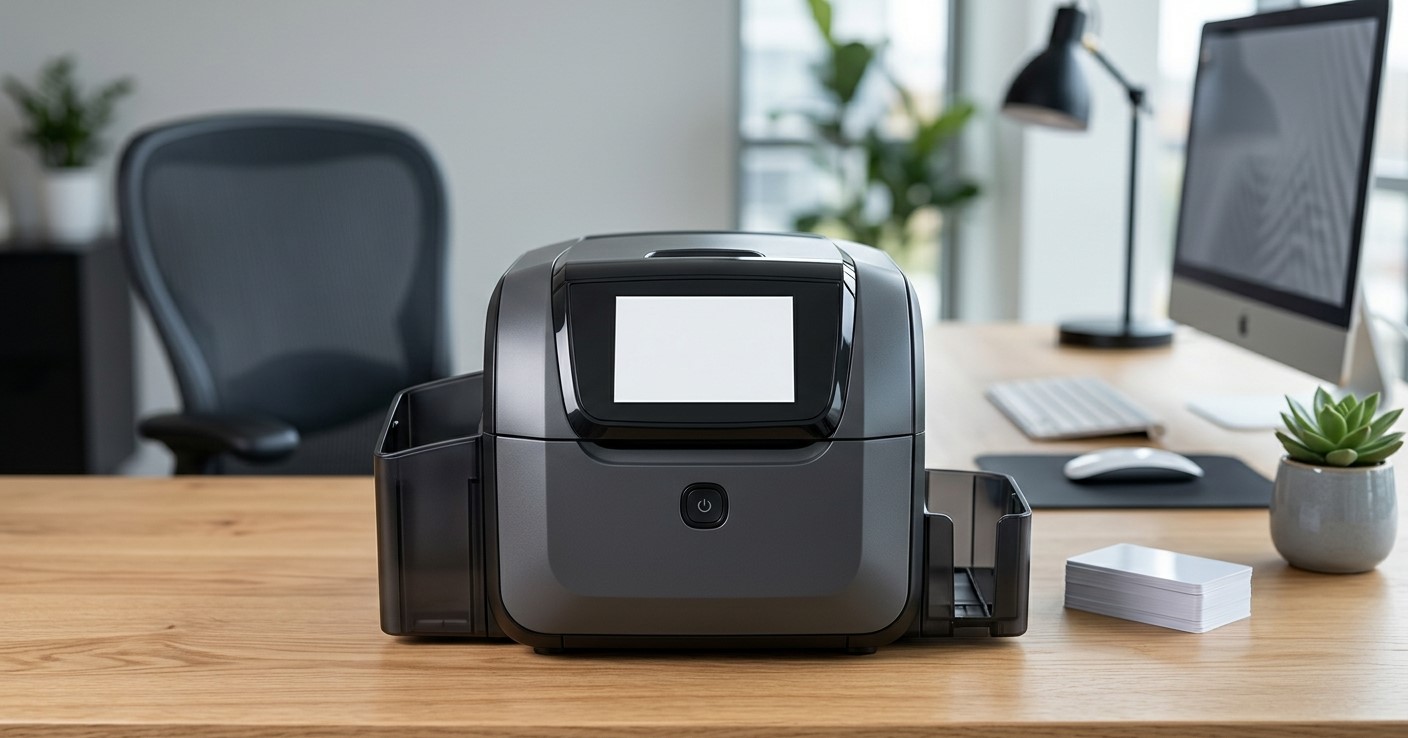
ID card printers help businesses create employee badges, student identification cards, visitor passes, membership cards, and access control credentials. However, the cost of an ID card printer can vary significantly depending on its features, printing technology, speed, and security capabilities.

Understanding these factors helps businesses select equipment that meets their needs without overspending. If you are researching the id card printer price in kuwait, Pointus Solutions can help you explore printing solutions suited to your organization’s requirements and budget.

Table of Contents
- How Much Does an ID Card Printer Cost?
- Factors That Affect ID Card Printer Prices
- Types of ID Card Printers and Their Costs
- Additional Costs to Consider
- How to Choose the Right ID Card Printer
- Frequently Asked Questions
- Conclusion and Call to Action
1. How Much Does an ID Card Printer Cost?
ID card printer prices depend on the model, printing technology, and included features. Entry-level printers are generally designed for smaller organizations, while advanced models support higher printing volumes, improved image quality, and additional security options.
Rather than choosing a printer based only on its initial price, businesses should consider the total cost of ownership, including consumables, maintenance, and software.
When comparing the id card printer price in kuwait, request a quotation based on your required printing volume, card type, and preferred features. Prices may vary between suppliers and models, so confirm current pricing before purchasing.
2. Factors That Affect ID Card Printer Prices
Several important factors determine how much an ID card printer costs.
Printing Technology
Direct-to-card printers print directly onto the surface of compatible cards. They are often a cost-effective option for standard employee IDs and visitor badges.
Retransfer printers print onto a transparent film before transferring it to the card. They support edge-to-edge printing and can produce detailed images, but typically have a higher purchase price.
Single-Sided vs. Dual-Sided Printing
Single-sided printers print on one side of a card and are suitable for basic identification needs. Dual-sided printers print on both sides, making them useful when organizations need to include photographs, contact information, terms, or security details on the reverse.
Dual-sided functionality may increase the initial cost, depending on the model.
Printing Speed and Volume
Businesses printing a small number of cards each month may not need an industrial or high-volume printer. Larger organizations, universities, hospitals, and factories may benefit from faster equipment designed for frequent printing.
Higher-capacity printers often cost more but can improve productivity when handling large batches.
Print Quality and Resolution
Organizations requiring clear photographs, fine text, logos, and detailed graphics should consider print resolution and color reproduction. Higher-quality output can be especially important for professional identification cards and credentials.
Security and Encoding Features
Some ID card printers support optional encoding for magnetic stripes, contact smart cards, or contactless credentials. These features can help integrate cards with access control and identification systems.

However, encoding modules and related software may add to the total purchase cost.
Brand, Warranty, and Support
Printer brands differ in reliability, consumable availability, warranty terms, and technical support. A lower-priced model may not provide the best long-term value if replacement supplies are difficult to obtain or maintenance is expensive.
3. Types of ID Card Printers and Their Costs
| Printer Type | Typical Use | Relative Cost |
|---|---|---|
| Entry-level single-sided | Small offices and visitor badges | Low |
| Mid-range dual-sided | Medium-sized businesses and schools | Medium |
| Retransfer printer | Detailed, edge-to-edge card printing | High |
| High-volume or advanced security printer | Large organizations and specialized credentials | High to very high |
These are relative price categories, not fixed quotations. Actual costs depend on the model, optional features, supplier, and local availability.
4. Additional Costs to Consider
The printer itself is only part of the investment. Businesses should also budget for:
- Printer ribbons: Required to print text, photographs, and graphics.
- Blank ID cards: PVC and specialty cards may have different prices.
- Cleaning kits: Help maintain print quality and protect printer components.
- Software: ID design or card management software may involve additional licensing costs.
- Maintenance and repairs: Routine servicing and replacement parts may affect long-term expenses.
- Encoding accessories: Optional modules may be necessary for compatible smart cards or access control applications.
If your organization also uses barcode labeling for inventory, shipping, or product identification, you may need separate supplies. Businesses looking to buy barcode labels and ribbons kuwait should verify compatibility with their barcode printer, as these consumables are generally different from ID card printer ribbons.
5. How to Choose the Right ID Card Printer
Follow these steps before purchasing:
- Estimate your card volume: Calculate how many cards you need to print daily, monthly, or annually.
- Identify card requirements: Decide whether you need single-sided or dual-sided printing, color photographs, or edge-to-edge coverage.
- Review security needs: Determine whether cards require barcode printing, magnetic stripes, or smart-card encoding.
- Compare running costs: Include ribbons, blank cards, cleaning supplies, and maintenance.
- Check supplier support: Review warranty coverage, availability of consumables, and technical assistance.
- Request a quotation: Compare suitable models based on features and total ownership costs, not just the advertised purchase price.
This approach helps businesses make a practical investment that supports their identification processes over time.
6. Frequently Asked Questions
Q1. What affects the price of an ID card printer the most?
Printing technology, printing speed, dual-sided functionality, security features, and overall capacity are major price factors.
Q2. Is a single-sided ID card printer cheaper?
Generally, yes. Single-sided models often cost less than comparable dual-sided printers, making them suitable for basic identification requirements.
Q3. Are retransfer ID card printers more expensive?
They typically have a higher initial cost because of their printing process and ability to produce edge-to-edge designs.
Q4. What supplies are needed for an ID card printer?
Most systems require compatible blank cards and printer ribbons. Cleaning kits and software may also be needed, depending on the printer and application.
Q5. How can I find the right ID card printer price in Kuwait?
Compare supplier quotations for models that match your printing volume, features, consumable requirements, warranty, and support needs.
7. Conclusion and Call to Action
The cost of an ID card printer depends on its printing technology, speed, card capacity, security options, and ongoing supply requirements. Entry-level models can meet basic identification needs, while advanced printers are better suited to organizations requiring higher volumes or specialized features.
Looking for the right identification or barcode printing solution? Contact Pointus Solutions to explore suitable equipment and supplies for your business. Compare the id card printer price in kuwait and evaluate your long-term requirements before making a purchase. If you also need barcode printing supplies, explore compatible options to buy barcode labels and ribbons kuwait for your business operations.