Real estate has long been considered one of the most valuable and stable investment asset classes. However, traditional property investing often requires substantial capital, lengthy transaction processes, and limited liquidity. These barriers have historically restricted access to real estate investments to wealthy individuals, institutional investors, and large organizations.
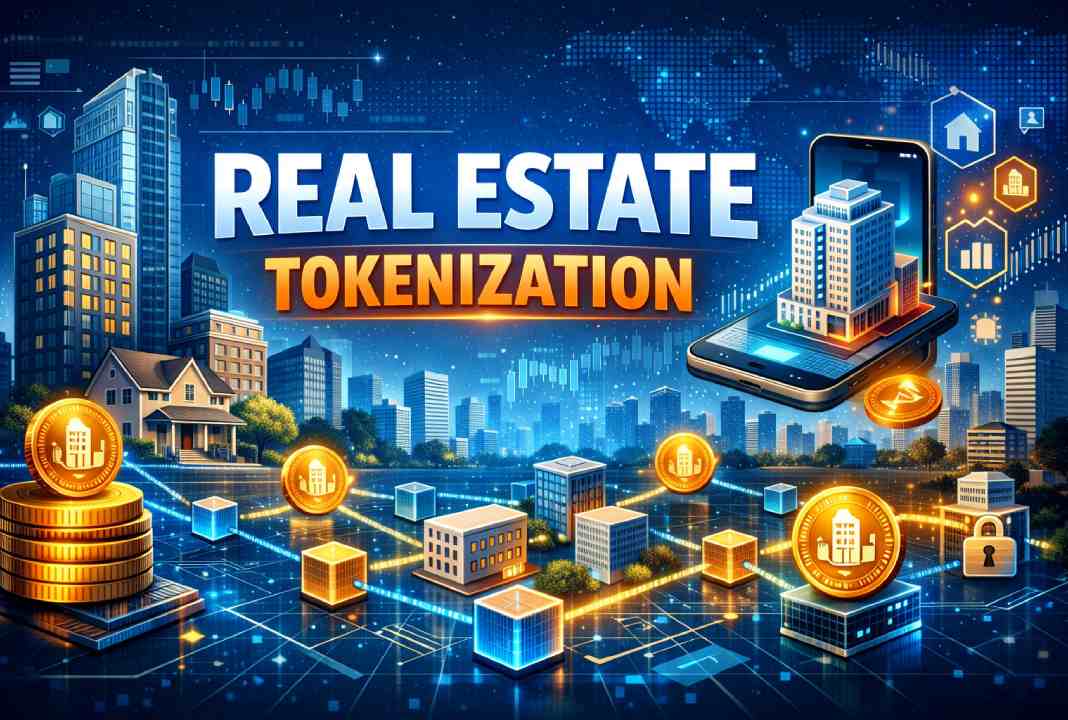
The emergence of blockchain technology and asset tokenization is changing this landscape. Real estate tokenization enables physical properties to be represented as digital tokens on a blockchain, creating a more accessible, transparent, and efficient investment framework. By allowing properties to be divided into smaller ownership units, tokenization introduces a level of flexibility that traditional real estate markets have struggled to provide. As a result, investors gain new ways to participate in property markets while property owners and developers gain access to broader sources of capital.
Understanding Real Estate Tokenization
Real estate tokenization is the process of converting ownership rights in a property into digital tokens stored on a blockchain network. These tokens represent a share of the underlying asset and can be bought, sold, or transferred according to predefined rules established through smart contracts.
Instead of requiring an investor to purchase an entire property, tokenization allows ownership to be divided into multiple fractions. Each token holder owns a proportional share of the asset and may receive benefits such as rental income distributions or capital appreciation based on the token structure. This approach transforms real estate from a traditionally illiquid asset into a more flexible and accessible investment vehicle.
Lower Capital Requirements for Investors
One of the biggest advantages of real estate tokenization is the reduction of investment barriers. Traditional property investments often require significant upfront capital, making participation difficult for many investors. Tokenization allows a property to be divided into thousands of digital shares. Rather than purchasing an entire building or parcel of land, investors can acquire a fraction of the asset based on their available capital.
This flexibility enables:
- Smaller investment commitments
- Portfolio diversification across multiple properties
- Access to premium real estate assets
- Greater participation from retail investors
As a result, investors can enter the real estate market without needing substantial financial resources.
Fractional Ownership Expands Investment Choices
Traditional real estate investing typically limits investors to a small number of properties due to high acquisition costs. Tokenization changes this by enabling fractional ownership. Instead of concentrating capital in a single property, investors can spread investments across multiple asset categories, including:
- Residential properties
- Commercial buildings
- Industrial facilities
- Agricultural land
- Mixed-use developments
- Hospitality assets
This diversification reduces concentration risk and creates more balanced investment portfolios. For investors seeking flexibility, fractional ownership provides exposure to various property sectors without requiring large capital commitments.
Improved Liquidity Compared to Traditional Real Estate
Real estate has traditionally been known for its lack of liquidity. Selling a property can take weeks, months, or even years depending on market conditions and regulatory requirements. Tokenized real estate introduces greater liquidity by allowing ownership interests to be traded digitally. Rather than selling an entire property, investors can sell a portion of their holdings through secondary marketplaces where regulations permit.
Improved liquidity offers several advantages:
- Faster access to capital
- Easier portfolio adjustments
- Reduced dependency on lengthy property sales
- Greater investment flexibility
This liquidity enhancement helps bridge the gap between traditional real estate and more liquid financial assets.
Access to Global Investment Opportunities
Geographical limitations have traditionally restricted real estate investment opportunities. Investors often face challenges related to foreign regulations, transaction costs, and administrative complexity when purchasing property in other countries. Real estate tokenization allows investors to participate in global property markets through blockchain-based ownership structures.
Benefits include:
- Exposure to international real estate markets
- Reduced administrative barriers
- Broader investment opportunities
- Enhanced capital flow across borders
This global accessibility enables investors to build geographically diversified portfolios while allowing property owners to reach a wider audience of potential investors.
Greater Portfolio Diversification
Diversification is a key principle of risk management. However, traditional real estate investing often requires significant capital, limiting the number of properties an investor can own. Tokenization enables investors to allocate capital across numerous properties and regions without purchasing entire assets.
For example, an investor could simultaneously hold tokenized interests in:
- An office building
- A residential apartment complex
- A logistics warehouse
- Agricultural farmland
- A hospitality development
Such diversification can reduce exposure to market-specific risks while increasing flexibility in portfolio construction.
Enhanced Transparency and Investor Confidence
Blockchain technology provides a transparent record of ownership and transaction history. Every transfer, investment, and ownership update is recorded on an immutable ledger.
This transparency benefits investors by providing:
- Verifiable ownership records
- Real-time transaction tracking
- Reduced risk of ownership disputes
- Improved auditability
Greater transparency strengthens trust between investors, property managers, developers, and regulators.