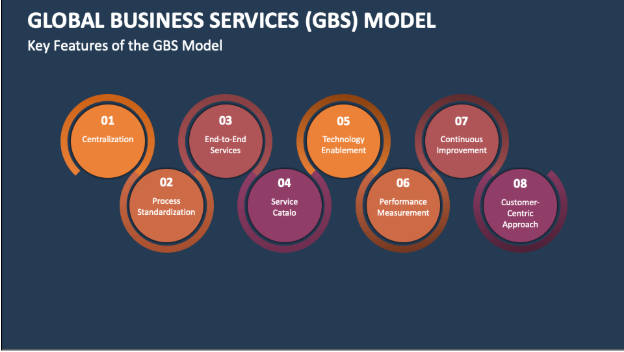
The way organisations manage their internal operations has changed significantly over the past decade. Shared services have evolved, outsourcing models have matured, and businesses are now looking for smarter, more integrated approaches to running back-office and support functions. At the centre of this shift sits the GBS business model, a structure that is rapidly becoming the preferred choice for forward-thinking enterprises across industries. By bringing multiple business functions under a unified operating framework, GBS helps organisations improve efficiency, standardise processes, and enhance service delivery. It also enables businesses to leverage technology, data, and global talent more effectively while supporting long-term growth and scalability.
What GBS Actually Means
Global Business Services, commonly referred to as GBS, is an operating model that consolidates an organisation’s support functions, such as finance, human resources, IT, procurement, and supply chain, into a single, unified structure.
Unlike traditional shared services centres, which often operate in silos, a GBS business integrates these functions under one governance framework. The result is a more agile, consistent, and strategically aligned support operation that serves the entire enterprise.
The Key Drivers Behind GBS Adoption
Several factors are pushing organisations toward the GBS model:
- Cost efficiency – Consolidating functions eliminates duplication and reduces operational overhead across business units.
- Standardisation – Common processes and technologies replace inconsistent, fragmented approaches inherited from legacy structures.
- Scalability – A unified model adapts more readily as the business grows, enters new markets, or undergoes structural change.
- Data and visibility – Centralised operations generate cleaner, more accessible data that supports better decision-making at every level.
These drivers make the GBS business model compelling not just for large multinationals but increasingly for mid-sized organisations seeking operational maturity.
How GBS Differs From Traditional Outsourcing
A common misconception is that GBS and outsourcing are interchangeable. They are not.
Outsourcing transfers specific functions to an external provider, often prioritising cost reduction above all else. GBS, by contrast, is an enterprise-owned model focused on value creation. It may incorporate elements of outsourcing where appropriate, but the strategic direction, governance, and accountability remain firmly within the organisation.
This distinction matters because GBS business structures are designed to align directly with corporate strategy, not simply to reduce expenditure. They contribute to innovation, talent development, and long-term operational resilience in ways that conventional outsourcing cannot.
The Role of Technology in Modern GBS
Technology is central to how GBS models deliver value today. Automation, artificial intelligence, and cloud-based platforms have transformed what is possible within a shared services environment.
Robotic process automation handles repetitive, rules-based tasks across finance and HR functions with greater speed and accuracy than manual processing. AI-driven analytics surface insights that improve forecasting, risk management, and resource allocation. Cloud infrastructure enables seamless collaboration across geographies, which is particularly valuable for organisations operating across multiple regions or time zones.
Effective GBS services leverage these technologies not as add-ons but as foundational elements of the operating model, ensuring continuous improvement rather than a static, maintenance-focused structure.
Building a Successful GBS Structure
Transitioning to a GBS model requires careful planning and executive commitment. Organisations that succeed typically share several characteristics:
- A clear mandate from senior leadership with defined objectives and measurable outcomes
- A phased implementation approach that manages change without disrupting ongoing operations
- Investment in change management and communication to bring employees and stakeholders along through the transition
- A governance model that balances central oversight with the flexibility needed by individual business units
Without these foundations, GBS transformations risk becoming costly restructuring exercises rather than genuine capability upgrades.
Conclusion
The GBS model represents a genuine evolution in how enterprises organise and deliver internal services. It moves beyond cost-cutting to become a strategic enabler of growth, efficiency, and innovation. For organisations ready to modernise their operations, investing in the right GBS services is a decisive step toward long-term competitive advantage.