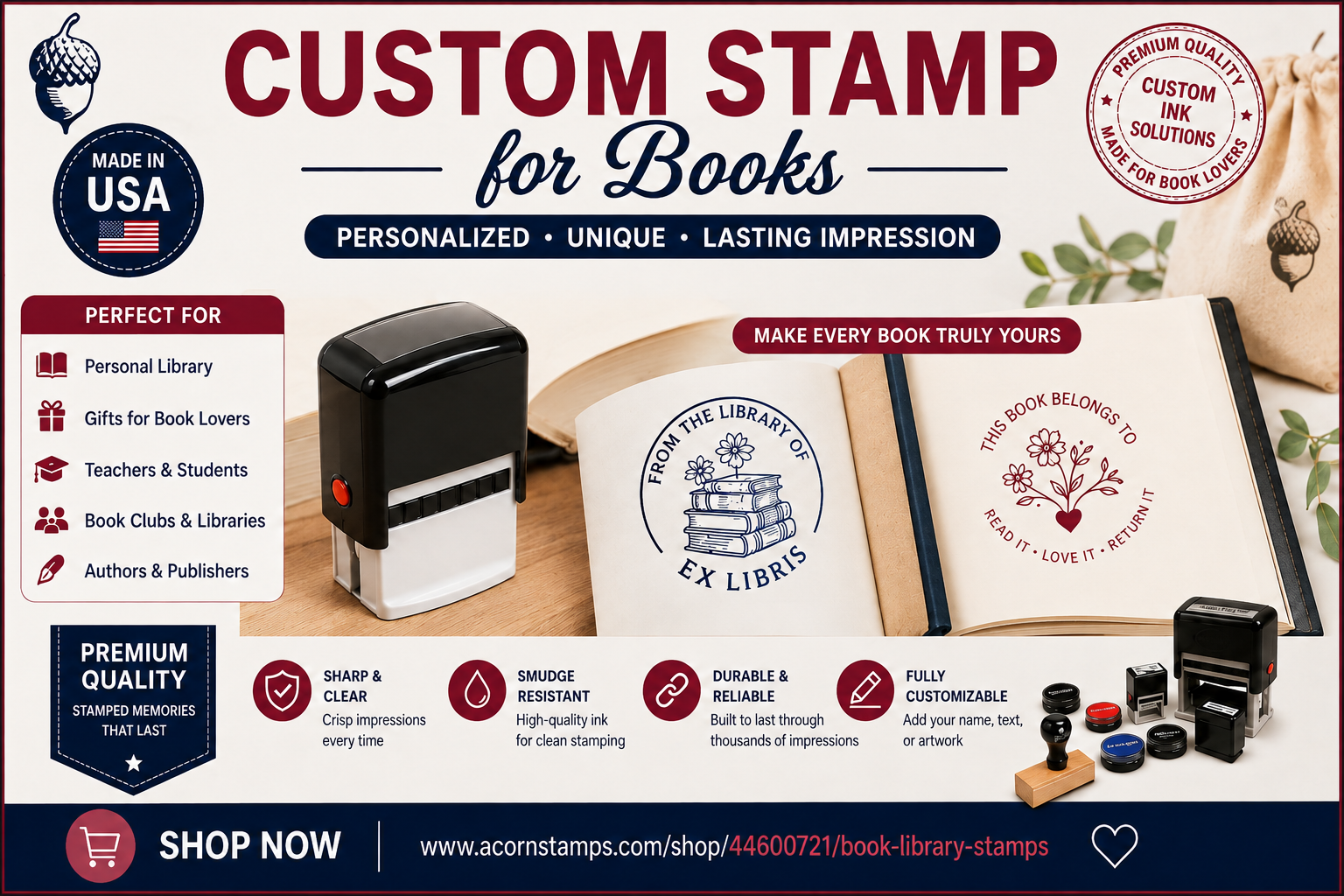
A book can be more than something you read—it can be part of your personal library, classroom collection, family bookshelf, or treasured collection. A custom stamp for books offers a simple way to identify ownership while adding personality to every book you own. Whether you are a book lover, teacher, librarian, parent, or collector, the right stamp can turn an ordinary book into something distinctly yours.
But what should you actually put on a book stamp? Should you use your name, a family name, an address, a favorite phrase, or something more traditional such as “Ex Libris”? The best choice depends on how you use your books and the impression you want to create.
What Is a Custom Stamp for Books?
A custom stamp for books is a personalized stamp designed to mark books with an individual’s, family’s, classroom’s, or organization’s information. Instead of handwriting your name in every book, you can create a consistent and professional-looking ownership mark.
A custom book stamp can include text, initials, decorative elements, icons, or a combination of these. Some people prefer a simple name design, while others choose an elegant library-style layout.
For those who want a raised, ink-free impression, a book embosser is another popular option. Both stamps and embossers can personalize books, but they create different results.
15 Ideas for What to Put on a Personalized Book Stamp
Choosing the wording is often the most enjoyable part of creating a personalized book stamp. Here are 15 ideas to consider.
1. Your Full Name
The simplest option is your first and last name. For example:
“Books Belong to Sarah Johnson”
This works especially well for personal libraries and books you frequently lend to friends or family.
2. Your First Name
For a casual and minimalist design, simply use your first name. This is especially suitable for children’s books, journals, and personal collections.
3. Family Name
A family-oriented design can say:
“The Johnson Family Library”
This is a great choice if several people in your household share the same book collection.
4. “From the Library of…”
One of the most recognizable book-stamp phrases is:
“From the Library of [Name]”
It immediately communicates ownership and gives the stamp a traditional library feel.
5. “This Book Belongs To…”
A book stamp custom design featuring “This Book Belongs To” is friendly, straightforward, and particularly useful for children’s books and classroom collections.
6. “Ex Libris”
An Ex Libris book stamp provides a classic and literary appearance. “Ex Libris” is Latin for “from the library of” or “from the books of.” It is often used to identify the owner of a personal library.
You can combine it with your name, initials, or a decorative illustration for a sophisticated result.
7. Initials
If you prefer a subtle design, use your initials instead of your full name. Monograms can work particularly well for collectors who want an elegant and understated mark.
8. A Personal Library Name
Give your collection its own identity. Examples include:
- The Smith Family Library
- Emma’s Reading Room
- The Little Oak Library
- Our Home Library
This approach can make your bookshelf feel more personal and distinctive.
9. A Classroom Name
Teachers can personalize books with a classroom designation such as:
“Mrs. Davis’s Classroom Library”
A custom library stamp can make it easier to identify books belonging to a classroom, especially when books are regularly shared with students.
10. Teacher Name and Grade
Teachers may want to include both their name and grade level:
“Ms. Taylor – 3rd Grade Classroom Library”
This can be useful for organizing classroom materials and distinguishing one collection from another.
11. School or Library Name
Schools, educational programs, and organizations can include their official name. This creates a consistent ownership mark across books in a shared collection.
12. A Favorite Reading Phrase
You do not have to make your stamp purely functional. A short phrase such as “A Home for Good Stories” or “My Happy Place: Books” can add personality.
13. Name + Location
Some readers like to include a city or state with their name. For example:
“From the Library of Emily – Los Angeles, CA”
This can be especially meaningful for personal collections and book lovers who enjoy commemorating where their library began.
14. Name + Decorative Symbol
A name combined with a small book, leaf, star, flower, or other appropriate symbol can create a distinctive design without adding too much text.
15. A Gift or Memorial Message
A personalized stamp can also commemorate a special occasion. A short message such as:
“A Gift for James, 2026”
can make books more meaningful when given as birthday, graduation, wedding, or milestone gifts.
Custom Stamp vs. Book Embosser: Which Is Better?
Both options personalize books, but the right choice depends on the appearance and convenience you want.
| Feature | Custom Book Stamp | Book Embosser |
|---|---|---|
| Uses ink | Yes | No |
| Impression | Inked design | Raised impression |
| Color options | Multiple ink choices | Paper-dependent |
| Appearance | Clear and practical | Elegant and subtle |
| Best for | Frequent book marking | Premium personal libraries |
| Personalization | Names, text, graphics | Names, text, graphics |
| Ease of use | Quick stamping | Simple pressing |
If you want a visible, colorful mark, a custom book stamp is a practical choice. If you prefer a sophisticated, understated impression without ink, a book embosser may be more appropriate.
Where Should You Put a Custom Stamp in a Book?
The most common location is the inside cover or the first blank page near the front of the book. This keeps the ownership mark visible without interfering with the title, author information, or reading experience.
For children’s books and classroom collections, placing the stamp in a consistent location makes ownership easier to identify.
Before stamping an important or collectible book, test your stamp on a similar piece of paper. This helps you check the ink coverage, pressure, and placement before making the final impression.
How to Design a Personalized Library Stamp
A good personalized library stamp should be readable, attractive, and appropriately sized for the books you own.
Consider these design tips:
- Keep the wording short and easy to read.
- Choose a font that remains clear at a small size.
- Avoid overcrowding the design with too many decorative elements.
- Include your name or library name prominently.
- Choose a shape that fits comfortably inside book covers.
- Consider adding a simple icon for personality.
- Use wording that will still feel appropriate years from now.
For a traditional appearance, “Ex Libris” works beautifully with classic typography. For a modern collection, a clean name-based design may be a better choice.
Why Use a Custom Library Stamp?
A custom library stamp can provide several practical and personal benefits.
Easy identification: Quickly identify who owns a book without handwriting the owner’s name.
Consistent appearance: Give your entire collection a uniform ownership mark.
Personal expression: Create a design that reflects your personality, family, classroom, or reading style.
Useful for shared collections: Teachers, families, and organizations can distinguish their books from others.
Great for gifts: Personalized book stamps can make thoughtful gifts for readers, teachers, graduates, and book collectors.
How Acorn Stamps Can Help Personalize Your Books
If you are looking for a personalized way to mark your collection, Acorn Stamps offers options designed for personal libraries, classrooms, book lovers, and other collections. You can choose wording and design elements that match the style of your library rather than settling for a generic ownership mark.
Whether you prefer a straightforward name-based custom stamp for books, a traditional “Ex Libris” design, or an elegant embossed impression, personalization allows you to create an ownership mark that feels uniquely yours.
Conclusion
The best custom stamp for books combines useful ownership information with a design that reflects your personality. A simple name, family library title, classroom designation, or classic “Ex Libris” phrase can transform an ordinary book into a clearly identified part of your collection.
Before ordering, think about who owns the books, where the stamp will be used, how much information you want to include, and whether you prefer an inked stamp or a raised embossed impression. With the right wording and design, a personalized book stamp can become a small but memorable signature throughout your library.
Frequently Asked Questions (FAQ)
What should I put on a custom stamp for books?
Popular choices include your full name, family name, “From the Library of,” “This Book Belongs To,” “Ex Libris,” initials, classroom name, or a personal library name.
What is the best wording for a personalized book stamp?
“From the Library of [Name]” is a classic option, while “This Book Belongs To [Name]” is simple and friendly. “Ex Libris [Name]” offers a more traditional literary style.
Where should a book stamp be placed?
Most people place a stamp on the inside cover or the first blank page of a book. Choose one consistent location throughout your collection.
Is a custom book stamp better than a book embosser?
Neither is universally better. A stamp creates a visible ink impression and can offer color choices, while an embosser creates a raised, ink-free impression with a more understated appearance.
Can teachers use personalized library stamps?
Yes. Teachers can use them to identify classroom books and create a consistent ownership mark across their reading collections.
What does “Ex Libris” mean on a book stamp?
“Ex Libris” means “from the library of” or “from the books of.” It is traditionally used to identify the owner of a personal book collection.