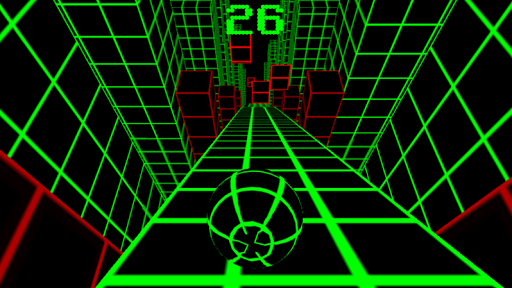
Ever found yourself in a moment of wanting a quick, engaging, and surprisingly addictive challenge? Look no further than games like Slope. These types of games, often categorized as endless runners with a physics twist, offer a unique blend of simplicity and skill that can captivate you for hours. While there are many variations on this theme, Slope stands out as a prime example, offering a sleek, minimalist aesthetic combined with a demanding yet rewarding gameplay loop.

What is Slope, and Why Should You Play It?
At its core, Slope is a 3D endless runner where you control a small green ball rolling down an ever-descending, ever-changing series of ramps and platforms. The objective is deceptively simple: stay on the track for as long as possible. What makes it interesting, however, is the constant interplay between gravity, your own momentum, and the unpredictable nature of the generated landscape.

Imagine a rollercoaster that builds itself as you go, complete with sudden drops, sharp turns, and narrow passages. Your only tools are the left and right arrow keys (or A and D on some setups) to steer your ball. There are no power-ups, no enemies to defeat, just you and the relentless descent. This pure focus on maneuvering and reaction time is what gives Slope its enduring appeal. It’s easy to learn but incredibly difficult to master, leading to countless “just one more try” moments.

Diving into the Gameplay: Your First Roll
When you first launch a game like Slope, you’ll be greeted by a minimalist, futuristic landscape. The green ball is immediately in motion, picking up speed as it rolls down the initial incline.
- Controls: Your primary interaction will be with the left and right arrow keys (or A/D). These subtly shift your ball’s trajectory. It’s not a sharp turn; rather, it’s a gentle nudge that requires anticipation. Think of it more like leaning into a turn than actively steering a car.
- The Track: The track itself is composed of various geometric shapes – flat platforms, ramps, and sometimes even gaping holes that require careful navigation. The color scheme often shifts, adding to the visual dynamism.
- Obstacles: As you progress, red obstacles will appear. These are your primary threats. Hitting one means game over. They can be stationary blocks, moving barriers, or even sections of the track that unexpectedly turn red.
- Gravity and Speed: The ball is constantly accelerating. This increasing speed is both the thrill and the challenge. What might seem like a manageable turn at slow speeds becomes a terrifying plunge at high velocity. Mastering the art of gentle steering in a high-speed environment is key.
- The Score: Your score is simply the distance you’ve traveled. Every meter counts, and the satisfaction of beating your previous high score is a significant motivator.
Tips for Conquering the Curves
While practice is undoubtedly the best teacher, here are a few tips to help you extend your runs and reach new distances:
- Look Ahead: This is perhaps the most crucial piece of advice. Don’t focus solely on the immediate section of the track. Train your eyes to scan ahead for upcoming turns, gaps, and obstacles. This foresight allows you to initiate gentle adjustments early, rather than frantic last-minute swerves.
- Small Adjustments are Key: Resist the urge to hold down a direction key for too long. Instead, tap it in short bursts. Over-correcting is a common pitfall, often leading to a collision with the opposite edge of the track. Think of it as feathering the steering.
- Embrace the Momentum: Your ball’s momentum is a powerful force. Sometimes, letting the ball naturally follow the curve of a ramp is more effective than trying to force a straight line. Learn to flow with the track rather than fight it.
- Learn the Patterns (and their absence): While the track generation is procedural, you’ll start to recognize common obstacle placements and track designs. This subconscious recognition can give you a slight edge. However, be prepared for completely new formations – the game keeps you on your toes!
- Practice Patience: You will crash. A lot. Don’t get discouraged. Each crash is an opportunity to learn what not to do. The beauty of these quick-play games is that you can restart instantly and apply what you’ve learned.
- Find Your Rhythm: Believe it or not, there’s a certain rhythm to successful play. As you get better, you’ll feel the flow of the game, anticipating turns and obstacles almost instinctively.
The Endless Appeal
Games like Slope offer a compelling, skill-based experience that’s perfect for short breaks or extended gaming sessions. There’s no complex storyline, no convoluted mechanics, just pure, unadulterated gameplay. It’s a testament to how simple yet engaging a game can be when it nails the core elements of challenge and reward. So, if you’re looking for a game that tests your reflexes and spatial awareness in a surprisingly satisfying way, give Slope a try. You might just find yourself addicted to the roll.