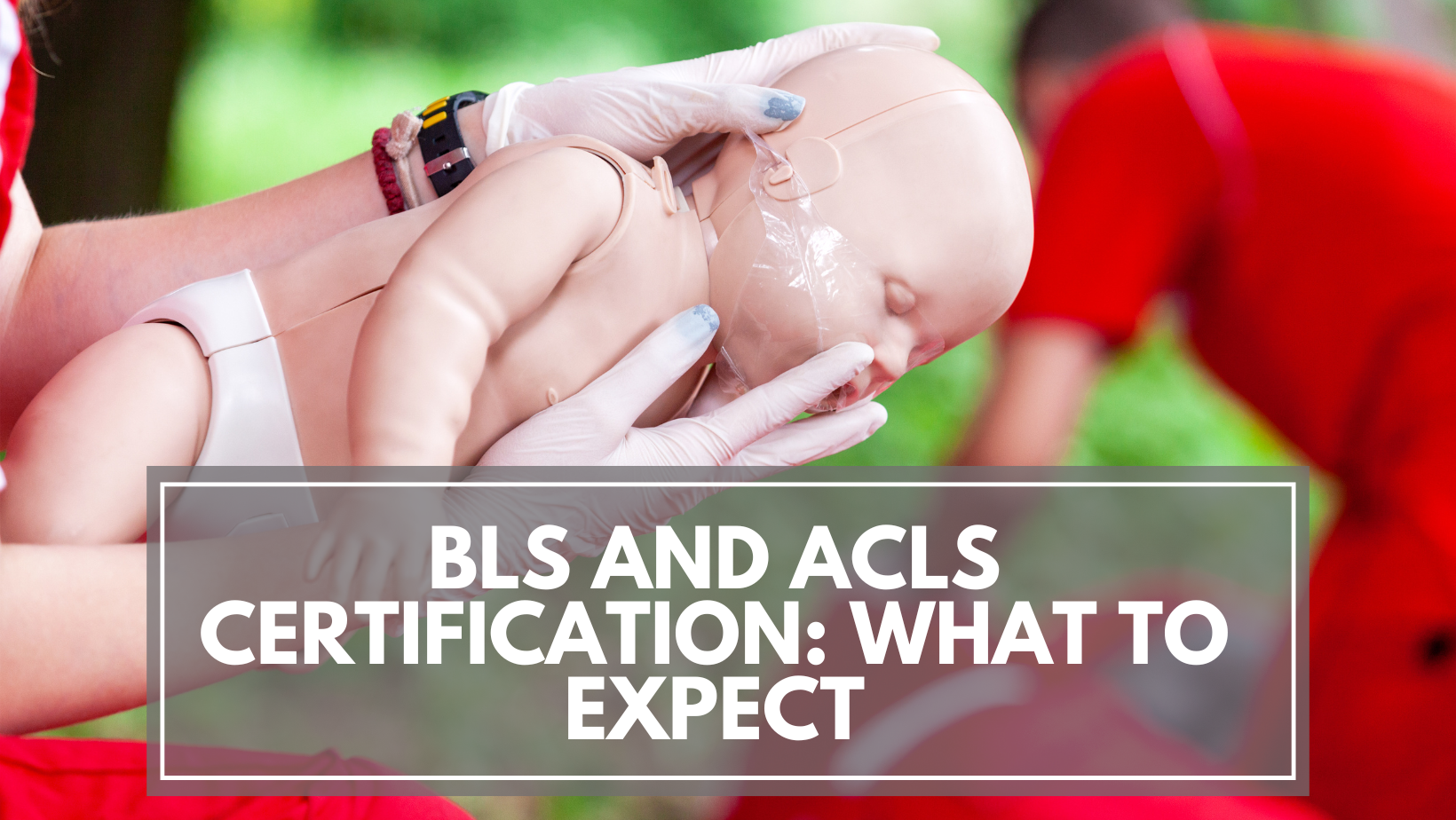
In the fast-paced world of healthcare, staying current with life-saving skills isn’t just a job requirement it’s a moral imperative. Whether you are a seasoned nurse, a paramedic, or a medical student just starting your journey, obtaining your BLS Certification and ACLS Certification are critical milestones.

However, for many professionals, the prospect of enrolling in these courses can bring up questions. What exactly is covered? How difficult is the material? And how has the learning process evolved in recent years?
At CPR Cart LLC, we understand the demands on your time. That is why we have streamlined the education process. Gone are the days of sitting in day-long, traditional classroom lectures. Instead, we offer a modern approach: AHA HeartCode online learning combined with a quick, hands-on skills session. This guide will walk you through exactly what to expect in these courses, helping you prepare for success.
Understanding the Difference: BLS vs. ACLS
Before diving into the specifics of the coursework, it is essential to understand the distinction between these two vital certifications.
BLS Certification (Basic Life Support) serves as the foundation for all life-saving training. It focuses on recognizing life-threatening emergencies, providing high-quality cardiopulmonary resuscitation (CPR) for adults, children, and infants, and using an Automated External Defibrillator (AED). It is designed for healthcare providers and covers the “basics” of stabilizing a patient until more advanced help arrives.
ACLS Certification (Advanced Cardiovascular Life Support) builds upon that foundation. It is intended for healthcare professionals who direct or participate in the management of cardiovascular emergencies. This course moves beyond chest compressions into advanced interventions, such as intravenous access, airway management, pharmacology, and interpreting electrocardiograms (ECGs).
In short, BLS is about keeping the blood pumping; ACLS is about identifying the cause of the arrest and using advanced methods to restart the heart.
What to Expect in Your BLS Certification Course
For many, the BLS course is their first foray into formal emergency cardiovascular care. If you are pursuing your BLS Certification, you can expect a comprehensive overview of the “Chain of Survival.”
- The Online Learning Phase (HeartCode BLS)
With CPR Cart LLC, your certification journey begins online. Using the American Heart Association’s HeartCode BLS program, you will engage in a self-paced eLearning environment. This replaces the traditional classroom lecture.
Expect to navigate through realistic patient scenarios. The online portion covers:
- High-Quality CPR: You will learn the precise metrics for effective CPR, including compression depth, rate, and recoil.
- The Chain of Survival: Understanding the critical steps that improve survival rates.
- Ventilations: Learning how to use bag-mask devices effectively.
- AED Use: Understanding how to operate an AED safely and quickly.
The benefit of this format is that you can pause, rewind, and review complex concepts as many times as you need. There is no pressure to keep up with a live lecture; you control the pace of your education.
- The Skills Session
Once you complete the online simulation and written exam, the next step is the hands-on skills session. This is where you translate your digital knowledge into physical action.
During this session, you will demonstrate your proficiency in:
- One-Rescuer and Two-Rescuer CPR: Learning to coordinate with a team is a crucial part of BLS.
- Child and Infant CPR: The techniques vary significantly based on the patient’s size.
- AED Operation: Practicing the “clear” commands and pad placement.
CPR Cart LLC prioritizes efficiency. This skills check is designed to be quick and convenient, verifying that you have mastered the necessary motor skills without requiring hours of waiting time.
What to Expect in Your ACLS Certification Course
The ACLS Certification is significantly more complex, involving a deeper understanding of cardiac physiology and pharmacology. This course is demanding, but the blended learning model makes it manageable for busy professionals.
- The Cognitive Component (HeartCode ACLS)
Similar to BLS, your ACLS journey starts with the HeartCode ACLS online course. This portion is extensive and dives deep into the algorithms that guide emergency care. You can expect to encounter:
- Megacode Scenarios: These are complex, simulated cases where you act as the team leader. You will be required to make split-second decisions regarding defibrillation, intubation, and drug administration.
- Pharmacology: ACLS requires a working knowledge of the drugs used in cardiac arrest, such as epinephrine, amiodarone, and atropine. The online modules help you learn when and why to administer these medications.
- Airway Management: You will review advanced airway adjuncts and ventilation strategies.
- ECG Recognition: A significant portion of your study will focus on identifying lethal rhythms like Ventricular Fibrillation (VF), Pulseless Ventricular Tachycardia (pVT), and Asystole.
This online format allows you to study the complex algorithms without the intimidation of an audience. You can take your time to understand the “why” behind every decision.
- The Skills Verification
After passing the online written exam, you will schedule your skills session. For ACLS, this involves demonstrating your ability to manage a cardiac arrest scenario from start to finish.
Key expectations during this session include:
- Algorithm Application: You must demonstrate that you can follow the correct algorithm for the given scenario (e.g., the Cardiac Arrest Algorithm or the Tachycardia Algorithm).
- Team Dynamics: While you may be performing the skills, the session verifies your ability to communicate clearly and direct a resuscitation effort.
- Manual Defibrillation: Unlike the AED used in BLS, ACLS uses manual defibrillators. You will demonstrate knowledge of energy selection and shock delivery.
The Modern Approach: Online Learning with Quick Skills Checks
One of the most significant changes in medical education is the shift away from the “traditional classroom.” CPR Cart LLC utilizes the AHA HeartCode learning method because it is proven to be effective and respectful of your time.
Why is this model superior for today’s healthcare workers?
- Flexibility: You complete the cognitive portion on your schedule, from the comfort of your home or office.
- Focus: The skills session is purely about verification. You aren’t sitting through lectures you already know; you are proving your competency and getting back to your day.
- Retention: Studies show that interactive, scenario-based online learning often leads to better retention of algorithms and protocols compared to passive listening.
By eliminating the traditional classroom environment, we remove the barriers to certification. You no longer need to sacrifice an entire weekend to maintain your credentials.
Who Needs These Certifications?
Determining which course you need is straightforward.
BLS Certification is required for:
- Nurses (RN, LPN, CNA)
- Medical Assistants
- Dental Professionals
- EMTs and Paramedics
- Pharmacy Technicians
- Medical and Nursing Students
ACLS Certification is typically required for:
- Physicians and Doctors
- Registered Nurses (especially in ER, ICU, and Critical Care)
- Paramedics
- Respiratory Therapists
- Nurse Practitioners and Physician Assistants
It is important to note that ACLS certification almost always requires a current BLS certification as a prerequisite. If your BLS is expired or non-existent, you will need to secure that first.
Preparing for Success
To ensure you pass both the online portion and the skills session, consider these tips:
- Review Your Algorithms: For ACLS, the algorithms are the roadmap. Memorize the flow of treatment for VF/pVT, Asystole, and Symptomatic Bradycardia.
- Understand the Medications: Do not just memorize dosages; understand the physiological effect of the drugs. This helps you adapt if a scenario changes.
- Practice CPR Quality: Even in ACLS, high-quality CPR is the most important factor in survival. Ensure your compression rate (100-120 bpm) and depth are consistent.
- Relax: The skills session is not designed to trick you. It is an opportunity to show you are competent. If you’ve completed the HeartCode modules thoroughly, you will be well-prepared.
Renewing Your Certification
Both BLS and ACLS certifications are valid for two years. The renewal process is very similar to the initial certification process. By using the HeartCode system with CPR Cart LLC, the renewal is seamless. You simply complete the updated online modules to see what has changed in the guidelines, complete the exam, and finish with a quick skills session. This keeps your skills sharp without the redundancy of sitting in a traditional class for hours.
Conclusion
Earning your BLS Certification or ACLS Certification is a noble pursuit that equips you with the skills to save lives. While the subject matter is serious, the process of obtaining your credentials has never been more efficient.
By choosing CPR Cart LLC, you are opting for a modernized, streamlined approach. You are choosing to learn via the American Heart Association’s scientifically backed HeartCode system, combined with a convenient skills verification that respects your time.
Whether you are learning the basics of chest compressions or mastering complex cardiac algorithms, you can expect a high-quality educational experience that prepares you for the moments that matter most. Ready to get started? Join the thousands of professionals who have simplified their certification process with CPR Cart LLC.
Read More: Can Muscle Relaxers Assist With Neck And Again Ache?