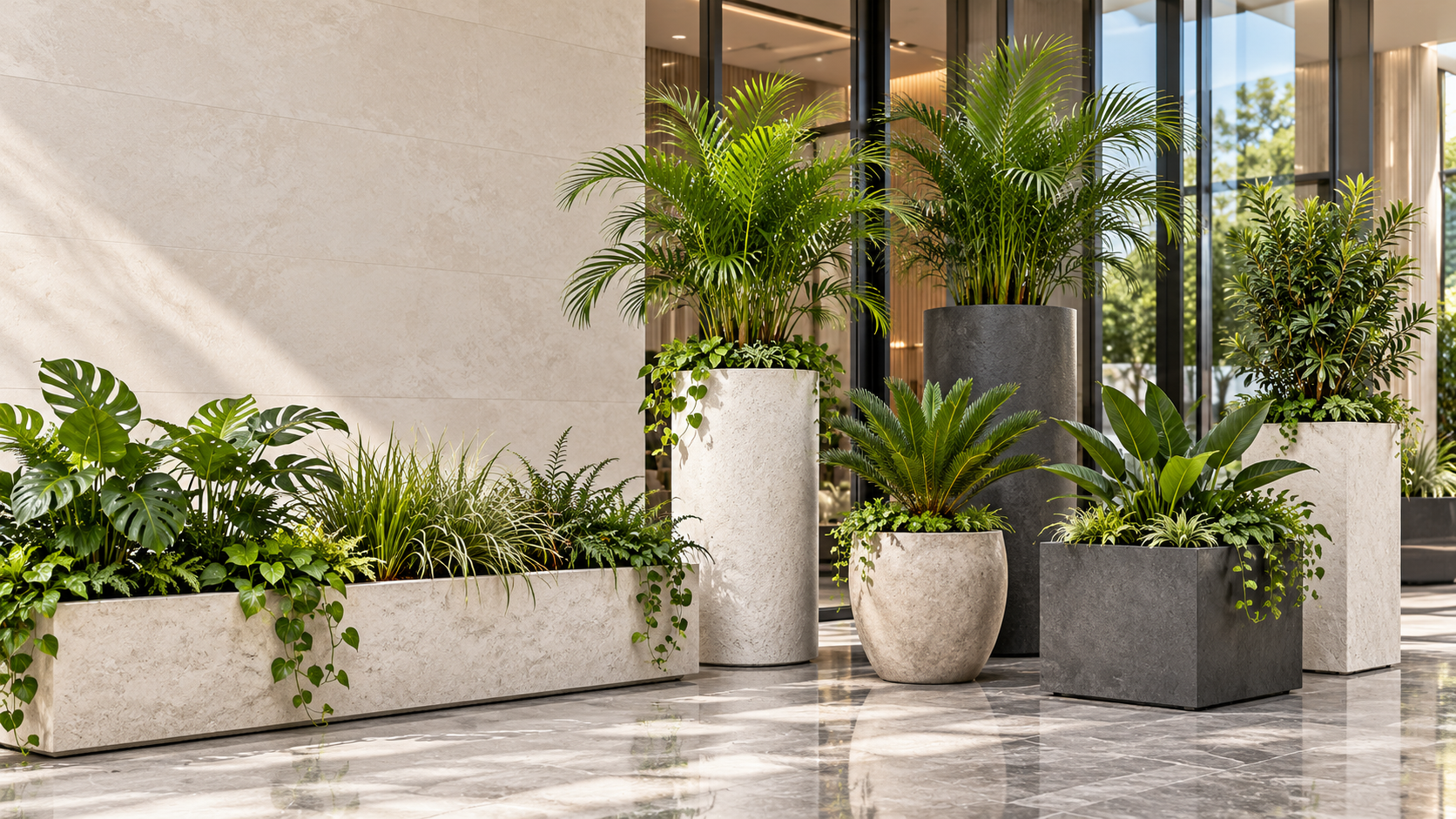

Modern landscaping and interior design increasingly focus on creating spaces that feel welcoming, balanced, and visually appealing. Plants play an important role in achieving this goal, but the containers used to display them are equally significant. A thoughtfully selected decorative planter can complement architectural features, introduce natural textures, and improve the overall appearance of residential and commercial environments. From office reception areas and hotel entrances to balconies and landscaped gardens, the right planter can combine practical functionality with attractive design.

Choosing a suitable planter involves more than selecting a colour or shape. Material quality, dimensions, drainage, maintenance requirements, and the surrounding environment should all be considered before making a purchase.
Understanding the Role of Decorative Planters in Modern Design
Decorative planters serve both functional and aesthetic purposes. They provide a suitable container for plants while helping designers organise and enhance interior and exterior spaces. Their shape, finish, and proportions can influence how a particular area looks and feels.
In commercial environments, planters can help define walkways, soften the appearance of hard architectural surfaces, and introduce greenery into otherwise minimal spaces. Hotels may use coordinated planters in lobbies and entrance areas, while corporate offices can incorporate them into reception zones, meeting spaces, and outdoor seating areas.
For residential projects, decorative containers can enhance balconies, patios, living rooms, and garden corners. Selecting designs that complement the existing furniture, flooring, and architectural finishes creates a more cohesive visual result.
Choosing the Right Planter Material
Material selection is one of the most important considerations when purchasing planters. Different materials offer distinct advantages depending on the intended application, environmental conditions, and maintenance expectations.
Traditional ceramic and terracotta planters offer a natural appearance, while concrete containers can provide a substantial, architectural look. Metal planters may suit contemporary settings, although their suitability depends on the finish and exposure conditions.
Fibre-reinforced plastic (FRP) is another option for modern landscaping projects. FRP combines a resin matrix with reinforcing fibres to create a composite material. Depending on the manufacturing process and product specifications, FRP planters can offer a useful balance of strength, relatively low weight, design flexibility, and ease of handling.
These characteristics can make FRP suitable for commercial interiors, landscaped entrances, terraces, and other locations where appearance and practical installation requirements must be considered together. Buyers should confirm the construction quality, finish, drainage provisions, and intended use of the particular product rather than assuming every planter offers identical performance.
Match the Size and Shape to the Space
The proportions of a planter should complement its surroundings without obstructing movement or overwhelming the area. Small planters may work well on desks, shelves, and windowsills, whereas medium-sized containers can suit balconies, office corners, and smaller landscaped areas.
Large and tall planters are often appropriate for spacious entrances, hotel lobbies, commercial courtyards, and building exteriors. Rectangular planters can help create organised planting arrangements along walls or walkways, while round and geometric designs can serve as decorative focal points.
Before selecting a size, consider the mature dimensions of the plant, its root requirements, the weight of the filled container, and the available floor space. A planter should provide sufficient room for healthy plant growth while maintaining safe and convenient access around the installation.
For commercial projects, repeating a consistent planter style across different areas can create a coordinated appearance. Alternatively, combining complementary shapes and sizes can add visual interest without making the landscape feel cluttered.
Consider Colour, Finish, and Architectural Compatibility
Colour and finish have a considerable influence on the final appearance of a planting arrangement. Neutral shades such as white, charcoal, grey, beige, and stone-inspired tones can complement contemporary architecture and work well across many commercial settings.
Matte finishes often create a subtle, understated appearance, while textured surfaces can introduce depth and visual character. Bold colours may be appropriate when planters are intended to stand out or reinforce a particular design scheme.
The best choice depends on the surrounding materials, lighting, plant foliage, and overall design objective. For example, a neutral planter may highlight the natural colour of tropical foliage, whereas a darker finish can provide contrast against lighter paving or walls.

Where several planters are required, buyers should check whether the selected colour and finish can be supplied consistently across the order. Customisation options should be confirmed with the manufacturer before finalising project specifications.
Evaluate Durability, Drainage, and Maintenance
A visually attractive planter must also support practical planting requirements. Proper drainage is essential for most plants because excess water around the roots can contribute to root damage and other growing problems. Buyers should check whether drainage holes are provided and whether the planter is suitable for the intended irrigation arrangement.
Outdoor installations require additional consideration. Direct sunlight, temperature changes, rainfall, standing water, and local weather conditions can affect the long-term performance of planter materials and finishes. Product suitability therefore depends on material formulation, construction quality, protective coatings, and installation conditions.
Maintenance requirements should also be evaluated before purchasing. Smooth or appropriately finished surfaces may be easier to clean, while textured designs may require different care. Routine inspection, suitable cleaning methods, and correct watering practices can help preserve both the planter and the plants it contains.
For large commercial installations, it is also sensible to assess the weight of the planter when filled with growing medium and water. Rooftop and balcony projects may require a review of structural load limits and safe placement.
Working with Reliable Decorative Planter Manufacturers
Selecting an appropriate supplier is an important part of a successful landscaping project. Experienced Decorative Planter Manufacturers can help buyers understand available materials, dimensions, finishes, and customisation possibilities.
Before placing an order, review the product specifications, request actual product photographs or samples where practical, and confirm the manufacturing material and finish. For bulk purchases, clarify minimum order quantities, production timelines, packaging, delivery arrangements, and quality-check procedures.
Commercial buyers should also discuss whether the supplier can maintain consistency across multiple units and repeat orders. These details are particularly important for hotels, corporate offices, property developments, retail spaces, and landscaping contractors managing several locations.
A useful supplier evaluation should focus on verifiable product information, clear communication, transparent quotations, and the ability to meet the project’s documented requirements. Comparing these factors helps buyers make decisions based on value and suitability rather than appearance or price alone.
Creating Better Spaces with the Right Decorative Planter
A successful planting scheme combines healthy plants, appropriate containers, and thoughtful placement. By considering material performance, planter dimensions, drainage, finish, and maintenance requirements, buyers can select products that complement their surroundings and support practical landscaping needs.
For residential and commercial projects seeking versatile planter designs, exploring the available Decorative Planter options from Terre Pure can be a useful starting point. Reviewing product details and discussing project-specific requirements with the supplier can help identify suitable solutions for different spaces.
Ultimately, the right planter should do more than hold a plant. It should contribute to the visual identity of the space, accommodate the needs of the selected greenery, and provide a practical solution for the intended environment.
Frequently Asked Questions
1. What is a decorative planter?
A decorative planter is a container designed to hold plants while enhancing the appearance of indoor or outdoor spaces. It is available in different shapes, sizes, colours, and finishes, making it suitable for homes, offices, hotels, gardens, balconies, and commercial landscapes.
2. Are FRP decorative planters suitable for indoor and outdoor use?
Yes, FRP decorative planters can be suitable for both indoor and outdoor applications, depending on their material formulation, finish, and construction. Before purchasing, check the manufacturer’s specifications for weather exposure, drainage, and maintenance requirements.
3. How do I choose the right decorative planter size?
Choose a planter according to the plant’s root requirements, mature size, available space, and overall design. Small planters work well on desks and shelves, while medium and large planters can complement balconies, office entrances, hotel lobbies, and landscaped outdoor areas.
4. What should I consider when selecting decorative planter manufacturers?
Look for manufacturers that provide clear product specifications, consistent finishes, suitable material options, customisation possibilities, and transparent quotations. For bulk orders, also confirm production timelines, delivery arrangements, minimum order quantities, and quality-control procedures.
5. Why are FRP decorative planters popular for commercial landscaping?
FRP decorative planters are often considered for commercial landscaping because they can combine relatively low weight, design flexibility, and a wide range of finishes. They can be used in offices, hotels, retail spaces, and commercial entrances, provided the selected product meets the project’s installation and environmental requirements.
