If you’ve lived in Middle Tennessee for more than one season, you know exactly what happens around late May. One day it’s pleasant enough to open the windows, and the next, the humidity hits like a wall. We transition from spring to “Tennessee Summer” almost overnight. For most Lebanon homeowners, that transition is the ultimate test for their air conditioning systems.

Each year follows the same cycle: The first heatwave comes around, and all of a sudden, every HVAC professional is packed with bookings for several days as it seems that everyone’s equipment failed at the same time.

But in order not to be caught unprepared and spend hot summer days sweating in your living room, you need to think ahead. Preparing your system isn’t only about replacing a filter but rather about knowing how the particularities of the climate in the area affect your machinery. Taking a couple of hours to prepare your home now will spare you the stress of an urgent AC repair near me when the temperature is 98°F.
The Lebanon Reality: Why We Can’t “Set and Forget”
Living in Wilson County presents a unique set of challenges for HVAC equipment. It isn’t just the heat; it’s the moisture. High humidity means your AC isn’t just moving air; it’s constantly extracting gallons of water out of that air every single day. That constant moisture creates a perfect environment for biological growth on your evaporator coils and rust on your electrical components.
Furthermore, our region has a lot of pollen and dust, which can clog outdoor condenser fins in a matter of weeks. If you don’t keep up with maintenance, your unit has to work twice as hard to do the same amount of cooling, which is a one-way ticket to a premature burnout.
Phase 1: The Outdoor “Deep Clean”
Your outdoor condenser unit is the “lungs” of your AC. If it can’t breathe, the system chokes. Over the winter, these units become magnets for dead leaves, spiderwebs, and dirt.
Start by walking outside and looking at the unit. Use a pair of gardening shears to clear back any brush, tall grass, or overgrown shrubs. You want at least two feet of clear space around the entire unit to allow for proper airflow. Once the area is clear, look at the metal fins on the sides. If they look matted down with dust or pollen, grab your garden hose.
Set the nozzle to a medium spray, not a high-pressure jet, and wash the fins from the inside out or top to bottom. Do not use a pressure washer, as the force can actually fold the aluminum fins and ruin the airflow. Giving the system a clean space to operate reduces the electrical load on the compressor significantly.

Phase 2: The Indoor Fundamentals
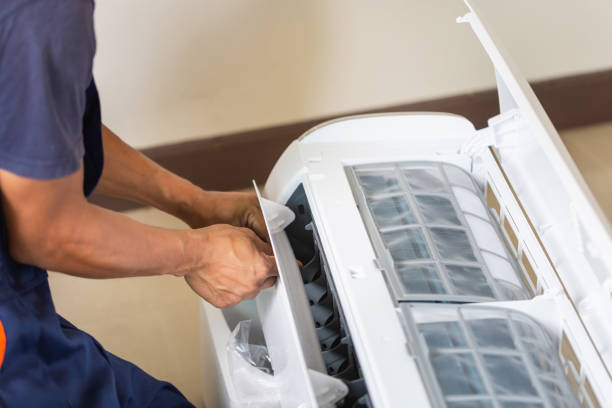
While the outdoor unit handles the heat rejection, the indoor side is all about filtration. We’ve all heard the “change your filter” advice, but it’s the most neglected task in home ownership. A cheap, thin fiberglass filter might stop a leaf, but it does nothing to stop the fine dust that builds up on your indoor coil.
However, don’t go out and buy the most restrictive, high-MERV “hospital grade” filter you can find. If the filter is too thick, your blower motor will struggle to pull air through it. This creates a vacuum effect that causes the motor to overheat and the indoor coil to freeze over with ice.

Stick to the manufacturer’s recommended MERV rating, usually around 8 or 10. If you have pets, check the filter every 30 days. If it looks gray, swap it. It is the cheapest insurance policy you can buy for your blower motor.
Phase 3: The “Ear Test”
Before you really need the AC to run for 12 hours a day, turn it on for a test drive while the afternoon temperature is still manageable. Listen to it. Does it sound like it did last year?
If you hear a persistent clicking, it might be the start capacitor struggling. If you hear a high-pitched whine, that’s often a belt or bearing. If you hear a rattle, something inside the cabinet has worked itself loose. These aren’t just quirks; they are early warning signs.
Calling for AC repair near me in April or May is a world of difference compared to calling in July. In the spring, technicians have the time to do a thorough job, and you aren’t paying for “emergency dispatch” fees.
Why Routine Professional Maintenance is Non-Negotiable
You might be wondering, “If I clean the leaves and change the filter, why do I need to pay a pro?” The reality is that there are things under the hood that you just can’t see. A professional technician is looking for the “silent killers” of HVAC units:
- Refrigerant Levels: You cannot “check” this yourself. If your refrigerant is low, it’s because you have a leak. Adding more without finding the leak is a waste of money.
- Electrical Amperage: Techs measure the current draw on your motors. If a motor is pulling more power than it should, it’s failing. Catching this early saves you from a total blowout.
- Condensate Drainage: Tennessee humidity means your AC produces a lot of water. If the drain line gets clogged with algae, which happens constantly here, that water will back up and ruin your ceiling or flooring. Pros clear these lines during their tune-up visits.
Final Thoughts
Your home is your biggest investment, and your AC system is the thing that makes it livable during our intense summer months. Don’t wait for a 95-degree day to find out that your system isn’t up to the task. Search for AC repair near me firms like Affordable Heating and Cooling and schedule a professional check-up.
By the time the real heat sets in, you’ll have the peace of mind knowing your system is ready to handle whatever the Tennessee weather throws at it. A little effort now is the best way to ensure your summer is cool, quiet, and stress-free.
Frequently Asked Questions
1. What is the best way to set my thermostat for summer?
The most efficient approach is to set it at a temperature you are comfortable with and leave it there. “Jumping” the thermostat down 10 degrees when you get home forces the unit to run at maximum capacity for hours, which is less efficient than just maintaining a steady, moderate temp.
2. Should I cover my outdoor unit in the winter?
It’s not necessary, and it can actually be harmful. A cover traps moisture inside the cabinet, which encourages rust and creates a cozy home for rodents who love to chew on electrical wires. Leave it exposed; it’s designed for the weather.
3. Does a “tune-up” actually save me money?
Yes. An efficient, clean, and properly charged unit uses significantly less electricity. Over the course of a Tennessee summer, the energy savings from a clean system often cover the cost of the maintenance visit itself.
4. How often should I clean the drain line?
If you have access to the drain line, pouring a cup of white vinegar down it every few months can help prevent algae buildup. It’s a small step that prevents thousands of dollars in water damage.
5. What if I notice my AC is blowing air, but it’s not cold?
Turn it off. If it’s blowing air but the air isn’t cold, the compressor likely isn’t kicking in. Running it in that state can overheat the compressor. Call a professional for a diagnostic check immediately.